Varicose Veins Causes: Why Do Varicose Veins Develop? Risk Factors, Venous Valve Damage and Prevention
Article author: Dr. Sagar Rajkuwar, MS-ENT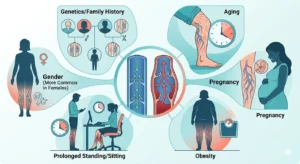
Introduction
Varicose veins are enlarged, twisted and swollen veins that commonly develop in the legs. They occur when the normal mechanism responsible for transporting blood from the lower limbs towards the heart becomes inefficient. One of the most important underlying mechanisms is venous valve dysfunction. When the small one-way valves inside the veins become weak or fail to close properly, blood can flow backwards and accumulate in the affected veins. This increases pressure within the veins, causing them to stretch, enlarge and become visibly twisted. However, the development of varicose veins is not explained by a single factor. Genetic susceptibility, increasing age, pregnancy, hormonal changes, excess body weight, previous deep vein thrombosis and prolonged periods of immobility may all contribute. Understanding the varicose veins causes is important because some contributing factors can be modified through lifestyle changes, while others, such as inherited susceptibility and ageing, cannot be completely avoided. Another important point is that standing for long hours does not necessarily mean that a person will develop varicose veins. It may increase venous pressure and worsen symptoms, particularly in someone who already has underlying venous valve dysfunction. This comprehensive guide explains how varicose veins develop inside the body, the major risk factors, the role of genetics and hormones, commonly misunderstood causes, and practical steps that may help reduce the risk of progression.Table of Contents
- What Causes Varicose Veins?
- How Do Healthy Veins Work?
- What Happens Inside the Veins When Varicose Veins Develop?
- Major Risk Factors for Varicose Veins
- Genetic Causes and Family History
- Why Are Varicose Veins Common During Pregnancy?
- Can Occupation and Prolonged Standing Cause Varicose Veins?
- Does Obesity Increase the Risk?
- Can Previous Deep Vein Thrombosis Cause Varicose Veins?
- Hormonal Changes and Varicose Veins
- Common Myths About the Causes of Varicose Veins
- Can Varicose Veins Be Prevented?
- When Should You Consult a Doctor?
- How Are the Underlying Causes Investigated?
- Frequently Asked Questions
- Summary
- Conclusion
- References
- Medical Disclaimer
1. What Causes Varicose Veins?
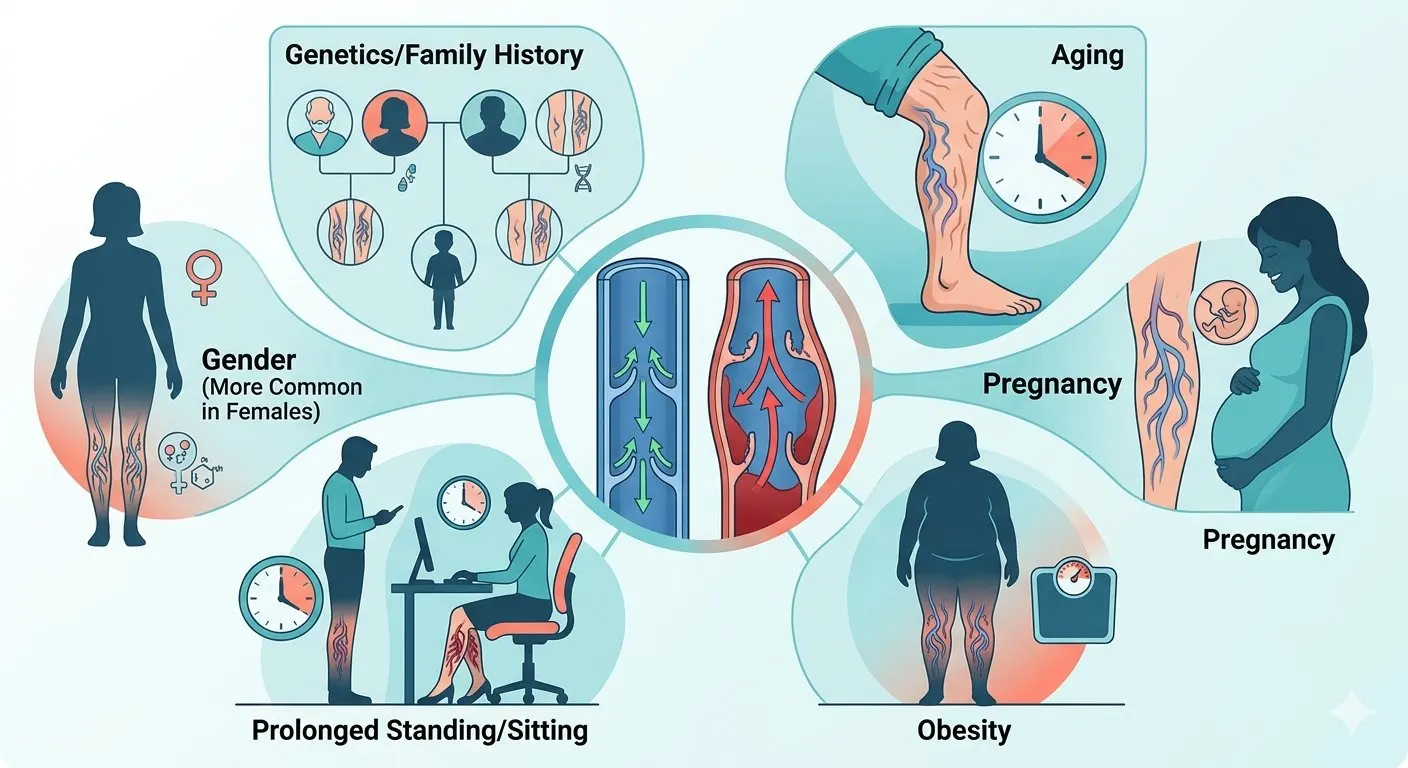
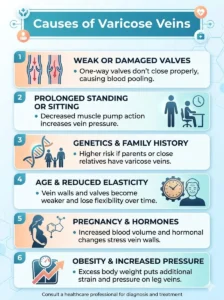
The primary mechanism responsible for many cases of varicose veins is the failure of the normal venous valves, combined with changes in the vein walls. Under normal circumstances, blood in the legs travels upwards towards the heart through a network of superficial and deep veins. Small structures called venous valves prevent blood from flowing backwards. When these valves become incompetent, blood may flow in the opposite direction. This condition is known as venous reflux. The resulting increase in pressure inside the affected veins is called venous hypertension. Over time, increased pressure and structural changes in the vein wall can cause the veins to become enlarged, elongated and tortuous. The major contributing factors include:- Inherited weakness or susceptibility of vein walls and valves.
- Increasing age.
- Pregnancy and hormonal changes.
- Excess body weight.
- Prolonged standing or sitting with limited movement.
- Reduced calf muscle pump activity.
- Previous deep vein thrombosis.
- Abnormalities of the deep venous circulation.
2. How Do Healthy Veins Work?
To understand the causes of varicose veins, it is helpful to understand how blood normally returns from the legs to the heart. Arteries transport oxygenated blood from the heart to different tissues. Veins return blood from these tissues towards the heart. Returning blood from the lower limbs is particularly challenging because it must travel against gravity. Three important mechanisms help this process.2.1 One-Way Venous Valves
Leg veins contain small flap-like structures called venous valves. These valves open when blood moves towards the heart and close when blood attempts to flow backwards. They help maintain the upward direction of blood flow, particularly when a person is standing. If the valves become damaged, stretched or incompetent, they may not close properly. Consequently, some blood flows backwards and accumulates in the veins.2.2 Calf Muscle Pump
The calf muscles play an important role in venous circulation. When a person walks, the calf muscles contract and compress the deep veins located between them. This action pushes blood upwards towards the heart. When the muscles relax, the venous valves help prevent blood from flowing backwards. This mechanism is called the calf muscle pump. It explains why regular walking and ankle movements are beneficial for venous circulation.2.3 Pressure Differences Within the Venous System
Blood flow depends partly on pressure differences between different parts of the circulation. When a person stands motionless, the gravitational column of blood increases pressure in the veins of the lower limbs. The calf muscle pump normally helps counteract this pressure during walking. However, when venous valves are incompetent or the muscle pump is ineffective, blood may accumulate in the lower limbs. This contributes to the development and progression of chronic venous disease.3. What Happens Inside the Veins When Varicose Veins Develop?
The development of varicose veins involves several interconnected changes rather than a single isolated event.3.1 Weakening of the Vein Walls
The walls of veins contain structural proteins, including collagen and elastin. These proteins help maintain the strength, flexibility and elasticity of blood vessels. Changes in their composition and organisation may reduce the ability of the vein wall to maintain its normal structure. In susceptible individuals, the veins may gradually become dilated.3.2 Failure of Venous Valves
As veins become enlarged or their valve structures become abnormal, the valves may fail to meet properly. This allows blood to move backwards. The resulting venous reflux increases pressure within the affected vein.3.3 Venous Hypertension
Persistent backward blood flow can produce sustained elevation of venous pressure. This is known as ambulatory venous hypertension when abnormal pressure persists during standing and walking. The increased pressure contributes to further vein dilatation and can affect surrounding tissues.3.4 A Cycle of Progressive Vein Dilatation
An important aspect of the disease is that vein enlargement and valve dysfunction can reinforce each other. A simplified sequence is:- An underlying weakness or abnormality affects the vein wall or valve.
- The valve becomes incompetent.
- Blood flows backwards through the affected vein.
- Pressure inside the vein increases.
- The vein becomes more dilated.
- Valve closure becomes increasingly ineffective.
- Venous reflux and vein enlargement may progress.
3.5 Inflammation and Tissue Remodelling
Research has identified additional biological changes in varicose veins. These include:- Endothelial dysfunction, involving the inner lining of blood vessels.
- Alterations in the extracellular matrix.
- Changes in matrix metalloproteinases (MMPs).
- Inflammatory cell activity.
- Changes in vascular smooth muscle cells.
- Abnormal regulation of tissue repair and remodelling.
4. Major Risk Factors for Varicose Veins
Several factors increase the likelihood of developing varicose veins. Not all of these factors directly damage venous valves. Some increase venous pressure, while others influence the structure of the veins or the efficiency of blood circulation.4.1 Increasing Age
Age is an important risk factor. As people grow older, changes can occur in the structure and elasticity of vein walls. Venous valves may also become less efficient. These changes can increase the likelihood of backward blood flow and vein enlargement. However, varicose veins are not an inevitable part of ageing. Many older adults never develop significant varicose veins.4.2 Family History and Genetic Susceptibility
A family history of varicose veins is one of the most important recognised risk factors. People whose parents or close biological relatives have varicose veins may have a higher likelihood of developing the condition. Inherited factors may influence:- Vein wall structure.
- Collagen and elastin composition.
- Venous valve development.
- Connective tissue characteristics.
- Susceptibility to chronic venous disease.
4.3 Pregnancy
Pregnancy increases the risk of developing varicose veins through several mechanisms. These include:- Increased circulating blood volume.
- Hormonal changes.
- Relaxation of vascular smooth muscle.
- Compression of pelvic veins by the enlarging uterus.
- Increased pressure within the lower-limb venous circulation.
4.4 Excess Body Weight and Obesity
Excess body weight can increase pressure within the abdominal and pelvic venous circulation. This may interfere with the return of blood from the lower limbs. Obesity is also associated with reduced physical activity in some individuals, which may impair the effectiveness of the calf muscle pump. Maintaining a healthy body weight may help reduce the mechanical burden on the venous system.4.5 Prolonged Standing
Occupations involving prolonged standing may be associated with an increased risk of chronic venous problems. Examples include:- Teachers.
- Nurses.
- Surgeons.
- Shop assistants.
- Security personnel.
- Factory workers.
- Hairdressers.
- Hospitality workers.
4.6 Prolonged Sitting and Physical Inactivity
Prolonged sitting can reduce the frequency of calf muscle contractions. Examples include:- Office workers.
- Long-distance drivers.
- People working continuously on computers.
- Individuals with restricted mobility.
4.7 Previous Deep Vein Thrombosis
A previous episode of deep vein thrombosis (DVT) can damage the venous valves or cause persistent obstruction within the deep venous system. This may result in post-thrombotic syndrome. Possible consequences include:- Chronic leg swelling.
- Pain and heaviness.
- Skin changes.
- Venous hypertension.
- Development or worsening of superficial collateral veins.
4.8 Female Sex and Hormonal Influences
Varicose veins are frequently reported in women, although men can also develop the condition. Hormonal changes may influence vein wall tone and connective tissue characteristics. Pregnancy, menstrual hormonal fluctuations and menopause may contribute to changes in venous circulation. The relationship between sex hormones and varicose veins is complex, and hormonal factors are not the only explanation for the higher prevalence reported in some female populations.4.9 Reduced Mobility
People with restricted mobility may have reduced calf muscle activity. This can occur in individuals with:- Neurological disorders.
- Musculoskeletal problems.
- Prolonged bed rest.
- Physical disabilities.
- Recovery following major surgery.
4.10 Previous Venous Disorders or Structural Abnormalities
Some people have congenital abnormalities of the venous system. Others may develop acquired venous obstruction or abnormal connections between veins. These conditions can alter normal blood flow and increase venous pressure. A vascular specialist may investigate these possibilities when the distribution or severity of varicose veins is unusual.5. Genetic Causes and Family History
Genetics deserves particular attention because many patients develop varicose veins despite having no obvious lifestyle-related risk factors. If one or both parents have varicose veins, their children may have an increased susceptibility. However, inheritance does not mean that the condition will definitely develop.5.1 What Is Inherited?
Researchers have investigated several biological characteristics associated with venous disease. These include:- Differences in connective tissue.
- Abnormalities in vein wall elasticity.
- Changes in extracellular matrix proteins.
- Venous valve structural abnormalities.
- Genetic variations involved in inflammation and vascular remodelling.
5.2 Can Genetic Risk Be Prevented?
A person cannot change their inherited genetic characteristics. However, maintaining physical activity, avoiding prolonged immobility and maintaining a healthy weight may help reduce some modifiable contributors to venous hypertension. A family history of varicose veins is a reason to be aware of possible symptoms, not a reason to assume that disease is inevitable.6. Why Are Varicose Veins Common During Pregnancy?
Pregnancy is an important physiological condition associated with increased venous pressure and changes in blood circulation. Several mechanisms contribute.6.1 Increased Blood Volume
During pregnancy, the circulating blood volume increases to support the mother and developing baby. This places additional demands on the venous circulation.6.2 Hormonal Changes
Pregnancy-related hormones, particularly progesterone, can influence smooth muscle tone and vascular relaxation. These changes may contribute to venous dilatation.6.3 Pressure From the Enlarging Uterus
As pregnancy progresses, the uterus becomes larger. It may compress pelvic veins and interfere with the return of blood from the legs towards the heart. This can increase venous pressure in the lower limbs.6.4 Multiple Pregnancies
Repeated pregnancies may increase the cumulative exposure to hormonal changes and venous pressure. Consequently, women with multiple pregnancies may have a higher likelihood of developing persistent varicose veins.6.5 Do Pregnancy-Related Varicose Veins Disappear?
Some pregnancy-related varicose veins become less prominent after childbirth as blood volume and pelvic pressure return towards normal. However, established enlarged veins may persist. Women should seek medical advice if they experience significant pain, swelling, skin changes or sudden one-sided leg symptoms during pregnancy.7. Can Occupation and Prolonged Standing Cause Varicose Veins?
Occupational factors are frequently discussed in relation to venous disease. The important distinction is between a factor that increases venous pressure and a factor that directly damages venous valves. Standing for prolonged periods increases the hydrostatic pressure in leg veins. When the calf muscles remain inactive, the normal pumping mechanism is less effective. This can aggravate existing venous dysfunction. People whose occupations require prolonged standing can consider:- Walking briefly at regular intervals.
- Performing ankle movements.
- Avoiding remaining motionless for extended periods.
- Taking short movement breaks.
- Maintaining an appropriate level of physical activity outside working hours.
8. Does Obesity Increase the Risk?
Yes. Excess body weight is a recognised risk factor for varicose veins and chronic venous disease. There are several possible explanations.8.1 Increased Abdominal Pressure
Excess abdominal fat can increase pressure within the abdomen. This may interfere with the return of blood through the pelvic and abdominal venous pathways.8.2 Reduced Mobility
Some individuals with obesity may experience reduced physical activity because of joint pain, breathlessness or other associated problems. Reduced calf muscle activity may contribute to venous pooling.8.3 Increased Mechanical Burden
Excess body weight increases the physical demands placed on the lower limbs. This may aggravate existing venous problems. Maintaining a healthy weight is therefore a useful component of long-term vascular health. Weight reduction cannot guarantee that existing varicose veins will disappear, but it may help reduce symptoms and improve overall health.9. Can Previous Deep Vein Thrombosis Cause Varicose Veins?
A previous episode of DVT can have long-term consequences for the venous circulation. A blood clot may partially or completely obstruct a deep vein. In some patients, the clot damages the venous valves. Even after the clot has resolved, the affected vein may remain narrowed or the valves may remain incompetent. This can produce persistent venous hypertension.9.1 What Is Post-Thrombotic Syndrome?
Post-thrombotic syndrome (PTS) is a chronic complication that can develop after DVT. Features may include:- Persistent leg swelling.
- Aching or heaviness.
- Skin pigmentation.
- Itching.
- Venous eczema.
- Venous ulcers.
- Development of collateral superficial veins.
9.2 Why Is This Distinction Important?
Primary varicose veins generally arise from abnormalities involving superficial veins and their valves. Post-thrombotic venous disease may involve deep vein obstruction or valve damage. These conditions can require different approaches to investigation and treatment.10. Hormonal Changes and Varicose Veins
Hormones influence several aspects of vascular function. Female sex hormones may affect smooth muscle tone and the structural characteristics of blood vessel walls. Pregnancy is the clearest physiological example of hormonal and circulatory changes contributing to venous dilatation. Hormonal contraceptives and hormone replacement therapy have also been studied in relation to venous disease. However, it is important not to assume that every woman using hormonal medication will develop varicose veins. Hormonal exposure should be interpreted alongside family history, age, pregnancy history and other individual risk factors. Patients should not stop prescribed hormonal medication solely because of concern about varicose veins without consulting their healthcare professional.11. Common Myths About the Causes of Varicose Veins
Several commonly repeated explanations for varicose veins are not supported by strong evidence. Understanding these distinctions helps prevent unnecessary worry.11.1 Does Crossing Your Legs Cause Varicose Veins?
There is no convincing evidence that simply crossing the legs causes permanent venous valve damage or directly produces varicose veins. However, sitting in the same position for long periods can reduce lower-limb movement. Changing position regularly is beneficial.11.2 Do High-Heeled Shoes Cause Varicose Veins?
High-heeled shoes are not established as a primary cause of varicose veins. However, shoes that restrict normal ankle movement may influence calf muscle activity. Comfortable footwear that permits normal movement is generally preferable.11.3 Do Tight Clothes Cause Varicose Veins?
Ordinary tight clothing has not been established as a direct cause of varicose veins. However, very restrictive garments around the waist or groin may interfere with venous return in some circumstances.11.4 Does Heavy Weightlifting Cause Varicose Veins?
Heavy resistance exercise can temporarily increase intra-abdominal and venous pressure, particularly during breath-holding or straining. However, this does not establish that weightlifting alone causes varicose veins. Physical activity generally has important cardiovascular and muscular benefits. People with symptomatic venous disease should discuss exercise intensity and technique with their healthcare professional rather than automatically avoiding all resistance training.11.5 Are Varicose Veins Caused Only by Standing?
No. Prolonged standing may contribute to venous pressure and symptom aggravation, but genetics, age, pregnancy, vein wall characteristics and valve dysfunction are also important.11.6 Do Varicose Veins Develop Only in Women?
No. Men can also develop varicose veins. Family history, ageing, obesity and previous venous disorders can increase risk in both sexes.12. Can Varicose Veins Be Prevented?
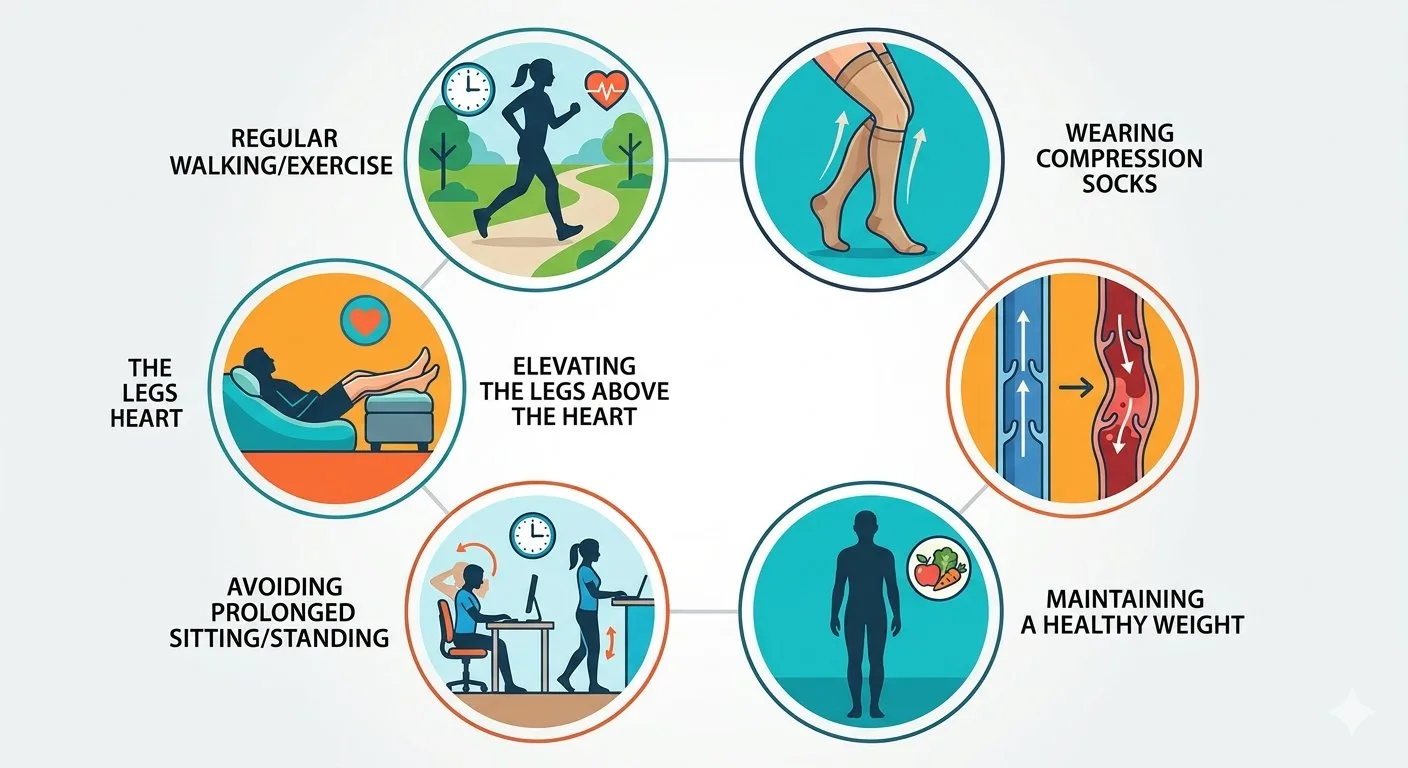
There is no guaranteed method of preventing all varicose veins, particularly when inherited susceptibility is present. However, certain measures may help improve venous circulation and reduce the effect of modifiable risk factors.12.1 Maintain Regular Physical Activity
Walking activates the calf muscle pump. Regular movement can help improve venous return and reduce prolonged periods of venous pooling.12.2 Avoid Prolonged Immobility
Change position frequently if your work involves prolonged sitting or standing. Short walking breaks and ankle movements can help maintain calf muscle activity.12.3 Maintain a Healthy Weight
A healthy weight may reduce pressure on the pelvic and lower-limb venous circulation.12.4 Elevate the Legs When Resting
Leg elevation can reduce dependent venous pressure and may help relieve swelling in people with existing venous disease. It should not be considered a treatment that repairs damaged venous valves.12.5 Avoid Smoking
Avoiding tobacco is important for general vascular health. Smoking has numerous harmful effects on blood vessels and overall circulation.12.6 Seek Assessment for Persistent Symptoms
People with persistent leg heaviness, swelling, aching or visible enlarged veins should seek medical evaluation. Early recognition can help identify chronic venous disease and appropriate management options.12.7 Use Compression Stockings Only When Appropriate
Graduated compression stockings may help selected patients manage swelling and discomfort. However, they do not permanently correct incompetent venous valves. The correct compression level should be selected after considering the person’s arterial circulation and other medical conditions.13. When Should You Consult a Doctor?
Medical evaluation is advisable if you notice:- New or progressively enlarged veins.
- Persistent leg pain or heaviness.
- Recurrent ankle swelling.
- Itching or skin discolouration.
- Skin thickening or eczema.
- A wound that does not heal.
- Painful, red or hardened superficial veins.
13.1 Warning Signs of Possible Deep Vein Thrombosis
Sudden swelling of one leg, particularly when accompanied by calf pain, tenderness or warmth, requires urgent medical assessment. A DVT must be considered rather than assuming that the symptoms are simply caused by varicose veins.13.2 Warning Signs of Pulmonary Embolism
Sudden breathlessness, chest pain, coughing up blood or fainting may indicate pulmonary embolism. These symptoms require immediate emergency medical attention.14. How Are the Underlying Causes Investigated?
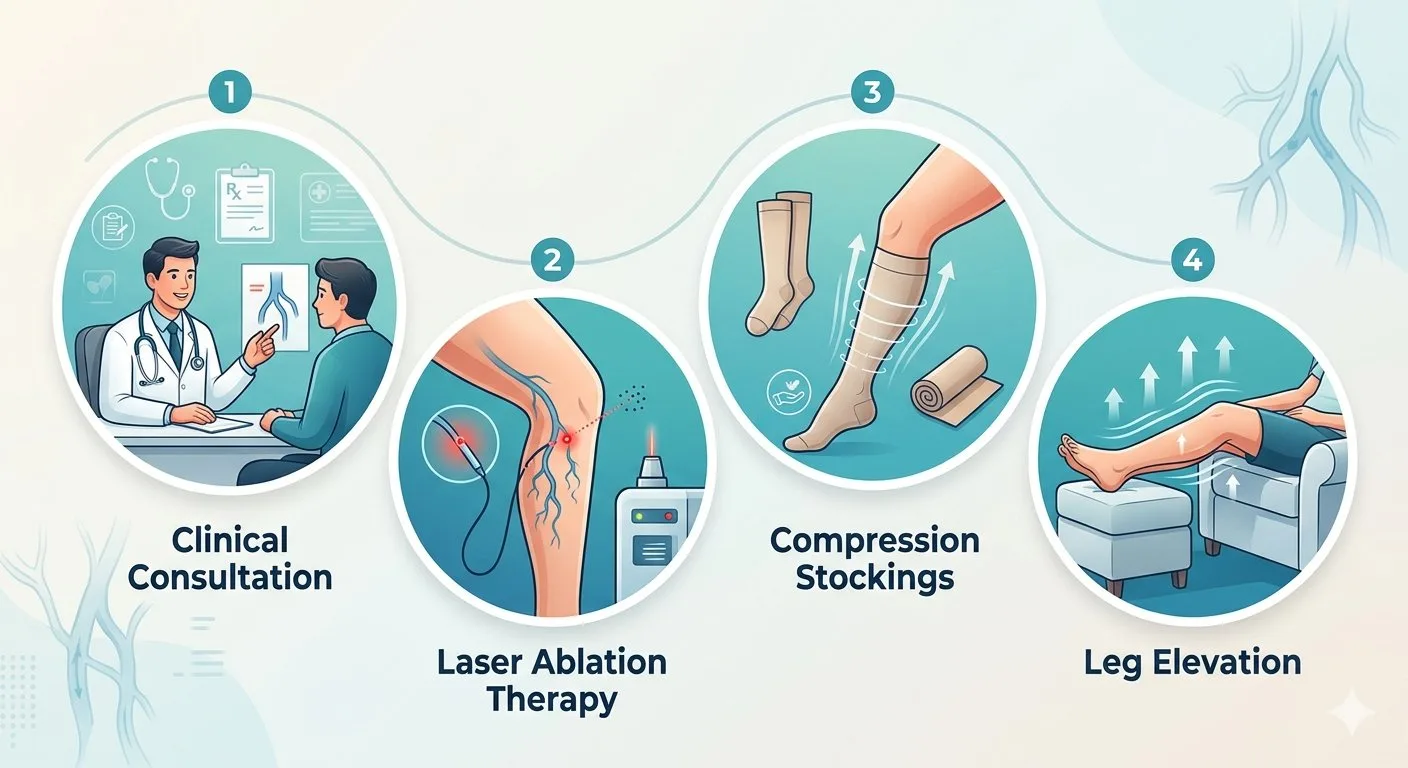
The investigation depends on the patient’s symptoms, medical history and physical examination.14.1 Clinical Examination
The doctor may assess:- Distribution of enlarged superficial veins.
- Leg swelling.
- Skin pigmentation.
- Eczema.
- Previous surgical or thrombosis history.
- Family history.
- Mobility and occupational factors.
14.2 Venous Duplex Ultrasound
Venous duplex ultrasound is the principal non-invasive investigation used to evaluate venous reflux. It combines conventional ultrasound imaging with Doppler assessment of blood flow. It can identify:- Incompetent venous valves.
- Reversed blood flow.
- Superficial venous reflux.
- Deep venous obstruction.
- Previous or current thrombosis.
- Abnormal venous pathways.
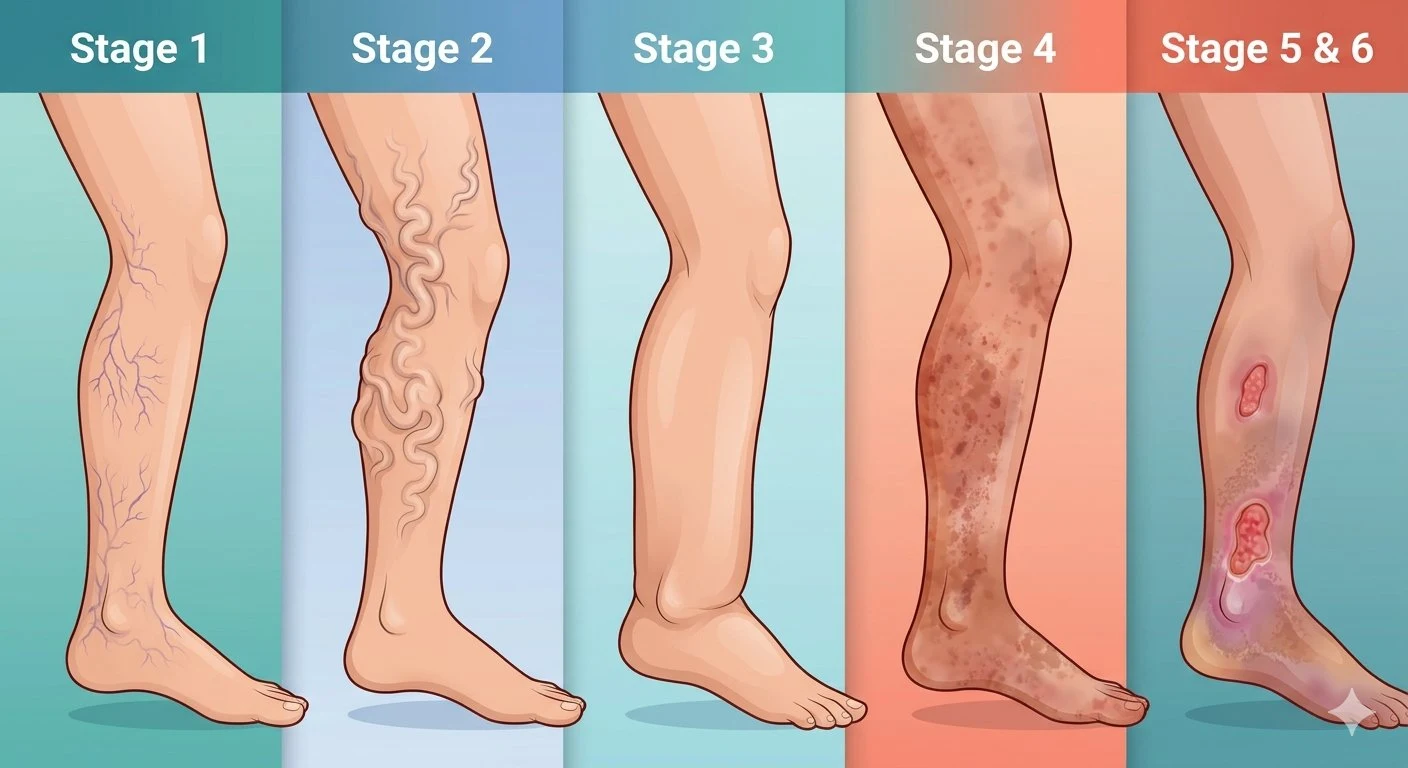
14.3 Understanding the CEAP Classification
The CEAP classification is an established system used to describe chronic venous disease. The letters represent:- C – Clinical: Visible clinical findings.
- E – Etiological: The underlying cause.
- A – Anatomical: The veins involved.
- P – Pathophysiological: Reflux, obstruction or both.
15. Frequently Asked Questions
Q1. What is the main cause of varicose veins?
The main underlying mechanism is commonly venous valve incompetence. When the valves fail to close properly, blood flows backwards and accumulates in the veins, increasing venous pressure and causing the veins to enlarge.Q2. Are varicose veins hereditary?
Yes. Family history is an important risk factor. Inherited characteristics may influence vein wall structure, connective tissue and valve function. However, having an affected parent does not guarantee that a person will develop varicose veins.Q3. Can standing for long hours cause varicose veins?
Prolonged standing can increase venous pressure and may contribute to the development or worsening of venous disease. However, it is not the only cause. Genetics, ageing, pregnancy and other factors also play important roles.Q4. Does obesity cause varicose veins?
Obesity is a recognised risk factor. Excess body weight may increase abdominal and pelvic pressure, affecting the return of blood from the legs. Reduced physical activity may also contribute.Q5. Why do women develop varicose veins during pregnancy?
Pregnancy increases blood volume, changes hormone levels and places additional pressure on pelvic veins because of the enlarging uterus. These factors can contribute to venous dilatation and valve dysfunction.Q6. Can varicose veins develop without a family history?
Yes. Although genetic susceptibility is important, varicose veins can develop in people without a known family history because of ageing, pregnancy, obesity, previous venous disease and other factors.Q7. Does crossing the legs cause varicose veins?
No convincing evidence establishes ordinary leg crossing as a direct cause of permanent venous valve damage. Remaining inactive in the same position for long periods is a separate issue.Q8. Can exercise prevent varicose veins?
Regular physical activity, particularly walking, supports the calf muscle pump and venous return. It may help reduce venous pooling and improve overall vascular health, although it cannot eliminate inherited susceptibility or reliably prevent every case.Q9. Can heavy lifting cause varicose veins?
Heavy lifting can temporarily increase venous and abdominal pressure, particularly when accompanied by breath-holding and straining. However, it is not established as an independent cause of all varicose veins.Q10. Can varicose veins develop in young adults?
Yes. Genetic susceptibility and other contributing factors may result in varicose veins developing during early adulthood. The condition is not restricted to older individuals.Q11. Can varicose veins develop after deep vein thrombosis?
Yes. DVT can damage deep venous valves or cause persistent venous obstruction. These changes can produce chronic venous hypertension and prominent superficial collateral veins.Q12. Do varicose veins go away after pregnancy?
Some pregnancy-related varicose veins become less prominent after childbirth. However, established enlarged veins may persist and require assessment if they cause symptoms.Q13. Can varicose veins be prevented completely?
No. There is no guaranteed way to prevent varicose veins in every individual. However, maintaining a healthy weight, regular walking and avoiding prolonged immobility may help reduce some contributing factors.Q14. Is poor blood circulation the same as varicose veins?
No. Varicose veins are associated with abnormalities in the venous circulation, particularly venous reflux. Poor arterial circulation is a different condition involving reduced blood supply to tissues.Q15. Which test identifies the underlying cause of varicose veins?
Venous duplex ultrasound is the principal investigation used to assess venous reflux and examine the superficial and deep venous systems.16. Summary
Varicose veins develop when the normal functioning of the venous circulation becomes impaired. The main underlying mechanism is commonly failure of the one-way valves inside the veins, resulting in backward blood flow and increased venous pressure. Important contributing factors include:- Genetic susceptibility and family history.
- Increasing age.
- Pregnancy.
- Hormonal changes.
- Obesity.
- Prolonged standing.
- Prolonged sitting and physical inactivity.
- Reduced calf muscle pump function.
- Previous deep vein thrombosis.
- Structural abnormalities of the venous system.
17. Conclusion
The causes of varicose veins involve a combination of structural, genetic, hormonal and lifestyle-related factors. Although venous valve incompetence is a major underlying mechanism, the condition may also be influenced by vein wall abnormalities, increasing age, pregnancy, obesity, previous DVT and reduced calf muscle pump activity. Understanding the varicose veins causes helps individuals recognise their risk factors and take practical steps to support healthy venous circulation. Not every risk factor can be avoided, particularly inherited susceptibility and ageing. Nevertheless, regular physical activity, maintaining a healthy weight and avoiding prolonged immobility can help reduce some contributing factors. People with persistent leg swelling, pain, skin changes or enlarged veins should seek medical assessment. A clinical examination and, when indicated, venous duplex ultrasound can help identify the underlying venous problem and guide appropriate management.18. References
The following authoritative medical resources and scientific publications support the information in this article.- National Institutes of Health (NIH) – Varicose Veins
https://health.nih.gov/health-
topics-a-z/varicose-veins - National Heart, Lung, and Blood Institute (NHLBI) – Varicose Veins
https://www.nhlbi.nih.gov/
health/varicose-veins - NHS – Varicose Veins: Causes and Risk Factors
https://www.nhs.uk/conditions/
varicose-veins/ - Mayo Clinic – Varicose Veins: Symptoms and Causes
https://www.mayoclinic.org/
diseases-conditions/varicose- veins/symptoms-causes/syc- 20350643 - Society for Vascular Surgery, American Venous Forum and American Vein and Lymphatic Society – Clinical Practice Guidelines for the Management of Varicose Veins, Part II
https://pmc.ncbi.nlm.nih.gov/
articles/PMC11523430/ - Pathophysiology and Genetic Associations of Varicose Veins: A Narrative Review – Angiology, 2025
https://pubmed.ncbi.nlm.nih.
gov/38226614/ - Global Impact and Contributing Factors in Varicose Vein Disease Development – Peer-Reviewed Review
https://pmc.ncbi.nlm.nih.gov/
articles/PMC9425889/ - Biomolecular Mechanisms in Varicose Veins Development – Annals of Vascular Surgery
https://pubmed.ncbi.nlm.nih.
gov/25449990/ - MedlinePlus – Varicose Veins and Spider Veins
https://medlineplus.gov/
varicoseveins.html - Northwestern Medicine – Causes and Diagnosis of Varicose Veins
https://www.nm.org/conditions-
and-care-areas/vein-center/ varicose-veins/causes-and- diagnoses - Mayo Clinic Health System – Six Varicose Vein Myths Debunked
https://www.
mayoclinichealthsystem.org/ hometown-health/speaking-of- health/6-varicose-vein-myths- debunked - StatPearls, National Center for Biotechnology Information – Varicose Veins
https://www.ncbi.nlm.nih.gov/
books/NBK470194/
19. Medical Disclaimer
This article is intended for general educational and informational purposes only. It does not replace professional medical consultation, clinical examination, diagnosis or treatment. Varicose veins may develop because of several interacting factors, and individual risk varies. Readers should not attempt to diagnose venous valve dysfunction or deep vein thrombosis based solely on symptoms or visible veins. Anyone experiencing sudden one-sided leg swelling, significant leg pain, suspected blood clots, chest pain or breathlessness should seek appropriate urgent or emergency medical assessment. Treatment and prevention recommendations should be individualised according to the patient’s medical history, examination and investigation findings.📲 For Health-Related Articles & Videos
🔹 Facebook: https://www.facebook.com/positivemind.healthcare🔹 YouTube: http://www.youtube.com/@healthuseful8539/
ENT Consultation & Surgery
Dr. Sagar Rajkuwar (MS-ENT) Consultant ENT Specialist & Head-Neck SurgeonPrabha ENT Clinic, Ambad, Nashik, Maharashtra, India