Last medically reviewed: October 12, 2026
Introduction
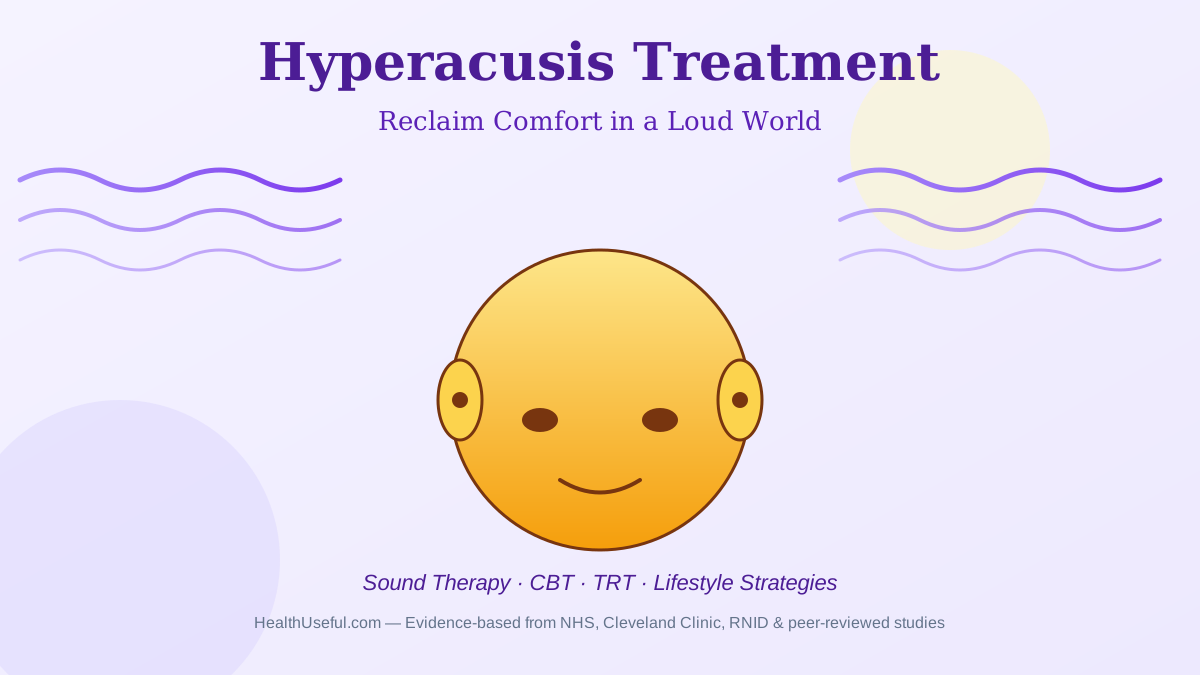
If everyday sounds — a kettle whistling, children laughing, cutlery clinking — feel painfully loud and overwhelming, you may be living with hyperacusis, a rare but deeply disruptive auditory sensory disorder. Fortunately, modern hyperacusis treatment has advanced considerably, combining sound therapy, cognitive behavioral therapy (CBT), counselling, lifestyle changes, and in rare cases surgery. This comprehensive guide walks you through every clinically proven aspect of hyperacusis treatment, from understanding the condition’s neurophysiology to building a personalised recovery plan that works. Our goal is simple: give you more useful, evidence-based information in one place than any top-ranking Google result — so you can take back control of your life, one quiet moment at a time.
What Is Hyperacusis?
📑 Table of Contents
- Introduction
- What Is Hyperacusis?
- Types of Hyperacusis
- Symptoms & Red Flags
- Causes & Risk Factors
- How Hyperacusis Is Diagnosed
- The Five Pillars of Hyperacusis Treatment
- Sound Therapy Explained
- Cognitive Behavioral Therapy (CBT)
- Tinnitus Retraining Therapy (TRT)
- Medications & Supplements
- Surgical Options
- Home & Lifestyle Strategies
- Hyperacusis in Children
- Recovery Timeline & Prognosis
- Watch: Expert YouTube Video
- Summary
- Frequently Asked Questions
- Conclusion
- Disclaimer
- References
Hyperacusis is a decreased sound tolerance (DST) condition in which ordinary environmental sounds — often below 70–80 dB — are perceived as uncomfortably loud, painful, or distressing. It is distinct from misophonia (strong emotional reaction to specific sounds like chewing) and phonophobia (fear-based avoidance of sound). According to the Cleveland Clinic and RNID (UK), roughly 1 in 50,000 people experience severe hyperacusis, but milder forms are far more common, especially alongside tinnitus. Successful hyperacusis treatment starts with recognising which type you have and ruling out treatable underlying causes.
Types of Hyperacusis
Symptoms & Red Flags
Before planning any hyperacusis treatment, it’s crucial to recognise the full symptom picture. Confirmed by the Cleveland Clinic, RNID, and NHS patient guides, common signs include:
- Everyday sounds feel painfully loud or distorted
- Ear pain, ear fullness, or pressure (otalgia)
- Co-existing tinnitus (ringing or buzzing)
- Anxiety, dread, or panic around noise
- Insomnia and difficulty concentrating
- Social withdrawal and depression
- Fatigue from constant hypervigilance
- In rare cases: balance disturbance, headache, or seizures triggered by sound
Causes & Risk Factors
No single cause explains every case, but research — summarised by the Hyperacusis Research foundation and multiple 2024 scoping reviews — points to a mix of peripheral and central nervous system changes.
Peripheral (Ear) Causes
- Noise-induced hearing loss or sudden acoustic trauma
- Ototoxic medications (certain antibiotics, chemotherapy agents, high-dose aspirin)
- Ménière’s disease
- Bell’s palsy (affecting the stapedius muscle)
- Head or ear surgery
Central (Brain) Causes
- Hyperactivity in the central auditory pathway
- Migraine and chronic headache disorders
- Post-traumatic stress disorder (PTSD)
- Autism spectrum disorder (ASD)
- Williams syndrome
- Lyme disease
- Depression and anxiety disorders
Other Contributors
- Temporomandibular joint (TMJ) dysfunction
- Stress and sleep deprivation
- Overuse of hearing protection in quiet environments (paradoxically worsens sensitivity)
How Hyperacusis Is Diagnosed
Diagnosis blends history, hearing testing, and validated questionnaires. Expect your audiologist or otolaryngologist (ENT) to run through:
Standard Clinical Workup
- Comprehensive medical history covering noise exposure, medications, and psychological context
- Otoscopy and tympanometry to exclude middle-ear pathology
- Pure-tone audiometry to measure hearing thresholds
- Loudness Discomfort Level (LDL) testing
- Uncomfortable Loudness Level (ULL) measurements
- Khalfa Hyperacusis Questionnaire (HQ) — a validated 14-item tool
- Tinnitus Handicap Inventory (THI) when tinnitus coexists
- Otoacoustic emissions (OAEs) to assess cochlear function
- Imaging (MRI/CT) if a neurological cause is suspected
The Five Pillars of Hyperacusis Treatment
Modern hyperacusis treatment is holistic. The British Society of Audiology (BSA) and American Academy of Audiology (AAA) endorse a multimodal approach — rarely one single therapy. The five evidence-based pillars are summarised below.
Sound Therapy Explained
According to a 2024 PubMed Central scoping review, sound therapy is the cornerstone of evidence-based hyperacusis treatment. It works by gradually re-training the central auditory system to accept everyday sounds as safe and non-threatening.
Common Sound Therapy Approaches
1. Pink Noise Generators
Ear-level noise generators deliver constant soft pink noise (a balanced, slightly bass-weighted sound). Daily use for 4–8 hours progressively raises LDLs.
2. Broadband White Noise
Flat-spectrum noise delivered through tabletop machines or apps while reading, working, or sleeping.
3. Fractal / Nature Sounds
Rain, waves, or specially engineered fractal music can be more pleasant and sustain longer daily use.
4. Progressive Sound Exposure
Structured hierarchy-based exposure starting at very low volumes and increasing gradually — often guided by an audiologist’s protocol.
Golden Rules for Sound Therapy
- Always keep levels below your discomfort threshold
- Consistency matters more than loudness — daily use is key
- Never use silence as a comfort zone — it worsens central gain
- Avoid routine use of earplugs in quiet rooms (reserved for genuinely loud environments)
- Expect gradual improvement over 6–18 months
Cognitive Behavioral Therapy (CBT) for Hyperacusis
CBT is the second cornerstone of hyperacusis treatment. Multiple 2024 reviews, including studies published in Frontiers in Psychiatry, show CBT raises LDLs by 10–20 dB on average and significantly lowers Hyperacusis Questionnaire scores.
Key CBT Techniques
- Cognitive restructuring: challenging unhelpful thoughts such as “sound will damage my ears”
- Graded exposure: scheduled, controlled encounters with mildly uncomfortable sounds
- Relaxation training: diaphragmatic breathing, progressive muscle relaxation
- Mindfulness-based stress reduction (MBSR)
- Behavioral activation: resuming avoided activities step by step
- Education about the fear-avoidance cycle
CBT is especially helpful for the annoyance and fear subtypes of hyperacusis. Internet-based CBT (iCBT) and app-delivered CBT are showing strong results, improving access for people unable to find local specialists.
Tinnitus Retraining Therapy (TRT)
Developed by Dr. Pawel Jastreboff, TRT blends low-level broadband sound (usually pink noise) with structured directive counselling. The goal is habituation — training your brain to classify sound as neutral background. Clinical data suggest TRT achieves meaningful improvement in roughly 70–85% of participants over 12–24 months when delivered by trained clinicians. TRT is often chosen when hyperacusis coexists with chronic tinnitus.
Medications & Supplements
There is no FDA-approved drug specifically for hyperacusis, but doctors sometimes use medications to manage related symptoms as part of a comprehensive hyperacusis treatment plan.
Medications Occasionally Used
- SSRIs (sertraline, escitalopram) — for comorbid anxiety or depression
- Low-dose amitriptyline — may help with pain-type hyperacusis and sleep
- Gabapentin — considered for pain hyperacusis in refractory cases
- Melatonin — for sleep disturbance
- Beta-blockers for autonomic symptoms (occasionally)
Supplements with Limited Evidence
- Magnesium
- Zinc
- N-acetylcysteine (NAC)
- B-complex vitamins
Always discuss supplements with your physician — some can interact with medications or worsen symptoms.
Surgical Options
Surgery is reserved for very specific causes:
- Round and oval window reinforcement — for hyperacusis caused by superior semicircular canal dehiscence (SSCD) or facial-nerve paralysis
- Stapedectomy revision if post-surgical hyperacusis is suspected
- Decompression surgery for tumours or structural lesions found on imaging
Surgical options require careful second opinions from specialist neuro-otology centres.
Home & Lifestyle Strategies
Day-to-day habits can meaningfully reinforce formal therapy. Add these pillars to your hyperacusis treatment toolbox:
Sleep Hygiene
- 7–9 hours of consistent sleep each night
- Use white noise or fractal music overnight
- Avoid screens 1 hour before bed
Stress Management
- Daily mindfulness or meditation (10–20 minutes)
- Yoga, tai chi, or gentle exercise
- Journalling or gratitude practice
Nutrition & Hydration
- Limit caffeine and alcohol — both heighten auditory arousal
- Prioritise anti-inflammatory foods: oily fish, leafy greens, berries
- Stay well hydrated
Social & Vocational Support
- Hyperacusis peer support groups (RNID, Hyperacusis Research, online forums)
- Workplace accommodations: quieter desk, meeting breaks, noise-filtering musician earplugs for genuinely loud environments
- Open communication with family and friends about triggers
Safe vs Unsafe Hearing Protection
A critical nuance: musician’s filter earplugs (e.g., ER-20, ER-25) are safer than foam plugs because they reduce volume evenly without blocking all sound. Overusing foam plugs in quiet environments can worsen hyperacusis by increasing central gain.
Hyperacusis in Children
Children with hyperacusis — especially those on the autism spectrum, with Williams syndrome, or with sensory processing difficulties — benefit from gentler, play-based approaches:
- Progressive exposure to quiet, pleasant sounds
- Noise-cancelling headphones only for genuinely loud environments
- Occupational therapy integration
- School accommodations and parent counselling
- Avoiding over-protection — social isolation can worsen outcomes
Recovery Timeline & Prognosis
| Timeline | What to Expect |
|---|---|
| Weeks 1–4 | Assessment, education, start sound therapy & CBT |
| Months 1–3 | Early LDL improvement; begin graded exposure |
| Months 3–6 | Noticeable drop in avoidance; improved sleep & mood |
| Months 6–18 | Significant habituation; return to normal activities |
| 18+ months | Many achieve near-complete tolerance; relapse-prevention plan |
Prognosis depends on cause, severity, consistency with therapy, and comorbidities. Mild to moderate hyperacusis responds well to a structured hyperacusis treatment program; severe pain-type hyperacusis may require long-term multidisciplinary management.
Watch: Expert YouTube Video on Hyperacusis Treatment
For a comprehensive visual explanation by leading audiologists and ENT specialists, watch this freely available educational video:
👉 Watch on YouTube: “Hyperacusis Treatment — Explained by an Audiologist”
Summary
Hyperacusis is a decreased sound-tolerance condition that can cause everyday sounds to feel painfully loud. Effective hyperacusis treatment is multimodal and tailored, built on five evidence-based pillars: patient education, structured sound therapy, cognitive behavioral therapy, lifestyle optimisation, and medical treatment of any underlying cause. Sound therapy and TRT retrain the central auditory system; CBT reduces the fear-avoidance cycle; healthy sleep, nutrition, and stress management speed recovery. Severe cases may require medication or, rarely, surgery. Most people experience significant improvement within 6–18 months of consistent, structured care, especially when guided by an audiologist or ENT.
Frequently Asked Questions (FAQs)
Q1. Can hyperacusis be cured?
There is no single cure, but comprehensive hyperacusis treatment can produce dramatic, sometimes near-complete, improvement, especially for mild-to-moderate cases.
Q2. How long does hyperacusis treatment take?
Most people see meaningful progress within 3–6 months, with full habituation often achieved between 12 and 24 months of consistent therapy.
Q3. Is sound therapy safe?
Yes, when properly titrated below your discomfort threshold. Working with a trained audiologist greatly improves safety and outcomes.
Q4. Should I wear earplugs all the time?
No. Routine use in quiet rooms can worsen hyperacusis by increasing central auditory gain. Use musician’s filter earplugs only in genuinely loud environments.
Q5. Can tinnitus and hyperacusis be treated together?
Yes. TRT and CBT target both conditions simultaneously, which is why they’re often first-line choices in combined hyperacusis treatment.
Q6. Can hyperacusis go away on its own?
Mild noise-induced hyperacusis sometimes improves spontaneously, but structured therapy accelerates recovery and prevents chronification.
Q7. Is hyperacusis a mental health condition?
No. It is a neurophysiological auditory disorder, though it often triggers anxiety or depression that benefit from psychological support.
Q8. Are there medications for hyperacusis?
No drug is approved specifically for hyperacusis. Medications may address co-existing anxiety, pain, or sleep problems within a broader hyperacusis treatment plan.
Q9. Can diet affect hyperacusis?
Caffeine, alcohol, and dehydration can heighten sound sensitivity in some people. Anti-inflammatory, balanced nutrition supports recovery.
Q10. Is online CBT effective for hyperacusis?
Emerging evidence shows internet-based CBT reduces symptoms significantly, improving access for people unable to see specialists in person.
Conclusion
Living with hyperacusis can feel isolating, exhausting, and frightening — but it is also treatable. Modern hyperacusis treatment blends evidence-based sound therapy, CBT, lifestyle optimisation, and medical care into a stepwise, personalised recovery plan. Consistency matters more than intensity: small, daily, controlled exposures gradually re-teach your brain that sound is safe. If you’ve been avoiding gatherings, children’s voices, music, or kitchens because of ear pain or overload, don’t suffer in silence. Reach out to an audiologist or ENT, start a structured plan, and remember that most people — regardless of severity — can rebuild tolerance and reclaim a fuller, quieter life.
Disclaimer
Medical Disclaimer: This article is for informational and educational purposes only and does not constitute medical advice, diagnosis, or treatment. Information on hyperacusis treatment is drawn from peer-reviewed research and recognised medical institutions, but every individual’s clinical situation is unique. Always consult a qualified otolaryngologist (ENT), audiologist, or primary care provider for personalised diagnosis and a treatment plan. Never ignore professional medical advice or delay seeking it because of anything you have read here. In the event of a medical emergency, call your local emergency number immediately. HealthUseful.com and the authors do not assume liability for any outcomes resulting from use of the information in this article.
References
- Cleveland Clinic. Hyperacusis. clevelandclinic.org
- South Warwickshire NHS Foundation Trust. Hyperacusis Patient Information. swft.nhs.uk
- NHS NI Direct. Hyperacusis. nidirect.gov.uk
- NHS 111 Wales. Hyperacusis (Noise Sensitivity). 111.wales.nhs.uk
- RNID (UK). Hyperacusis Information & Support. rnid.org.uk
- Thieren L, et al. Current Recommendations for the Use of Sound Therapy in Adults with Hyperacusis: A Scoping Review. PMC. 2024. PubMed Central
- Frontiers in Psychiatry. Cognitive Behavioural Therapy for Hyperacusis: A Systematic Review. 2024. frontiersin.org
- British Society of Audiology. Guidelines for Sound Therapy in Hyperacusis. thebsa.org.uk
- UCSF EARS. Sound Sensitivity (& Hyperacusis): What It Is & How to Protect Your Ears Safely. ears.ucsf.edu
- Jastreboff PJ, Hazell JWP. Tinnitus Retraining Therapy: Implementing the Neurophysiological Model. Cambridge University Press.
- Khalfa S, et al. Psychometric Normalization of a Hyperacusis Questionnaire. ORL. 2002.
- WHO. Prevention of Hearing Loss and Ear Diseases. who.int
© 2026 HealthUseful.com — Found this guide helpful? Share it with someone struggling with sound sensitivity.