Last medically reviewed: October 12, 2026
Introduction
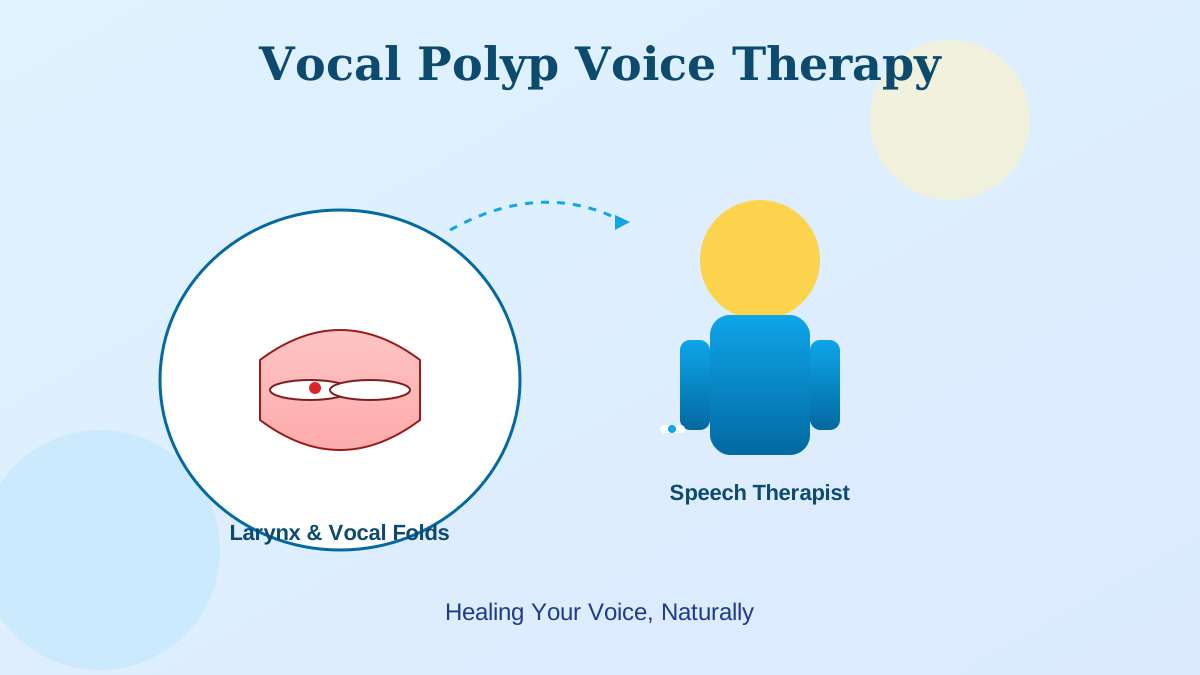
A persistent raspy voice, unexplained hoarseness, or that nagging feeling of a “lump” in your throat can be more than simple fatigue — it may be a vocal fold polyp. These benign, blister-like lesions sit on the delicate vocal cord mucosa and quietly change how you sound, speak, and sing. Fortunately, you don’t always need the operating theatre to recover. Vocal polyp voice therapy is a well-established, evidence-based, non-surgical pathway that trains your voice to heal, strengthen, and perform again. In this comprehensive guide, we unpack every clinically proven aspect of vocal polyp voice therapy, from causes to recovery, so you can make informed decisions about your voice health.
What Is a Vocal Polyp?
📑 Table of Contents
- Introduction
- What Is a Vocal Polyp?
- Causes & Risk Factors
- Signs & Symptoms
- How Vocal Polyps Are Diagnosed
- Voice Therapy Explained
- Techniques Used in Vocal Polyp Voice Therapy
- Who Benefits Most?
- Timeline, Expectations & Recovery
- Voice Therapy vs. Surgery
- Lifestyle & Vocal Hygiene Tips
- Watch: Expert YouTube Video
- Summary
- Frequently Asked Questions
- Conclusion
- Disclaimer
- References
A vocal polyp is a benign (non-cancerous) soft tissue growth on the vocal folds, the two bands of muscle inside your larynx that vibrate to produce sound. According to the Cleveland Clinic and the American Speech-Language-Hearing Association (ASHA), polyps resemble a small blister or stalk-like bump and typically develop on one vocal fold, though bilateral polyps can occur. Unlike vocal nodules (which are more like calluses on both cords), polyps are usually larger, softer, and more fluid-filled. Early intervention through vocal polyp voice therapy can prevent the lesion from worsening and often restore voice quality without surgery.
How Vocal Polyps Differ from Nodules and Cysts
Benign vocal fold lesions fall into three main categories: polyps, nodules, and cysts. The table below summarizes the critical differences important for understanding vocal polyp voice therapy candidacy.
| Feature | Polyp | Nodule | Cyst |
|---|---|---|---|
| Location | Usually one side | Both sides, symmetric | Deep in mucosa, one side |
| Appearance | Blister-like, soft, red | Callus-like, firm, white | Fluid-filled sac |
| Cause | Often a single trauma | Chronic vocal abuse | Blocked gland or congenital |
| Response to Therapy | Moderate to good (small/soft) | Excellent | Poor — usually needs surgery |
Causes & Risk Factors
Most vocal fold polyps develop from a combination of acute injury and chronic irritation. The NHS Royal Berkshire Foundation Trust and Merck Manual highlight the following as leading contributors:
- Phonotrauma: a single episode of shouting, screaming, loud singing, or forceful coughing can rupture tiny capillaries inside the vocal cord, causing a hemorrhagic polyp.
- Chronic vocal misuse: habitual throat clearing, speaking too loudly, or using an unnatural pitch.
- Smoking and vaping: irritate the laryngeal mucosa and increase inflammation.
- Laryngopharyngeal reflux (LPR): stomach acid rising into the throat damages the vocal cord lining.
- Allergies, asthma, and respiratory infections: cause chronic coughing and inflammation.
- Hormonal and endocrine disorders: including hypothyroidism.
- Environmental pollutants: fumes, dust, and chemicals.
- Dehydration, caffeine, and alcohol: dry out the delicate vocal fold tissue.
Understanding your personal risk profile is the first step in any successful vocal polyp voice therapy program, because a therapist tailors treatment to the root cause.
Signs & Symptoms
Symptoms often develop gradually, which is why many people ignore the early warning signs. Common indicators that may prompt a referral for vocal polyp voice therapy include:
- Persistent hoarseness or dysphonia lasting longer than two to three weeks
- A rough, raspy, or breathy voice
- Reduced vocal range, especially trouble with higher pitches
- Vocal fatigue after short periods of talking
- Sensation of a lump or something stuck in the throat (globus sensation)
- Neck or ear pain radiating from the throat
- Frequent throat clearing
- Voice that cracks or cuts out mid-sentence
- Needing extra effort to project
When to See a Doctor
Any hoarseness lasting more than three weeks should be evaluated by an otolaryngologist (ENT), especially for smokers or heavy voice users. Early assessment improves the success rate of vocal polyp voice therapy dramatically.
How Vocal Polyps Are Diagnosed
Diagnosis combines a careful medical history with specialized visualization of the larynx. The gold-standard investigations include:
Clinical Examination Methods
- Laryngoscopy: a thin, flexible scope with a camera is passed through the nose to view the vocal folds in real time.
- Videostroboscopy: a strobe light synchronized with your voice reveals the mucosal wave and vibration pattern, highlighting lesions missed on standard scopes.
- Acoustic voice analysis: software measures jitter, shimmer, harmonic-to-noise ratio (HNR), and maximum phonation time (MPT).
- Aerodynamic assessment: measures airflow and subglottic pressure during voicing.
- Voice Handicap Index (VHI-10 or VHI-30): a self-report questionnaire quantifying how the voice affects your daily life.
- GRBAS scale: perceptual rating of Grade, Roughness, Breathiness, Asthenia, and Strain.
These measurements establish a baseline, so progress through vocal polyp voice therapy can be objectively tracked over the weeks that follow.
What Is Voice Therapy? Its Role in Managing Vocal Polyps
Voice therapy — also called behavioral voice therapy — is a specialized rehabilitation delivered by a certified speech-language pathologist (SLP) or voice-focused SLP. Think of it as physiotherapy for your phonatory system. According to a 2023 systematic review and meta-analysis published in the Journal of Clinical Medicine, behavioral voice therapy, phonosurgery, and combined treatment all produce measurable improvements, with combined treatment yielding the best results for hoarseness, jitter, shimmer, and MPT. For small, soft, or recent polyps, vocal polyp voice therapy alone can resolve the lesion in 30% to nearly 50% of cases.
Infographic: How Vocal Polyp Voice Therapy Works
Techniques Used in Vocal Polyp Voice Therapy
No two voices are identical, so a voice therapist blends several evidence-based approaches. Here are the techniques most commonly used in a modern vocal polyp voice therapy program, drawn from peer-reviewed literature and ASHA practice guidelines.
1. Indirect (Educational) Techniques
These lay the behavioral foundation before any voicing exercise begins.
Vocal Hygiene Program
- Drink at least 1.5–2 litres of water daily to keep the mucosal surface moist.
- Limit caffeine and alcohol, both of which dehydrate.
- Stop smoking and avoid secondhand smoke.
- Treat LPR reflux with diet, head-of-bed elevation, and medication when indicated.
- Reduce background-noise shouting (restaurants, stadiums, crowded rooms).
- Use a microphone during presentations or singing performances.
Vocal Rest
In the early days of vocal polyp voice therapy, your SLP may recommend relative voice rest: speak softly, briefly, and only when needed. Complete voice rest is generally reserved for post-operative recovery.
2. Direct (Hands-On) Techniques
These exercises retrain how your voice is produced at the muscular and aerodynamic level.
Semi-Occluded Vocal Tract (SOVT) Exercises
SOVT is the backbone of modern vocal polyp voice therapy. By partially blocking the airway at the lips, you create back-pressure that balances the vocal folds and reduces impact stress. Common SOVT exercises include:
- Straw phonation (Lax Vox): humming through a thin straw into air or water. Research by Ramathibodi Hospital shows measurable improvement in jitter and shimmer after short-term straw therapy in benign vocal fold lesions.
- Lip trills (lip bubbles): vibrating the lips while sustaining a tone.
- Tongue trills: rolling an “R” while phonating.
- Humming on /m/, /n/, /ng/: resonant hums that gently engage the folds.
Resonant Voice Therapy (RVT)
Developed by Dr. Katherine Verdolini Abbott, this method focuses on vibrations felt in the front of the face (the “mask”). Resonant voice therapy within vocal polyp voice therapy teaches minimum effort and maximum output — ideal for voices under strain.
Vocal Function Exercises (VFE)
Created by Dr. Joseph Stemple, VFE is a four-exercise regimen (warm-up, stretch, contract, power) performed twice daily. It conditions the intrinsic laryngeal muscles like a workout program for your voice.
Confidential Voice
A soft, breathy, slightly elevated-pitch style used short-term to reduce vocal fold collision force.
Flow Phonation
Combines sustained airflow with gentle onset to minimize impact on the lesion.
Manual Laryngeal Therapy
A trained SLP uses external neck massage and circumlaryngeal release to reduce extrinsic muscle tension around the larynx.
3. Behavioral & Lifestyle Modifications
- Replace throat clearing with a silent swallow or sip of water.
- Pace speaking: pause for breath more often.
- Monitor loudness with a smartphone decibel app.
- Use voice-amplification devices in classrooms or large rooms.
- Build a daily voice warm-up and cool-down routine, especially for teachers, singers, and public speakers.
Who Benefits Most from Vocal Polyp Voice Therapy?
Research published by Duke University (Cohen & Garrett) found that nearly half of patients with vocal fold polyps and cysts achieved symptom resolution with voice therapy alone. Response rates were especially high — around 82% — for small, translucent polyps compared to only 15% for fibrotic or hyaline polyps.
Infographic: Ideal Candidates for Vocal Polyp Voice Therapy
Timeline, Expectations & Recovery
Most patients attend between 6 and 16 sessions of vocal polyp voice therapy, typically once or twice a week, with daily home practice. Early improvements in vocal effort and comfort can appear within 2–3 weeks, while objective acoustic improvements (jitter, shimmer, MPT) often become apparent by 6–8 weeks.
What a Typical Session Looks Like
- Warm-up (5 minutes): gentle breathing and relaxation
- SOVT exercises (10–15 minutes): straw phonation, lip trills
- Resonance work (10 minutes): humming, chant speech
- Carryover tasks (10–15 minutes): sentences, reading, conversation
- Review and home-practice plan (5 minutes)
Measuring Progress
Throughout vocal polyp voice therapy, your clinician will repeat stroboscopy, VHI-10, and acoustic measurements. If significant polyp regression is seen on scope and voice quality improves, therapy continues. If no change occurs after 6–12 weeks, surgical options are revisited.
Voice Therapy vs. Surgery: Making an Informed Choice
| Factor | Voice Therapy | Phonomicrosurgery |
|---|---|---|
| Invasiveness | Non-invasive | Microsurgical, under general anesthesia |
| Downtime | None | 1–2 weeks of voice rest |
| Best For | Small, soft, recent polyps | Large, fibrotic, chronic polyps |
| Risk of Scarring | None | Low but possible |
| Recurrence Risk | Low if habits sustained | Possible without follow-up therapy |
| Cost | Lower overall | Higher (surgical fees + therapy) |
Current clinical guidelines, including a 2018 study published in European Archives of Oto-Rhino-Laryngology, show that combined treatment (CT) — pre-operative vocal polyp voice therapy followed by surgery and post-operative therapy — produces superior results compared with either option alone.
Lifestyle & Vocal Hygiene Tips
Lifestyle plays an outsized role in both outcome and relapse prevention after vocal polyp voice therapy. Follow these evidence-based tips endorsed by the NHS, ASHA, and Cleveland Clinic.
Daily Habits for Vocal Longevity
Hydration & Humidification
- Sip water throughout the day — aim for pale, straw-colored urine.
- Use a humidifier at night (40–50% humidity).
- Steam inhalation for 5–10 minutes once or twice daily.
Nutrition
- Avoid late-night meals that trigger reflux.
- Limit spicy, fried, and acidic foods if you have LPR.
- Watch chocolate, peppermint, and carbonated drinks.
Sleep & Stress
- Prioritize 7–9 hours of restorative sleep.
- Consider yoga, mindfulness, or meditation to lower muscle tension.
Smart Voice Use
- Use eye contact and gestures to avoid shouting across rooms.
- Warm up before performances with 5–10 minutes of SOVT.
- Rest your voice during colds and upper respiratory infections.
Pro Tip
Keep a reusable thin straw in your pocket. A 3-minute “straw tune-up” between classes or calls primes your voice and reinforces the gains from vocal polyp voice therapy.
Watch: Expert YouTube Video on Vocal Polyp Voice Therapy
For a visual walkthrough from leading laryngologists and voice-focused SLPs, we recommend the following freely available educational video:
👉 Watch on YouTube: “Vocal Polyp Voice Therapy — Explained by a Speech Pathologist”
Summary
Vocal polyps are benign, blister-like growths on the vocal folds, usually caused by phonotrauma, chronic misuse, smoking, reflux, or allergies. They cause hoarseness, breathiness, and vocal fatigue. Vocal polyp voice therapy — delivered by a certified speech-language pathologist — is a non-surgical, evidence-based treatment that combines vocal hygiene, behavioral change, and direct voice exercises such as SOVT, resonant voice therapy, and vocal function exercises. For small, soft, early polyps the therapy alone may resolve the lesion; for larger or fibrotic polyps, therapy is paired with phonomicrosurgery. Combined treatment delivers the best long-term outcomes.
Frequently Asked Questions (FAQs)
Q1. Can vocal polyp voice therapy actually make a polyp disappear?
Yes, in many cases — especially when the polyp is small, soft, translucent, and recent. Studies show symptom resolution rates between 30% and 82% depending on polyp type. Even when the polyp doesn’t disappear completely, vocal polyp voice therapy can prevent progression and reduce symptoms significantly.
Q2. How long does vocal polyp voice therapy take?
Most patients complete therapy in 6 to 16 sessions over 2 to 6 months. Noticeable improvement often begins within 2–4 weeks of consistent practice.
Q3. Is voice therapy painful?
No. Properly delivered vocal polyp voice therapy should never be painful. In fact, discomfort during exercises is a sign that technique needs adjusting.
Q4. Can I keep working if I’m a teacher or singer during therapy?
Often yes, but with modifications. Your SLP will teach you energy-saving voice techniques, amplification strategies, and pacing. Short-term vocal rest periods may be recommended.
Q5. Do I still need voice therapy if I’m having surgery?
Yes. Current evidence strongly supports both pre-operative and post-operative vocal polyp voice therapy. It accelerates healing, prevents recurrence, and optimizes final voice quality.
Q6. Can children have vocal polyps and get voice therapy?
Children more commonly develop nodules than polyps, but when polyps do occur, pediatric vocal polyp voice therapy is effective and non-invasive. Family involvement is key.
Q7. Will my voice ever sound the same again?
Most patients regain their natural, healthy voice. Early diagnosis plus adherence to vocal polyp voice therapy and vocal hygiene are the strongest predictors of full recovery.
Q8. Can I do voice therapy online?
Yes. Teletherapy is well established and effective for vocal polyp voice therapy, provided the SLP is licensed in your region and you have a reliable camera and microphone.
Q9. What causes vocal polyps to come back?
Returning to the behaviors that caused the polyp — shouting, smoking, untreated reflux — is the leading cause of recurrence. Lifelong vocal hygiene is essential.
Q10. Are vocal polyps cancerous?
No. Vocal polyps are benign (non-cancerous). However, any hoarseness lasting over three weeks should always be evaluated by an ENT to rule out other conditions.
Conclusion
A vocal polyp doesn’t have to end your speaking or singing career. With early diagnosis, a committed partnership with a certified SLP, and consistent home practice, vocal polyp voice therapy offers a scientifically validated, non-invasive path back to a healthy, resonant voice. Whether used alone for small, soft polyps or as part of a combined treatment plan with phonosurgery, vocal polyp voice therapy addresses the root causes, retrains vocal behavior, and gives you lifelong tools to protect your voice. If you’ve been hoarse for more than three weeks, consult an otolaryngologist and ask for a referral to a voice-focused SLP — your voice is worth it.
Disclaimer
Medical Disclaimer: This article is for informational and educational purposes only and does not constitute medical advice, diagnosis, or treatment. Information on vocal polyp voice therapy is drawn from peer-reviewed research and recognized medical institutions, but every individual’s clinical situation is unique. Always consult a qualified otolaryngologist (ENT), laryngologist, or certified speech-language pathologist (SLP) for personalized diagnosis and a treatment plan. Never ignore professional medical advice or delay seeking it based on anything you have read on this website. In the event of a medical emergency, call your local emergency number immediately. HealthUseful.com and the authors do not assume liability for any outcomes resulting from the use of information in this article.
References
- American Speech-Language-Hearing Association (ASHA). Vocal Cord Nodules and Polyps. asha.org
- Cleveland Clinic. Vocal Cord Lesions: Nodules, Polyps and Cysts. clevelandclinic.org
- NHS Royal Berkshire Foundation Trust. Vocal Fold Polyps Patient Leaflet, 2023. royalberkshire.nhs.uk
- Cohen SM, Garrett CG. Utility of Voice Therapy in the Management of Vocal Fold Polyps and Cysts. Otolaryngol Head Neck Surg. Duke Scholars
- Kaneko M, et al. The Efficacy of Different Voice Treatments for Vocal Fold Polyps: A Systematic Review and Meta-Analysis. J Clin Med. 2023. PubMed Central
- Jiang W, et al. Effect of Voice Therapy on Vocal Fold Polyp Treatment. European Archives of Oto-Rhino-Laryngology, 2018.
- Merck Manual Professional. Vocal Cord Polyps, Nodules, and Granulomas. msdmanuals.com
- Beth Israel Deaconess Medical Center (BIDMC). Vocal Fold Lesions (Polyps, Nodules, Cysts). bidmc.org
- Ramathibodi Hospital, Mahidol University. Efficacy of Straw Phonation Exercises with Breathing Exercises for Benign Vocal Fold Lesions.
- Northwestern Medicine. Vocal Cord Polyp and Nodule Treatments. nm.org
- SciELO. Effectiveness of Speech Therapy for Vocal Fold Polyps: Literature Review. scielo.br
© 2026 HealthUseful.com — Found this guide helpful? Share it with someone who’s struggling with voice problems.