What Is the Number One Cause of Nasal Polyps? (Complete ENT Specialist Guide)
Author: Dr. Sagar Rajkuwar (MS ENT), ENT Specialist, Nashik, India
🌐 www.entspecialistinnashik.com
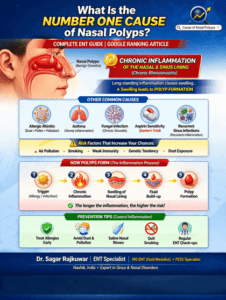
Table of Contents
- Introduction
- What Are Nasal Polyps?
- What Is the Number One Cause of Nasal Polyps? (Direct Answer)
- How Chronic Inflammation Leads to Polyps
- Other Common Causes of Nasal Polyps
- Risk Factors That Increase Your Chances
- Symptoms Linked to the Underlying Cause
- Role of Allergies and Immunity
- Diagnosis and Evaluation
- Treatment Based on Cause
- Can Nasal Polyps Be Prevented?
- FAQs
- Conclusion
- Medical Disclaimer
1. Introduction
Nasal polyps are a common condition seen in ENT practice, yet many patients ask:
👉 “What is the number one cause of nasal polyps?”
Understanding the root cause is essential—not only for treatment but also for preventing recurrence.
In this article, in-depth guide, you will learn:
- The primary cause of nasal polyps
- How they develop
- What factors increase your risk
- How to manage and prevent them
2. What Are Nasal Polyps?
Nasal Polyps are soft, non-cancerous growths that develop in the lining of the nose or sinuses.
Key Features:
- Painless, soft, jelly-like
- Usually occur on both sides
- Associated with long-term inflammation
Common Symptoms:
- Nasal blockage
- Runny nose
- Loss of smell
- Postnasal drip
3. What Is the Number One Cause of Nasal Polyps? (Direct Answer)
👉 The number one cause of nasal polyps is chronic inflammation of the nasal and sinus lining.
This condition is medically known as:
Chronic Rhinosinusitis
Why is this the main cause?
- Persistent inflammation causes swelling of the mucosa
- Over time, this swelling forms polypoidal growths
- The longer the inflammation continues, the higher the risk of polyp formation
👉 In simple terms:
Long-standing irritation + inflammation = nasal polyps
4. How Chronic Inflammation Leads to Polyps
Step-by-Step Process:
- Trigger (allergy/infection/irritant)
- Persistent inflammation
- Swelling of nasal lining
- Fluid accumulation
- Formation of soft growth (polyp)
Important Insight:
- Inflammation weakens the mucosal barrier
- Leads to abnormal tissue growth
📞 ENT Consultation & Surgery
Dr. Sagar Rajkuwar (MS-ENT)
Prabha ENT Clinic, Ambad, Nashik
📱 7387590194 | 9892596635
🌐 www.entspecialistinnashik.com
5. Other Common Causes of Nasal Polyps
Although chronic inflammation is the main cause, several conditions contribute:
🔹 1. Allergic Rhinitis
Allergic Rhinitis
- Caused by dust, pollen, pollution
- Leads to repeated irritation
🔹 2. Asthma
- Strongly associated with nasal polyps
- Inflammation affects both lungs and sinuses
🔹 3. Fungal Infections
- Chronic fungal sinusitis can trigger polyp formation
🔹 4. Aspirin Sensitivity (Samter’s Triad)
- Combination of:
- Asthma
- Nasal polyps
- Aspirin intolerance
🔹 5. Recurrent Sinus Infections
- Frequent infections maintain inflammation
6. Risk Factors That Increase Your Chances
Certain factors make you more prone:
- Air pollution (common in urban India)
- Smoking
- Weak immunity
- Genetic predisposition
- Occupational exposure (dust, chemicals)
7. Symptoms Linked to the Underlying Cause
Symptoms often reflect the cause:
In Allergic Cases:
- Sneezing
- Itchy nose
In Infection Cases:
- Thick nasal discharge
- Fever
In Advanced Cases:
- Complete nasal blockage
- Loss of smell
8. Role of Allergies and Immunity
The immune system plays a major role.
Key Mechanism:
- Overactive immune response → inflammation → polyp formation
Important Cells:
- Eosinophils (in allergic patients)
👉 This is why polyps are more common in:
- Asthma patients
- Allergy sufferers
9. Diagnosis and Evaluation
ENT Specialist Assessment Includes:
1. Nasal Endoscopy
- Direct visualization
2. CT Scan (PNS)
- Extent of sinus involvement
3. Allergy Testing
- Identifies triggers
10. Treatment Based on Cause
1. Medical Treatment:
- Steroid nasal sprays (reduce inflammation)
- Antihistamines (for allergies)
- Antibiotics (if infection present)
2. Surgical Treatment:
- Functional Endoscopic Sinus Surgery (FESS)
Important:
Surgery removes polyps, but does not cure the underlying cause.
11. Can Nasal Polyps Be Prevented?
Yes, by controlling inflammation:
Prevention Tips:
- Treat allergies early
- Avoid dust and pollution
- Use saline nasal rinses
- Quit smoking
- Regular ENT follow-up
12. Frequently Asked Questions (FAQs)
1. What is the main cause of nasal polyps?
Chronic inflammation of the nasal lining.
2. Are nasal polyps caused by infection?
Sometimes, but not always.
3. Can stress cause nasal polyps?
No direct link, but may affect immunity.
4. Do nasal polyps go away on their own?
Rarely; treatment is usually needed.
13. Conclusion
👉 The number one cause of nasal polyps is chronic inflammation of the nose and sinuses.
Final Takeaway:
✔ Control inflammation to prevent polyps
✔ Treat underlying conditions early
✔ Regular ENT care reduces recurrence
14. Medical Disclaimer
This article is for educational purposes only and does not replace professional medical advice. Always consult a qualified ENT specialist for proper diagnosis and treatment.