When to Worry About a Nasal Polyp? (Complete ENT Specialist Guide)
Author: Dr. Sagar Rajkuwar (MS ENT), ENT Specialist, Nashik, India
🌐 www.entspecialistinnashik.com
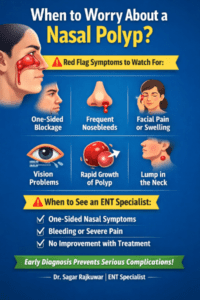
Table of Contents
-
Introduction
-
What Is a Nasal Polyp?
-
Are Nasal Polyps Dangerous?
-
When Should You Worry About a Nasal Polyp? (Direct Answer)
-
Red Flag Symptoms You Must Not Ignore
-
Benign vs Suspicious Nasal Growths
-
Causes of Nasal Polyps
-
Risk Factors for Serious Conditions
-
Diagnosis and Evaluation
-
When Is a Biopsy Needed?
-
Treatment Options
-
Complications If Ignored
-
Prevention Tips
-
FAQs
-
Conclusion
-
Medical Disclaimer
1. Introduction
Many patients diagnosed with nasal polyps ask a very important question:
👉 “When should I worry about a nasal polyp?”
While most nasal polyps are harmless, certain symptoms and situations require urgent medical attention. Knowing the difference between a simple polyp and a potentially serious condition can help prevent complications.
2. What Is a Nasal Polyp?
Nasal Polyps are soft, non-cancerous growths that develop inside the nasal passages or sinuses due to chronic inflammation.
Key Features:
-
Smooth, soft, pale
-
Painless
-
Usually occur on both sides (bilateral)
Common Symptoms:
-
Nasal blockage
-
Runny nose
-
Loss of smell
-
Postnasal drip
3. Are Nasal Polyps Dangerous?
✅ Short Answer:
Most nasal polyps are NOT dangerous.
They are:
-
Benign
-
Non-cancerous
-
Slow-growing
👉 However, problems arise when:
-
Symptoms become severe
-
Complications develop
-
The growth is not actually a polyp
4. When Should You Worry About a Nasal Polyp? (Direct Answer)
👉 You should worry about a nasal polyp if you experience:
-
One-sided nasal blockage
-
Frequent nosebleeds
-
Facial pain or swelling
-
Vision problems
-
Rapid growth of the polyp
-
Symptoms not improving with treatment
These signs may indicate a more serious condition that needs immediate evaluation.
📞 ENT Consultation & Surgery
Dr. Sagar Rajkuwar (MS-ENT)
Prabha ENT Clinic, Ambad, Nashik
📱 7387590194 | 9892596635
🌐 www.entspecialistinnashik.com
5. 🚨 Red Flag Symptoms You Must Not Ignore
Here are the most important warning signs:
🔴 1. One-Sided Nasal Blockage
-
Persistent blockage in only one nostril
-
Especially in adults
👉 This is the most critical warning sign
🔴 2. Frequent Nosebleeds
-
Recurrent bleeding
-
Blood-stained discharge
👉 Polyps rarely bleed—this needs evaluation
🔴 3. Facial Pain or Swelling
-
Pain around cheeks, eyes, or forehead
-
Swelling on one side
🔴 4. Vision Changes
-
Blurred or double vision
-
Eye swelling
🔴 5. Loss of Smell (Sudden or One-Sided)
-
Especially if worsening
🔴 6. Severe Headache
-
Persistent and deep
-
Not responding to medication
🔴 7. Rapid Growth
-
Polyp increasing in size quickly
🔴 8. Lump in the Neck
-
Enlarged lymph nodes
6. Benign vs Suspicious Nasal Growths
| Feature | Benign Polyp | Suspicious Growth |
|---|---|---|
| Side | Both sides | One side |
| Bleeding | Rare | Common |
| Pain | No | Yes |
| Growth | Slow | Rapid |
| Response to meds | Good | Poor |
Important Condition:
Sinonasal Cancer
Some cancers can mimic polyps, especially early on.
7. Causes of Nasal Polyps
Nasal polyps develop due to chronic inflammation.
Common Causes:
-
Chronic sinusitis
-
Allergic rhinitis
-
Asthma
-
Fungal infections
8. Risk Factors for Serious Conditions
Certain factors increase the risk of complications:
-
Smoking
-
Pollution exposure
-
Occupational chemicals
-
Weak immunity
-
Age > 50 years
9. Diagnosis and Evaluation
ENT Specialist Evaluation Includes:
1. Nasal Endoscopy
-
Direct visualization
2. CT Scan (PNS)
-
Shows extent of disease
3. MRI (if needed)
-
For suspected complications
10. When Is a Biopsy Needed?
👉 A biopsy is required if:
-
Growth is unilateral
-
Bleeding is present
-
Appearance is suspicious
-
No response to treatment
👉 This confirms whether the tissue is benign or malignant.
11. Treatment Options
1. Medical Treatment:
-
Steroid nasal sprays
-
Oral steroids
-
Antihistamines
2. Surgical Treatment:
-
Functional Endoscopic Sinus Surgery (FESS)
Goals:
-
Remove polyps
-
Restore breathing
-
Prevent recurrence
12. Complications If Ignored
Untreated nasal polyps can lead to:
-
Chronic sinus infections
-
Breathing difficulty
-
Sleep disturbances
-
Reduced quality of life
Rarely:
-
Spread of infection to nearby structures
13. Prevention Tips
-
Treat allergies early
-
Avoid pollutants
-
Use saline nasal rinse
-
Follow ENT advice
-
Regular check-ups
14. Frequently Asked Questions (FAQs)
1. Can nasal polyps become cancer?
No, they do not turn into cancer.
2. Are nasal polyps serious?
Usually no, but symptoms matter.
3. When is surgery needed?
When medicines fail or symptoms are severe.
4. Can polyps go away on their own?
Rarely; treatment is usually needed.
15. Conclusion
👉 Most nasal polyps are harmless and not a cause for concern.
However, you should worry if:
-
Symptoms are one-sided
-
There is bleeding
-
Pain or swelling is present
Final Takeaway:
✔ Bilateral, painless polyps → usually safe
✔ Unilateral, bleeding growth → needs urgent evaluation
✔ Early diagnosis prevents serious complications
16. Medical Disclaimer
This article is for educational purposes only and does not replace professional medical advice. Always consult a qualified ENT specialist for proper diagnosis and treatment.
✅ Read the full medical guide here:
By Dr. Sagar Rajkuwar (MS-ENT)
ENT Specialist – Nashik, Maharashtra, India