What are the 7 main symptoms of an allergic reaction?
Table of Contents
- (1)Introduction
- (2)What constitutes an allergic reaction?
- (3)Grasping the Seven Most Frequent Allergy Symptoms
- (4)Tests and diagnosis
- (5)Administration and therapy
- (6)Outlook / Prognosis
- (7)Prevention
- (8)Cold vs Allergies: How to tell the difference
- (9)FAQs About Allergic Reactions
- (10)Conclusion
7 Main Symptoms of an Allergic Reaction: Early Warning Signs You Should Never Ignore
-By ENT Specialist – Dr. Sagar Rajkuwar, Nashik, Maharashtra, India
Clinic Website:-www.entspecialistinnashik.com
(1)Introduction
Millions of children and adults around the world experience allergic reactions, which are very common. While some symptoms can be treated at home and are not severe, others can be fatal if left untreated. Understanding the warning indicators will enable you to respond swiftly and avoid significant consequences such as anaphylaxis.
This comprehensive guide will cover the seven most frequent signs of allergic responses, their causes, when to be concerned, and how to get assistance. This article will help you recognize and control reactions more confidently if you or someone you know suffers from allergies often.
Allergies
Allergies occur when your immune system overreacts to something that is typically harmless, such as pollen, pet dander, or certain foods. Possible symptoms include vomiting, dyspnea, sneezing, and a runny nose. There are certain drugs that can help alleviate your symptoms if you are unable to avoid allergens.
What is an allergy?
An allergy is your immune system’s excessive response to outside materials. When you eat, breathe, or touch anything to which you are allergic, your body believes it to be dangerous and responds by attempting to eliminate it. It may result in little responses like itching, sniffling, and sneezing. However, allergic reactions can occasionally cause low blood pressure (anaphylaxis) and life-threatening airway edema.
You may have an allergy to practically anything, including foods, medicines, pollen, and animals. A few folks have allergies that are just bothersome. Others must make radical changes to their lifestyles in order to prevent responses.
(2)What constitutes an allergic reaction?
When your immune system mistakenly interprets a harmless chemical as a danger, you experience an allergic response. The immune system subsequently releases chemical mediators such histamine, which causes irritation, inflammation, and a variety of systemic signs.
Typical allergens are:
- Dust mites
- Seasonal triggers and pollen
- Dander from pets
- Ingredients in medicine
- Foods (milk, eggs, shellfish, nuts)
- Bites from insects such as wasps or bees
- Products made of latex
Some individuals experience only minor pain after being exposed, while others may develop significant problems in a matter of minutes. It’s essential to identify it early on.
Different kinds of allergies
Examples of common allergies include:
- Bites and stings from bees and other insects
- Dust mites
- Foods
- Drugs
- Molds
- Additional creatures and pets
- other reactions of contact dermatitis and rashes from poison ivy
- Seasonal allergy pollen
(3)Grasping the Seven Most Frequent Allergy Symptoms
People experience a variety of allergy symptoms, which can frequently be upsetting and painful. Knowing the seven most prevalent allergy symptoms can help you recognize allergic reactions and take the necessary steps to treat them.
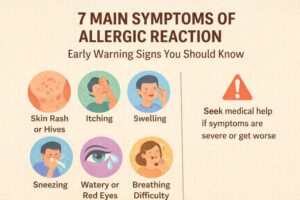
1. Sneezing
Sneezing is one of the most common signs of allergies. When allergens like pollen, dust, or pet dander enter the nasal passages, the immune system can react, causing the body to eliminate these irritants. An allergic reaction may be indicated by frequent sneezing, especially during certain times of year or in certain settings.
2. Runny or blocked nose
A runny or congested nose is frequently caused by allergic reactions. When exposed to allergens, the body releases histamines, which induce inflammation in the nasal airways. Because of this inflammation, there is an overproduction of mucus, which can cause a runny nose, congestion, and difficulty breathing.
3. Watery, Itchy Eyes
An allergic person could have itchy, watery eyes as a result of being exposed to allergens. Allergens entering the eyes might trigger an immunological reaction, resulting in discomfort, itching, redness, and excessive tears, all of which can have a big impact on vision and overall comfort.
4. Hives or a Skin Rash
Allergic reactions are frequently accompanied by skin reactions like rashes or hives. Histamines can be released upon exposure to allergens, resulting in the formation of hives or red, elevated, and itchy skin rashes. These can appear out of nowhere and vanish just as fast.
5. Coughing and wheezing
A cough and wheezing can be signs of a respiratory allergy. Allergens can irritate and inflame the airways, resulting in coughing attacks and wheezing sounds during breathing. Depending on a person’s sensitivity to particular allergens, these symptoms may manifest at different degrees of severity.
6. Malaise or fatigue
A feeling of lethargy or malaise might be brought on by allergies. Because allergens might trigger a demanding immune reaction in the body, they can cause fatigue, weariness, or a general sense of malaise, all of which can negatively affect daily tasks and overall health.
7. Digestive Problems
Allergies can sometimes cause digestive problems. An allergic response to particular foods or substances may manifest as stomach discomfort, nausea, vomiting, diarrhea, or other gastrointestinal issues after ingesting allergens.
What is the duration of allergies?
You’ll have allergies as long as you’re exposed to the allergen. While some begin a few minutes after exposure, others may not manifest symptoms for several hours or days. Your symptoms should disappear within a few hours of no longer being exposed to allergens. Certain allergies, such poison ivy rashes, might persist for several weeks.
What are the triggers of allergies?
An allergy occurs when your immune system incorrectly recognizes foreign proteins in pollen, pet dander, food, drugs, or other compounds as being hazardous (as if they were a virus or bacteria). When you breathe in, eat, or touch something you’re allergic to, processes are activated that are designed to safeguard you and eliminate the allergen from your body. This results in your symptoms, which can occasionally be fatal.
In most cases, you won’t react to a substance until you’ve been exposed to it several times. When you’re first exposed, your body treats it as an invader and produces antibodies against it (sensitization). The antibodies are activated the next time you come into contact with the same chemical. This causes your symptoms by warning your immune system to fight.
Risk factors
If you have any of the following, you’re more prone to allergies:
- A biological parent who has allergies
- Asthma or eczema (atopy) are examples of such disorders.
(4)Tests and diagnosis
How doctors determine if someone has allergies
Allergies may be identified by a medical professional using blood or skin tests. They will inquire about your symptoms and any potential allergens you might be exposed to, such as via your job or hobbies, in order to identify which allergens to test for.
They may also advise a patch test, a drug or food challenge test, or breathing tests based on your suspected allergies. A patch test looks for a contact skin reaction that develops over several days.
(5)Administration and therapy
What methods are used to treat allergies?
The best strategy for controlling allergies is to stay away from the things that cause them. If your allergies are likely to induce anaphylaxis, this is particularly the case.
However, certain prevalent allergens are difficult to avoid. Your doctor may advise you to take particular medications every day or receive regular treatments to lessen your symptoms or risk of an allergic reaction. Depending on your allergies, potential treatments may include:
- Antihistamines such fexofenadine (Allegra®), loratadine (Claritin®), and cetirizine (Zyrtec®).
- Nasal spray containing steroids (Flonase® or Nasacort®)
- Montelukast is an example of a leukotriene modifier.
- Injections of omalizumab (Xolair®) for food allergies or hives
- Similar to allergy injections, sublingual immunotherapy (SLIT), and oral immunotherapy (OIT), allergy immunotherapy
If you have an allergy that might result in a life-threatening response, your doctor will advise you to carry an epinephrine auto-injector (EpiPen® or Auvi-Q®) so you can use it at the first indication of a serious allergic reaction.
When should I make an appointment with my doctor?
If you have allergy symptoms and want to find out the root cause, speak with a healthcare practitioner. Your primary care physician may recommend you to a specialist, such an allergist or dermatologist, for specific tests.
If you have any of the following symptoms, call 911 or visit the emergency room:
- facial, lip, tongue, or throat swelling
- breathing issues
- discomfort in the chest or tightness
- Every inch of your body is covered in hives.
- tingling lips, hands, or feet
- Experiencing dizziness, weakness, or faintness
- Sense of fear or approaching catastrophe
(6)Outlook / Prognosis
If I have allergies, what should I anticipate?
The type of allergy determines what to expect. In general, pet or seasonal allergies are more likely to produce annoying, but not life-threatening, responses. Bee stings and food and drug allergies are more likely to result in severe reactions. If you have one of these allergies, you’ll likely need to carry an epinephrine injector.
Is there anything I can do about my allergies?
If your allergy symptoms are still bothersome despite therapy, you may find relief with:
- Saline washes or oral decongestants for nasal congestion
- Use eye drops designed for allergies or a cold washcloth to help soothe itchy eyes.
- Taking a shower and changing into clean clothing to help get rid of any remaining allergens on your body.
- lotions that are hypoallergenic or odorless to help soothe irritating rashes
(7)Prevention
Is it possible to avoid allergies?
To start with, you can’t truly prevent yourself from acquiring allergies. You may, however, take the following steps to avoid reactions to known allergens:
- After being in close proximity to animals to which you are allergic, change your attire and refrain from petting or being licked by them. Don’t let them near your bedroom or furniture, and don’t handle their toys.
- Regularly vacuum rugs, carpets, and other surfaces to aid in the removal of dust, animal dander, pollen, and other allergens.
- To aid in removing allergens from the air around you, use high-efficiency particulate (HEPA) air filters.
- During pollen season, keep your windows shut.
- Change the filters in your HVAC system in accordance with the manufacturer’s recommendations.
Check food labels if you have a food allergy, maintain allergen-free foods in your home, and only dine at eateries that you know provide allergen-free options.
(8)Cold vs Allergies: How to tell the difference
People often confuse allergies with respiratory infections.
| Feature | Allergies | Cold infection |
|---|---|---|
| Fever | No | Yes |
| Duration | Weeks | 7–10 days |
| Itching | Common | Rare |
| Mucus | Clear, watery | Thick, yellow |
| Seasonal | Yes | No |
(9)FAQs About Allergic Reactions
Can allergies start suddenly in adulthood?
Yes. Many people develop allergies even after age 30 due to new exposures.
Do allergies worsen at night?
Yes. Dust mites, bedding allergens, and lying posture can increase nasal congestion.
Can stress trigger allergies?
Indirectly, yes. Stress weakens immunity and increases inflammatory response.
Can allergic reactions kill a person?
Severe allergies can lead to anaphylactic shock, which is fatal if untreated.
For important health related topics please click on our facebook page link given below or copy paste this link into google search –
https://www.facebook.com/positivemind.healthcare
For important health related videos please click on the link of our youtube channel given below or copy paste this link into google search-
http://www.youtube.com/@healthuseful8539
(10)Conclusion
Allergic reactions can manifest as anything from a little rash to a serious medical emergency that might be fatal. Early identification of the seven key signs – skin rash, itching, swelling, sneezing, red eyes, breathing difficulty, and vertigo – can save lives.
If reactions recur or get worse over time, see an allergy or ENT expert. If you experience severe throat swelling, trouble breathing, or loss of consciousness, you need immediate medical attention.
Keep up with the news. Be ready. Taking early action is important.
If any patient has any ENT -Ear nose throat problems and requires any , consultation ,online consultation ,or surgery in clinic of ENT specialist Doctor Dr Sagar Rajkuwar ,he may TAKE APPOINTMENT BY CLICKING ON THE LINK GIVEN BELOW-
www.entspecialistinnashik.com
Clinic address of ENT SPECIALIST doctor Dr Sagar Rajkuwar-
Prabha ENT clinic, plot no 345,Saigram colony, opposite Indoline furniture Ambad link road ,Ambad ,1 km from Pathardi phata Nashik ,422010 ,Maharashtra, India-Dr Sagar Rajkuwar (MS-ENT), Cell no- 7387590194 , 9892596635