What Are the 5 Forbidden Acupressure Points?
Acupressure is a traditional healing technique that involves applying pressure to specific points on the body to relieve pain, improve circulation, and promote overall wellness. Rooted in Traditional Chinese Medicine (TCM), this therapy is widely used for headaches, sinus congestion, stress, digestive problems, and even hormonal balance.
By Dr. Sagar Rajkuwar, ENT Specialist, Nashik, Maharashtra, India
🌐 www.entspecialistinnashik.com
However, not all acupressure points are safe in every situation.
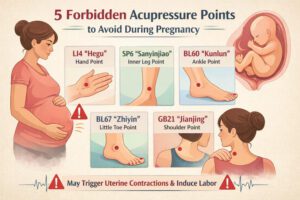
In particular, there are five “forbidden” acupressure points that should be avoided during pregnancy because they may stimulate uterine contractions or affect pelvic circulation. These points are sometimes used intentionally to induce labor—but should never be stimulated without professional supervision.
In this detailed, we will explore:
-
What are forbidden acupressure points?
-
The 5 forbidden acupressure points explained
-
Why they are risky during pregnancy
-
When they may be used safely
-
Safety guidelines and precautions
What Are Forbidden Acupressure Points?
“Forbidden acupressure points” refer to specific pressure points traditionally avoided during pregnancy. In TCM, these points are believed to:
-
Stimulate uterine contractions
-
Increase pelvic blood flow
-
Trigger downward energy movement
-
Potentially induce premature labor
While acupressure is generally safe when performed correctly, these points require caution—especially during the first and second trimesters.
The 5 Forbidden Acupressure Points
Let’s examine each of these points in detail.
1. LI4 (Hegu) – Large Intestine 4
Location:
Between the thumb and index finger, in the fleshy webbing of the hand.
Traditional Function:
-
Relieves headaches
-
Clears sinus congestion
-
Reduces toothache
-
Eases facial pain
-
Induces labor (in late pregnancy)
Why It’s Forbidden During Pregnancy:
LI4 strongly stimulates uterine contractions. In traditional obstetric acupressure, it is commonly used to:
-
Induce labor
-
Strengthen contractions
-
Reduce labor pain
Because of its powerful downward-moving energy, it is avoided in early pregnancy.
Why ENT Patients Should Be Careful
As an ENT specialist, you may often recommend LI4 for sinus headaches or facial pain relief. However, pregnant patients should avoid self-stimulation of this point without medical supervision.
2. SP6 (Sanyinjiao) – Spleen 6
Location:
Three finger-widths above the inner ankle bone, along the inner leg.
Traditional Function:
-
Regulates menstruation
-
Improves digestion
-
Reduces bloating
-
Induces labor
-
Relieves pelvic pain
Why It’s Forbidden During Pregnancy:
SP6 influences:
-
Uterine activity
-
Hormonal regulation
-
Pelvic circulation
This point is widely known as a labor-inducing acupressure point. Stimulating SP6 may increase uterine contractions and is therefore avoided throughout pregnancy unless labor induction is medically supervised.
3. BL60 (Kunlun) – Bladder 60
Location:
Behind the ankle, between the Achilles tendon and the outer ankle bone.
Traditional Function:
-
Relieves back pain
-
Reduces neck stiffness
-
Eases labor pain
-
Promotes circulation
Why It’s Forbidden During Pregnancy:
BL60 promotes strong downward energy flow and is traditionally used:
-
During labor
-
For breech presentation correction
-
To stimulate uterine contractions
It is avoided during early and mid-pregnancy to prevent premature uterine stimulation.
4. BL67 (Zhiyin) – Bladder 67
Location:
At the outer corner of the little toe nail.
Traditional Function:
-
Corrects breech position
-
Stimulates labor
-
Clears head congestion
Why It’s Forbidden During Pregnancy:
BL67 is specifically used in TCM to:
-
Turn breech babies (via moxibustion)
-
Stimulate fetal movement
-
Encourage labor
Because it influences uterine positioning and activity, it is avoided unless used intentionally under professional care.
5. GB21 (Jianjing) – Gallbladder 21
Location:
On the top of the shoulder, midway between the neck and shoulder tip.
Traditional Function:
-
Relieves neck stiffness
-
Reduces shoulder pain
-
Treats stress and anxiety
-
Induces labor
Why It’s Forbidden During Pregnancy:
GB21 strongly moves energy downward and is associated with:
-
Labor induction
-
Uterine stimulation
-
Pelvic activation
Deep pressure on this point may increase contraction activity.
Why Are These Acupressure Points Considered Dangerous?
From a traditional perspective, these points:
-
Activate pelvic meridians
-
Increase uterine tone
-
Promote descending energy
From a modern medical standpoint:
-
Strong pressure may trigger neuro-hormonal reflexes
-
Could stimulate oxytocin release
-
May increase uterine contractility
Although scientific evidence varies, caution is advised—especially in high-risk pregnancies.
Can These Points Ever Be Used Safely?
Yes—but only under supervision.
In full-term pregnancy, trained professionals may use these points to:
-
Induce labor
-
Strengthen contractions
-
Reduce labor pain
However, this should only be done:
-
After 37 weeks
-
With obstetric approval
-
In controlled clinical settings
Self-treatment is not recommended.
Common Myths About Forbidden Acupressure Points
Myth 1: Light Touch Is Always Safe
Even moderate pressure may stimulate nerve pathways.
Myth 2: One Press Won’t Do Anything
Repeated stimulation may have cumulative effects.
Myth 3: All Acupressure Is Unsafe in Pregnancy
Not true. Many points are safe and beneficial for:
-
Nausea relief
-
Back pain
-
Anxiety
-
Sinus congestion (with safe point selection)
Safe Acupressure Alternatives During Pregnancy
For sinus relief and ENT symptoms, safer points may include:
-
Gentle facial massage (without strong pressure)
-
Steam inhalation
-
Saline nasal irrigation
-
Hydration therapy
As an ENT specialist, recommending evidence-based sinus care remains safer than acupressure experimentation during pregnancy.
Are There Risks Outside Pregnancy?
These points are not dangerous for healthy adults. However, caution is advised in people with:
-
Bleeding disorders
-
High-risk cardiac conditions
-
Severe osteoporosis
-
Uncontrolled hypertension
Professional consultation is always best.
Scientific Evidence: What Does Research Say?
Clinical studies show mixed evidence regarding:
-
Acupressure-induced labor
-
Uterine contraction stimulation
-
Hormonal effects
Some trials suggest SP6 and LI4 may shorten labor duration, but evidence remains variable. Therefore, precautionary avoidance remains standard practice.
When Should You Avoid Acupressure Completely?
Avoid acupressure if:
-
You have high-risk pregnancy
-
There is placenta previa
-
There is history of preterm labor
-
You experience unexplained bleeding
-
You are unsure about point location
Final Summary: The 5 Forbidden Acupressure Points
| Acupressure Point | Location | Why Avoid in Pregnancy |
|---|---|---|
| LI4 (Hegu) | Hand web | Stimulates contractions |
| SP6 (Sanyinjiao) | Inner leg | Uterine activation |
| BL60 (Kunlun) | Ankle | Promotes downward energy |
| BL67 (Zhiyin) | Little toe | Stimulates fetal movement |
| GB21 (Jianjing) | Shoulder | Induces labor |
Key Takeaways
-
The 5 forbidden acupressure points are mainly restricted during pregnancy.
-
They are traditionally associated with labor induction.
-
Self-treatment is not recommended.
-
Many other acupressure points are safe when properly guided.
-
ENT patients should consult doctors before trying acupressure for sinus issues during pregnancy.
📞 ENT Consultation & Surgery
Dr. Sagar Rajkuwar (MS-ENT)
Prabha ENT Clinic, Ambad, Nashik
📱 7387590194 | 9892596635
🌐 www.entspecialistinnashik.com