Leg Cramps: Causes, Diagnosis, Tests & Best Treatment Options
Leg cramps are sudden, painful muscle contractions—most commonly affecting the calf muscles. They often occur at night and can last from a few seconds to several minutes. While most leg cramps are harmless, frequent or severe cramps may indicate an underlying medical issue.
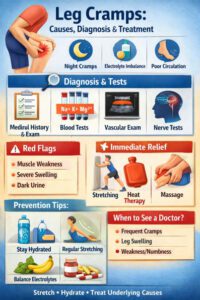
This SEO-optimized guide covers:
-
Causes of leg cramps
-
Diagnosis and necessary tests
-
Red flag symptoms
-
Immediate relief methods
-
Long-term prevention and treatment
What Are Leg Cramps?
Leg cramps are involuntary muscle contractions that typically affect:
-
Calf muscles
-
Thigh muscles
-
Foot muscles
They are especially common at night (nocturnal leg cramps) and in older adults, pregnant women, and athletes.
How Are Leg Cramps Diagnosed?
The diagnosis depends on:
-
Frequency
-
Intensity
-
Age of the patient
-
Associated symptoms
Most simple nighttime cramps do not require testing. However, persistent or unexplained cramps may need evaluation.
1️⃣ Basic Clinical Evaluation (First Step)
Medical History
Your doctor may ask:
-
When do cramps occur? (night, during exercise, while walking)
-
Frequency and duration
-
Current medications (especially diuretics or statins)
-
Hydration status
-
Associated symptoms: numbness, weakness, swelling
Physical Examination
The doctor checks for:
-
Peripheral pulses (to assess circulation)
-
Neurological reflexes and sensation
-
Muscle tenderness or wasting
-
Signs of systemic disease
2️⃣ Laboratory Tests (If Necessary)
If cramps are frequent or unexplained, basic blood tests may be advised.
Important Blood Tests
-
Serum electrolytes (Sodium, Potassium, Calcium, Magnesium)
-
Renal function tests (Urea, Creatinine)
-
Blood sugar levels (to rule out diabetes)
-
Thyroid function tests (TSH)
-
Liver function tests
-
Vitamin B12 level
-
Creatine Kinase (CK) if muscle disease is suspected
These tests help identify metabolic or systemic causes.
3️⃣ Vascular Investigations (If Circulation Problems Are Suspected)
If cramps occur while walking and improve with rest, circulation problems may be considered.
Ankle-Brachial Index (ABI)
Screens for peripheral arterial disease.
Doppler Ultrasound
Evaluates blood flow in leg arteries.
4️⃣ Neurological Tests (If Nerve Involvement Is Suspected)
If there is numbness, tingling, or weakness, further nerve testing may be required.
Nerve Conduction Studies (NCS)
Measures nerve function.
Electromyography (EMG)
Evaluates muscle and nerve activity.
MRI Spine
Performed if nerve root compression is suspected.
5️⃣ Special Situations
Pregnancy
Usually no testing required unless symptoms are severe.
Older Adults (Night Cramps Only)
Most cases are benign and do not need investigations.
Athletes
Assessment of hydration and electrolyte balance is important.
🚩 Red Flag Symptoms (Seek Immediate Medical Attention)
-
Persistent muscle weakness
-
Progressive muscle wasting
-
Severe pain with swelling (rule out DVT)
-
Dark-colored urine (possible rhabdomyolysis)
-
Fever and unexplained weight loss
Treatment of Leg Cramps
Treatment depends on the underlying cause. However, most nighttime leg cramps respond well to simple measures.
🟢 Immediate Relief During a Cramp
1. Stretching (Most Effective)
For calf cramps:
-
Straighten the leg
-
Pull toes upward toward the shin
-
Hold for 20–30 seconds
Alternatively:
-
Stand facing a wall
-
Lean forward with heels on the ground
2. Massage
Gently but firmly massage the affected muscle.
3. Heat Therapy
-
Apply a warm compress
-
Take a warm shower
Heat helps relax tight muscles.
4. Light Walking
Walking may interrupt the muscle spasm.
🟡 Long-Term Prevention
1️⃣ Lifestyle Measures
-
Daily calf stretching (especially before bedtime)
-
Adequate hydration
-
Avoid prolonged standing
-
Wear proper footwear
-
Gradually increase exercise intensity
Night stretching is particularly effective for nocturnal cramps.
2️⃣ Treat Underlying Causes
Electrolyte Imbalance
Supplement if deficient:
-
Potassium
-
Magnesium
-
Calcium
Medical Conditions
-
Control diabetes
-
Manage thyroid disorders
-
Treat peripheral vascular disease
Medication Review
If cramps started after:
-
Diuretics
-
Statins
Consult your doctor for adjustment.
🟠 Medications (For Severe or Recurrent Cramps)
Used only if non-drug methods fail:
-
Magnesium supplements (especially helpful in pregnancy)
-
Vitamin B complex
-
Gabapentin (if nerve-related)
-
Calcium channel blockers like diltiazem (in selected cases)
⚠ Quinine is generally avoided due to serious side effects like arrhythmia and thrombocytopenia.
🔵 Special Cases
Pregnancy
-
Stretching exercises
-
Magnesium if required
-
Usually resolves after delivery
Athletes
-
Proper hydration
-
Electrolyte replacement
-
Warm-up and cool-down routines
When Should You See a Doctor?
-
Frequent or severe cramps
-
Muscle wasting
-
One leg swelling or redness
-
Pain while walking that improves with rest
-
Associated weakness or numbness
Key Takeaway
Most leg cramps improve with:
✔ Regular stretching
✔ Proper hydration
✔ Treating underlying medical conditions
However, persistent or severe cramps should not be ignored, as they may indicate metabolic, neurological, or vascular disorders.
Medical Disclaimer:
This article is for informational and educational purposes only and does not replace professional medical advice, diagnosis, or treatment. Always consult a qualified healthcare provider for persistent, severe, or unexplained symptoms. Do not ignore medical advice or delay seeking care based on information read online.