Deviated Septum: Symptoms, Causes, Self-Test, Diagnosis & Treatment (Septoplasty Guide)
By ENT Specialist – Dr. Sagar Rajkuwar, Nashik, Maharashtra, India
Clinic Website: www.entspecialistinnashik.com
Table of contents-
- ✅Introduction
- Symptoms and Causes
- Diagnosis and Tests
- Treatment
- Prevention
- Outlook / Prognosis
- Living With
- FAQ’s
- ✅Summary / Conclusion
(1)✅Introduction
One of the most prevalent nasal disorders is a deviated septum, which affects approximately 80% of the population to some extent. The two nostrils in your nose are separated by the nasal septum, which is a thin layer of cartilage and bone. If this wall is crooked or pushed to one side, it may interfere with airflow and cause symptoms like nasal congestion, headaches, snoring, sinus infections, and sleep disruptions.
Although some people are unaffected by the change, others suffer from ongoing respiratory issues that interfere with their everyday activities.
This comprehensive handbook covers the symptoms, causes, consequences, diagnosis, and best treatment options for a deviated septum, including when to think about septoplasty for long-term relief.
What is a deviated septum?
A deviated septum occurs when the bone and cartilage that split your nasal cavity is misaligned. Your nasal septum divides the left and right sections of your nasal cavity. This is the reason you have two nostrils.
As much as 80% of the general populace has a deviation of the nasal septum. Some individuals are unaware of having a deviated septum due to the absence of symptoms. However, for others, a deviated septum can lead to breathing difficulties, headaches, and other problems.
(2)Symptoms and Causes
What are the symptoms of a deviated nasal septum?
Individuals with a significantly deviated septum might observe a change in the shape of their nose.
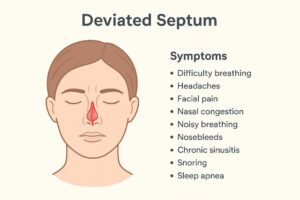
Additional symptoms of a deviated septum may consist of:
- Difficulty in breathing through one or both nostrils.
- Headaches.
- Facial pain.
- Nasal congestion.
- Noisy breathing (stridor).
- Nosebleeds.
- Chronic sinusitis (inflammation of your sinuses).
- Snoring.
- Sleep apnea.
How to tell if you have a deviated septum
Tilt your head back and gaze into a mirror. (You can also take a photo of the underside of your nose. ) If your nostrils appear uneven or if their sizes differ, you might be experiencing a deviated septum.
You could also determine it by performing the deviated septum self-test:
- Using your finger, close one of your nostrils.
- Inhale and pay attention to the airflow. Be aware of how easy or hard it is to breathe through that nostril.
- Next, close your other nostril and repeat the process.
If you experience difficulty breathing through one or both nostrils, you may have a deviated septum.
This test can act as a useful self-assessment tool. However, the only definitive method to confirm if you have a deviated septum is to receive a diagnosis from a healthcare professional.
What causes a deviated septum?
An injury, such as a broken nose, can lead to a deviated septum. Other factors include:
- Participation in contact sports.
- Automobile accidents.
- Falls.
- Fights and other physical confrontations.
Some individuals are born with a deviated nasal septum. For instance, challenging births or connective tissue diseases can result in this condition.
A deviated septum may also develop as a consequence of typical growth. As your nose matures, your septum grows too and may occasionally bend toward one side. This is the most prevalent cause of deviated septum.
What are the complications of nasal septum deviation?
Mild nasal septum deviation may not lead to any complications whatsoever. However, if you possess a severely deviated septum, you might experience complications, which can include:
- Chronic sinus issues.
- Sleep apnea.
- Loud snoring or noisy breathing while sleeping.
- Nasal congestion.
- Nosebleeds.
- Dry mouth (xerostomia).
(3)Diagnosis and Tests
How do healthcare providers diagnose nasal septum deviation?
A healthcare provider will examine your nose utilizing a nasal speculum. This handheld device gently opens your nostrils to allow the provider to inspect the interior of your nose. They will assess your septum to determine if it impacts the size of your nasal passages.
Your provider will also inquire about your symptoms. They may pose questions such as:
- What symptoms do you have?
- How long have you been experiencing these symptoms?
- Do you find it hard to breathe?
- Do you experience disrupted sleep?
- Do you snore while sleeping?
- Do you have any history of sinus problems or nasal congestion?
- Management and Treatment
- How do medical professionals address a deviated septum?
It varies based on the severity of your situation. The majority of individuals do not require treatment for a deviated septum since they experience minimal to no symptoms. Mild symptoms can be managed with medication. However, if a deviated nasal septum obstructs your ability to breathe properly, surgery may be necessary.
(4)Treatment
Decongestants. Decongestants are drugs that alleviate swelling in the nasal tissues, thus aiding in keeping the air passages on either side of your nose unblocked.
Antihistamines. Antihistamines are drugs that assist in stopping allergy symptoms, which may involve a congested or dripping nose.
Nasal steroid sprays.
What is the treatment of choice for a deviated nasal septum?
The most frequently used treatment for a deviated septum is septoplasty. If you experience breathing difficulties, recurrent sinus infections, or other annoying symptoms, you might consider septoplasty as a possibility. In a septoplasty, a surgeon alters the shape of your septum. This procedure may include the addition or removal of bone and cartilage.
What is the surgical management of the deviated septum techniques in septoplasty?
Septoplasty pinpoint the exact region of septal deviation and focuses on that area for removal. The methods are akin to the SMR, but considerably less cartilage is extracted. Furthermore, a septoplasty frequently involves altering the septal cartilage or positioning a cartilage graft instead of cartilage removal.
DISCLAIMER-Some patients go to net and directly take treatment from there which can lead to catastrophic consequences-Then- Many people ask then why to read all this text -the reason is that it helps you to understand the pathology better ,you can cooperate with treatment better ,your treating physician is already busy with his patients and he does not have sufficient time to explain you all the things right from ABCD ,so it is always better to have some knowledge of the disease /disorder you are suffering from.
Medications
Slight septal deviation might result in occasional symptoms. You can alleviate these symptoms using over-the-counter (OTC) medications, such as:
- Nasal decongestants. (You should not use nasal decongestant sprays for more than three consecutive days. This could lead to rebound congestion. )
- Nasal steroid sprays.
- Antihistamines.
- Septoplasty
The most frequent treatment for a deviated septum is septoplasty. If you suffer from breathing difficulties, recurrent sinus infections, or other irritating symptoms, septoplasty might be a viable option for you.
During a septoplasty, a surgeon modifies your septum. This process may involve the addition or removal of bone and cartilage.
Generally, septoplasty is an outpatient procedure. The duration of the procedure ranges from 30 to 90 minutes.
(5)Prevention
Can I avoid nasal septum deviation?
Some individuals are born with a deviated septum. Other individuals may develop a deviated septum during their growth in childhood. In these instances, nasal septum deviation cannot be prevented.
If you do not currently have a deviated septum, there are measures you can take to lower your risk:
- Use protective equipment (such as a midface mask and helmet) while participating in contact sports.
- Always buckle your seatbelt.
(6)Outlook / Prognosis
What can I anticipate if I have a deviated septum?
In many situations, having a deviated septum does not impact your quality of life. If you experience mild symptoms, you may manage them with over-the-counter medications.
Serious cases could necessitate surgery. If you struggle with breathing, frequent nosebleeds, or ongoing nasal congestion, consult your healthcare provider to explore whether surgery is a possibility.
(7)Living With
When should I consult a healthcare provider?
Reach out to a healthcare provider if your symptoms affect your breathing, disrupt your sleep, or negatively influence other areas of your life.
When should I visit the emergency room?
If you suspect you have a broken nose, you should go to your closest emergency room (ER) for treatment. If you have a fractured nasal septum, they can address it immediately.
(8)FAQ’s
Can you feel a deviated septum with your finger?
In most instances, you cannot determine if you have a deviated septum merely by feeling it. However, individuals with pronounced nasal deviation might recognize that their septum is misaligned.
Is it worth correcting a deviated septum?
Only you can make the decision that is best for you. If your deviated septum does not lead to breathing difficulties, sleep apnea, or other concerning symptoms, you likely do not need to take any action. But if your condition adversely affects your quality of life, surgery may be a viable option.
Overall, surgery for a deviated septum generally has favorable success rates, up to 85%. However, about 15% of individuals undergoing this treatment do not experience significant improvements in their symptoms.
Can you reposition a deviated septum?
You should never attempt to reposition your septum under any circumstances. If a traumatic incident — such as a car accident or physical altercation — results in a broken nose or deviated septum, you should visit your nearest emergency room promptly.
Can a deviated septum lead to sleep apnea?
Yes, a deviated septum can obstruct airflow through your nasal passages, leading to snoring and sleep apnea.
Most individuals have a deviated septum, but those with minimal to no symptoms may remain unaware. Having a deviated septum does not imply that something is wrong with you. Typically, treatment is unnecessary unless it disrupts your quality of life. However, if you encounter symptoms such as chronic nasal congestion, nosebleeds, sleep apnea, or breathing difficulties, inform your healthcare provider. They can assess whether you have a deviated septum and suggest suitable treatment options.
For important health related topics please click on our facebook page link given below or copy paste this link into google search –
https://www.facebook.com/positivemind.healthcare
For important health related videos please click on the link of our youtube channel given below or copy paste this link into google search-
http://www.youtube.com/@healthuseful8539
(9)✅Summary / Conclusion
Although a deviated septum is quite prevalent and usually harmless, it can cause some people to experience breathing problems, persistent congestion, sinus infections, snoring, and even sleep apnea. Medicines like nasal steroid sprays, antihistamines, and decongestants can treat mild cases. Septoplasty, the surgical repair of the septum, has a high success rate in providing long-lasting relief from symptoms that interfere with your breathing or sleep.
If you frequently have nasal congestion, loud breathing, recurring sinus issues, or interrupted sleep, see an ENT expert to see if a deviated septum is to blame and discuss your treatment choices.
If any patient has any ENT -Ear nose throat problems and requires any , consultation ,online consultation ,or surgery in clinic of ENT specialist Doctor Dr Sagar Rajkuwar ,he may TAKE APPOINTMENT BY CLICKING ON THE LINK GIVEN BELOW-
www.entspecialistinnashik.com
Clinic address of ENT SPECIALIST doctor Dr Sagar Rajkuwar-
Prabha ENT clinic, plot no 345,Saigram colony, opposite Indoline furniture Ambad link road ,Ambad ,1 km from Pathardi phata Nashik ,422010 ,Maharashtra, India-Dr Sagar Rajkuwar (MS-ENT), Cell no- 7387590194 , 9892596635