Understanding Bleeding Polyp of the Nose: Causes, Symptoms, Diagnosis & Treatment (Complete ENT Guide)
By Dr. Sagar Rajkuwar, ENT Specialist, Nashik, Maharashtra, India
🌐 www.entspecialistinnashik.com
What is a bleeding nasal polyp?
A bleeding nasal polyp is a benign growth in the nasal passages that may bleed due to inflammation, infection, or irritation.
Is a bleeding nasal polyp dangerous?
Most are benign, but persistent or heavy bleeding should be evaluated by an ENT specialist.
How are bleeding nasal polyps treated?
Treatment includes nasal steroid sprays, saline rinses, and in severe cases, surgery.
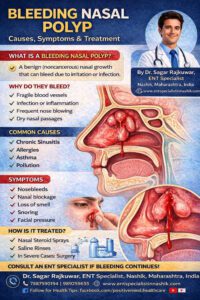
Table of contents-
- 📌 Introduction
- 🧠 What Is a Bleeding Nasal Polyp?
- 🔬 Causes of Bleeding Nasal Polyps
- 🩸 Why Do Nasal Polyps Bleed?
- ⚠️ Symptoms of Bleeding Nasal Polyps
- 🚨 Red Flag Symptoms (Important)
- 🧪 Diagnosis of Bleeding Nasal Polyps
- 🧬 Differential Diagnosis (Important for Clinical Depth)
- 💊 Treatment of Bleeding Nasal Polyps
- 🔁 Recurrence of Nasal Polyps
- 🧘 Lifestyle & Home Care
- 🥗 Diet & Immunity
- 🏁 Conclusion
1.📌 Introduction
A bleeding polyp of the nose is a concerning condition for many patients, especially when symptoms like recurrent nosebleeds, nasal blockage, and breathing difficulty appear. These growths are usually related to Nasal Polyps, which are noncancerous but can significantly affect quality of life if left untreated.
This SEO-optimized, in-depth guide explains everything you need to know—from causes and diagnosis to advanced treatment options—based on clinical ENT practice.
2.🧠 What Is a Bleeding Nasal Polyp?
A bleeding nasal polyp refers to an inflamed nasal growth that becomes fragile and prone to bleeding due to irritation or infection.
Types of Nasal Polyps:
1. Antrochoanal Polyp
- Originates from maxillary sinus
- Extends into nasal cavity
2. Ethmoidal Polyp
- Arises from ethmoid sinuses
- Usually bilateral
👉 Both are forms of Nasal Polyps, but bleeding may occur when they enlarge or get infected.
3.🔬 Causes of Bleeding Nasal Polyps
The underlying cause is usually chronic inflammation.
Common Causes:
1. Chronic Sinusitis
- Persistent sinus inflammation
- Leads to mucosal swelling
2. Allergic Rhinitis
- Triggered by pollen, dust, etc.
- Causes long-term irritation
3. Asthma
- Associated inflammatory condition
4. Environmental Irritants
- Pollution
- Tobacco smoke
- Chemical exposure
5. Infection
- Bacterial or fungal sinus infection
4.🩸 Why Do Nasal Polyps Bleed?
Bleeding occurs due to:
- Fragile blood vessels
- Frequent nose blowing
- Dry nasal mucosa
- Infection or inflammation
👉 Unlike tumors, bleeding is usually mild but should be evaluated.
5.⚠️ Symptoms of Bleeding Nasal Polyps
Patients may experience:
- Persistent nasal congestion
- Nosebleeds (Epistaxis)
- Thick nasal discharge
- Facial pressure
- Reduced sense of smell
- Snoring or sleep disturbance
- Difficulty breathing
6.🚨 Red Flag Symptoms (Important)
Seek urgent care if you notice:
- One-sided nasal blockage
- Heavy or continuous bleeding
- Vision changes
- Severe headache
👉 These may indicate serious conditions requiring evaluation.
7.🧪 Diagnosis of Bleeding Nasal Polyps
1. Clinical Examination
ENT specialist evaluates symptoms and nasal cavity.
2. 👉 Nasal Endoscopy
- Direct visualization
- Identifies size and location
3. Imaging Studies
CT Scan
- Gold standard
- Shows sinus involvement
MRI
- Used if tumor suspected
8.🧬 Differential Diagnosis (Important for Clinical Depth)
Conditions that mimic bleeding polyps:
- Nasal tumors
- Deviated septum
- Chronic infection
- Foreign body
👉 Proper diagnosis is essential.
9.💊 Treatment of Bleeding Nasal Polyps
1. Medical Treatment
Nasal Steroid Sprays
- Reduce inflammation
Oral Steroids
- Short-term use
Saline Irrigation
- Cleans nasal passages
2. Advanced Therapy
Biologics
- Target immune system
- Reduce recurrence
3. Surgical Treatment
👉 Endoscopic Sinus Surgery
Indications:
- Large polyps
- Recurrent bleeding
- Failed medical therapy
10.🔁 Recurrence of Nasal Polyps
Polyps may return due to:
- Chronic inflammation
- Allergy exposure
- Genetic factors
👉 Long-term management is required.
11.🧘 Lifestyle & Home Care
✅ Do:
- Regular saline rinses
- Allergy control
- Humidified air
❌ Avoid:
- Smoking
- Dust exposure
- Pollution
12.🥗 Diet & Immunity
Anti-inflammatory foods help:
- Fruits
- Vegetables
- Omega-3 fatty acids
👨⚕️ Experience of ENT Specialist Doctor
Dr. Sagar Rajkuwar (MS-ENT)
With years of experience in managing Nasal Polyps, Dr. Sagar Rajkuwar has treated numerous cases of:
- Chronic sinusitis
- Recurrent nasal polyps
- Complex ENT conditions
Clinical Approach:
- Accurate diagnosis with endoscopy
- Personalized treatment plans
- Advanced surgical techniques
👉 Focus is always on long-term relief and prevention of recurrence.
🎥 Watch Educational Videos
👉 YouTube Channel:
http://www.youtube.com/@healthuseful8539/
📞 ENT Consultation & Surgery
Dr. Sagar Rajkuwar (MS-ENT)
Prabha ENT Clinic, Ambad, Nashik
📱 7387590194 | 9892596635
🌐 www.entspecialistinnashik.com
📲 For Health-Related Articles & Videos
🔹 Facebook: https://www.facebook.com/positivemind.healthcare
🔹 YouTube: http://www.youtube.com/@healthuseful8539/
🏆 Featured Snippet
What is a bleeding nasal polyp?
A bleeding nasal polyp is a noncancerous growth in the nasal passages that may bleed due to irritation, infection, or inflammation.
13.🏁 Conclusion
A bleeding nasal polyp is usually benign but should not be ignored. Early diagnosis using
👉 Nasal Endoscopy
and proper treatment can prevent complications.
🔑 Key Takeaways:
- Polyps are noncancerous but problematic
- Bleeding occurs due to irritation
- Treatment includes medication and surgery
- Early care improves outcomes
⚠️ Medical Disclaimer
This article is for educational purposes only and does not replace professional medical advice. Consult an ENT specialist for diagnosis and treatment.
📚 References
- Standard ENT textbooks on sinusitis and nasal polyps
- Clinical guidelines on management of chronic sinusitis
- Research on biologic therapy in nasal polyps
- Evidence-based ENT practic