Varicose Veins Treatment: Laser, Surgery, Medicines & Recovery-various aspects
Article author: Dr. Sagar Rajkuwar, MS-ENT
Introduction
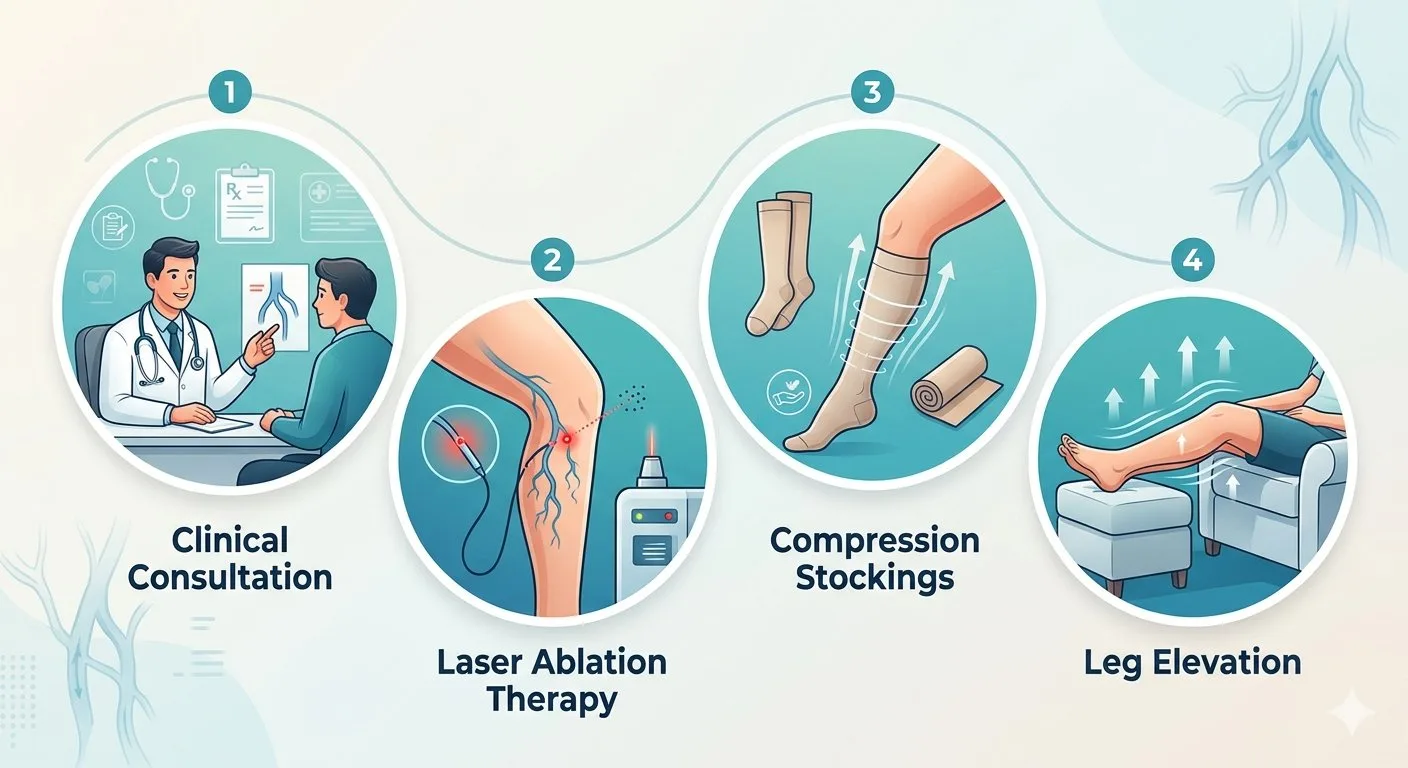
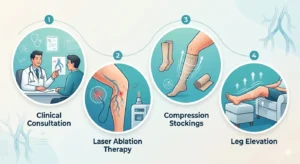
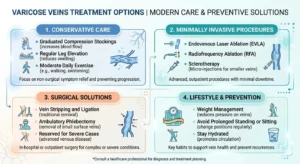
Varicose veins are a common vascular condition affecting millions of people worldwide. They appear as enlarged, twisted and swollen veins, usually on the legs. Although some people consider them primarily a cosmetic problem, varicose veins can cause significant discomfort, pain, swelling, skin changes and, in advanced cases, non-healing leg ulcers. The good news is that several effective treatment options are available. Modern varicose veins treatment has advanced considerably, and many patients can now be treated using minimally invasive procedures without conventional surgery or prolonged hospitalisation. The most appropriate treatment depends on the severity of the condition, the location of the affected veins, the presence of faulty venous valves, the patient’s symptoms and the findings of a venous duplex ultrasound. Common treatment options include:- Endovenous laser ablation (EVLA or EVLT).
- Radiofrequency ablation (RFA).
- Ultrasound-guided foam sclerotherapy.
- Cyanoacrylate glue closure.
- Mechanochemical ablation.
- Ambulatory phlebectomy.
- Conventional surgical vein stripping.
- Compression therapy and lifestyle modifications.
1. What Are Varicose Veins?
Varicose veins are enlarged, dilated and twisted superficial veins that usually develop in the lower limbs. Normally, veins carry blood from the legs towards the heart. Unlike arteries, veins contain small structures called venous valves that prevent blood from flowing backwards under the influence of gravity. When these valves become weak or damaged, blood may flow backwards and accumulate inside the veins. This condition is known as venous reflux. The increased pressure causes the affected veins to enlarge, become twisted and protrude beneath the skin.What do varicose veins look like?
They may appear as:- Blue or dark purple veins.
- Raised, twisted blood vessels.
- Bulging veins beneath the skin.
- Rope-like structures along the calf or thigh.
- Multiple enlarged superficial veins around the ankles.
2. What Causes Varicose Veins?
The main underlying mechanism is failure of the venous valves, leading to increased pressure inside superficial veins. Several factors can contribute to this condition.2.1 Weak venous valves
Healthy venous valves open to allow blood to move towards the heart and close to prevent backward flow. When these valves become incompetent, blood flows backwards and accumulates in the veins. This increases venous pressure and produces progressive dilatation.2.2 Family history
Genetic factors play an important role. People with parents or close family members who have varicose veins may have a higher likelihood of developing the condition.2.3 Prolonged standing
People whose occupations involve standing for extended periods may experience increased venous pressure in the legs. Examples include:- Teachers.
- Nurses.
- Surgeons.
- Factory workers.
- Shopkeepers.
- Security personnel.
2.4 Pregnancy
Pregnancy increases blood volume and produces hormonal changes that can relax vein walls. The enlarging uterus can also compress pelvic veins and interfere with blood returning from the legs. Consequently, varicose veins may develop or worsen during pregnancy.2.5 Increasing age
With increasing age, venous walls and valves may become less efficient. This increases the likelihood of chronic venous disease.2.6 Obesity
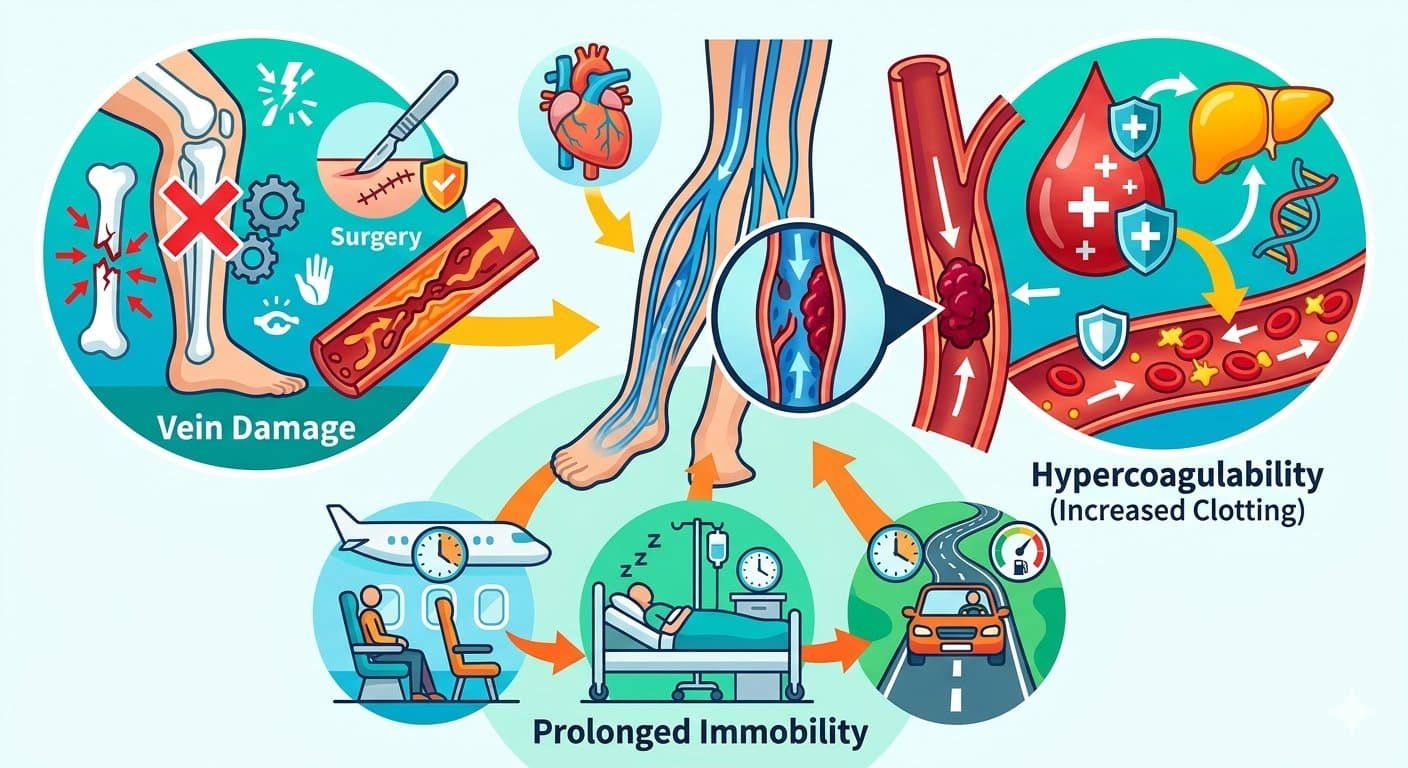
Excess body weight can increase pressure within the venous circulation of the lower limbs.2.7 Previous deep vein thrombosis
A previous episode of deep vein thrombosis (DVT) can damage venous valves and cause long-term venous obstruction. This may result in secondary varicose veins and chronic venous insufficiency.3. Symptoms of Varicose Veins
Some people have visible varicose veins without significant discomfort. Others experience symptoms that interfere with everyday activities. Common symptoms include:- Aching or pain in the legs.
- Heaviness, particularly towards the evening.
- Swelling around the ankles.
- Itching over affected veins.
- Burning or throbbing sensations.
- Muscle cramps, particularly at night.
- Visible enlarged and twisted veins.
- Skin discolouration around the ankles.
- Dryness and eczema.
- Discomfort after prolonged standing.
Why do symptoms become worse in the evening?
When a person remains standing or sitting for prolonged periods, gravity increases the pressure within the leg veins. If venous valves are incompetent, blood may accumulate in the lower limbs. This can produce swelling, heaviness and discomfort. Symptoms may improve after walking, resting or elevating the legs.When should you consult a doctor?
Seek medical assessment if you experience:- Persistent leg pain.
- Increasing swelling.
- Itching or skin changes.
- Enlarging varicose veins.
- Hard, painful superficial veins.
- A wound near the ankle that does not heal.
- Repeated bleeding from a varicose vein.
4. What Are the Different Stages of Varicose Veins?
Doctors commonly use the Clinical-Etiological-| CEAP clinical class | Description |
|---|---|
| C0 | No visible or palpable signs of venous disease |
| C1 | Spider veins and reticular veins |
| C2 | Established varicose veins |
| C3 | Leg or ankle oedema |
| C4a | Pigmentation or venous eczema |
| C4b | Lipodermatosclerosis or atrophie blanche |
| C4c | Corona phlebectatica |
| C5 | Healed venous ulcer |
| C6 | Active venous ulcer |
Why is classification important?
Patients with small superficial veins may require only reassurance or cosmetic treatment. Patients with enlarged varicose veins, swelling, skin damage or ulcers may require more detailed vascular assessment. The CEAP classification helps doctors describe disease severity and monitor changes after treatment.5. How Are Varicose Veins Diagnosed?
Accurate diagnosis is essential because visible veins do not always indicate which vein is responsible for the underlying problem. The most important investigation is venous duplex ultrasound.5.1 Clinical examination
The doctor examines the legs for:- Enlarged superficial veins.
- Skin pigmentation.
- Ankle swelling.
- Venous eczema.
- Healed or active ulcers.
- Areas of tenderness.
- Signs of previous thrombosis.
5.2 Venous duplex ultrasound
Venous duplex ultrasound combines conventional ultrasound imaging with Doppler assessment of blood flow. It helps identify:- Incompetent venous valves.
- Reflux in the great saphenous vein.
- Reflux in the small saphenous vein.
- Incompetent perforator veins.
- Deep venous obstruction.
- Previous or current venous thrombosis.
- The extent of superficial venous disease.
What is venous reflux?
Venous reflux means backward flow of blood through a vein due to incompetent valves. In a commonly used ultrasound assessment, superficial truncal reflux lasting more than 0.5 seconds is considered abnormal. For certain deep veins, a different reflux-duration threshold is used. The findings must be interpreted in relation to the anatomical location and clinical picture.Why is ultrasound important before laser treatment?
Laser or radiofrequency treatment should target the abnormal vein responsible for the symptoms. Treating only the visible bulging veins without identifying the underlying reflux may result in incomplete treatment or recurrence. A proper ultrasound examination helps the vascular specialist plan the procedure.6. What Is the Best Treatment for Varicose Veins?
There is no single treatment that is best for every patient. The choice depends on the size and location of the affected veins, symptoms, ultrasound findings, previous treatment and individual medical circumstances. For patients with symptomatic varicose veins caused by superficial truncal reflux, current NICE guidance recommends endothermal ablation as the preferred initial intervention. This generally includes:- Endovenous laser ablation.
- Radiofrequency ablation.
7. Endovenous Laser Treatment for Varicose Veins (EVLT/EVLA)
Endovenous laser ablation (EVLA) is a minimally invasive procedure used to close abnormal superficial veins. It is commonly performed for incompetent great saphenous or small saphenous veins.How does laser treatment work?
A thin catheter is introduced into the affected vein under ultrasound guidance. A laser fibre is passed through the catheter. Controlled laser energy heats the vein wall, causing the abnormal vein to close. Blood is then redirected through other healthy veins. Over time, the treated vein becomes fibrosed and is gradually absorbed by the body.Steps involved in EVLT
- The patient is positioned for the procedure.
- The affected vein is identified using ultrasound.
- Local anaesthesia is administered.
- A small needle puncture is made.
- A catheter is inserted into the vein.
- The laser fibre is positioned appropriately.
- Tumescent anaesthesia is administered around the vein when indicated.
- Laser energy is delivered while the catheter is withdrawn.
- The treated vein closes.
- Compression and mobilisation instructions are provided.
Advantages of laser treatment
- Minimally invasive.
- Usually performed under local anaesthesia.
- No large surgical incision.
- Generally performed as a day-care procedure.
- Relatively quick recovery.
- Effective closure of refluxing superficial veins.
- Less postoperative discomfort than traditional stripping in many patients.
Possible complications
Although EVLT is generally safe when appropriately performed, complications can occur. These include:- Bruising.
- Pain or tenderness.
- Temporary skin discolouration.
- Superficial thrombophlebitis.
- Nerve irritation or injury.
- Thermal skin injury.
- Deep vein thrombosis.
- Rarely, pulmonary embolism.
8. Radiofrequency Ablation for Varicose Veins (RFA)
Radiofrequency ablation (RFA) is another minimally invasive procedure used to treat incompetent superficial veins. It uses controlled radiofrequency energy to heat and close the affected vein.How does RFA work?
A specialised catheter is inserted into the affected vein. Radiofrequency energy heats the vein wall in a controlled manner. The resulting tissue changes cause the vein to contract and close. Blood is redirected through healthy venous channels.Advantages of RFA
- Minimally invasive.
- Usually performed under local anaesthesia.
- Small puncture rather than a large incision.
- Limited postoperative discomfort in many patients.
- Relatively rapid return to routine activities.
- Effective treatment of superficial venous reflux.
RFA versus laser treatment
Both procedures are established treatments for symptomatic superficial venous reflux. The choice depends on:- Vein anatomy.
- Vein diameter.
- Availability of equipment.
- Operator experience.
- Patient preference.
- Cost.
- Clinical suitability.
9. Foam Sclerotherapy for Varicose Veins
Foam sclerotherapy is a minimally invasive treatment in which a specially prepared chemical foam is injected into the abnormal vein. The foam irritates the inner lining of the vein, causing it to close. Over time, the treated vein becomes fibrosed and is gradually absorbed.How is foam sclerotherapy performed?
- The abnormal vein is identified.
- Ultrasound guidance is used when required.
- A fine needle is introduced into the vein.
- The sclerosant foam is injected.
- The chemical causes the vein to close.
- Compression may be recommended according to the treatment plan.
Which medicines are used?
Common sclerosants include:- Polidocanol.
- Sodium tetradecyl sulphate (STS).
Advantages
- No large surgical incision.
- Can be performed as an outpatient procedure.
- Useful for selected varicose tributaries.
- Can be used when thermal ablation is unsuitable.
- May treat certain recurrent veins.
Possible complications
- Temporary bruising.
- Local discomfort.
- Skin pigmentation.
- Superficial thrombophlebitis.
- Allergic reactions.
- Rare neurological or visual disturbances.
- Rare thromboembolic complications.
10. Cyanoacrylate Glue Closure
Cyanoacrylate closure is a nonthermal endovenous treatment. It uses a specialised medical adhesive to seal the incompetent superficial vein.How does it work?
A catheter is introduced into the affected vein under ultrasound guidance. Small quantities of medical adhesive are delivered at planned intervals. The adhesive seals the vein, preventing further reflux through that vessel.Advantages
- No thermal energy.
- Usually no tumescent anaesthesia is required.
- Minimally invasive.
- Relatively quick recovery in suitable patients.
Limitations and risks
Possible complications include:- Local inflammation.
- Phlebitis-like reactions.
- Hypersensitivity to the adhesive.
- Skin reactions.
- Incomplete closure or recanalisation.
- Rare thrombotic complications.
11. Mechanochemical Ablation
Mechanochemical ablation (MOCA) combines mechanical damage to the vein lining with the administration of a sclerosant. A specialised catheter is introduced into the affected vein. A rotating or mechanical component damages the inner lining while a chemical agent is delivered. The combined action causes the vein to close.Advantages
- Nonthermal procedure.
- Does not require the same tumescent anaesthesia used for thermal ablation.
- Minimally invasive.
- May be useful in selected anatomical situations.
Limitations
- Availability varies.
- Long-term comparative evidence differs between treatment methods.
- Vein closure and recurrence outcomes may vary.
- It may not be suitable for all vein diameters or anatomical patterns.
12. Ambulatory Phlebectomy
Ambulatory phlebectomy is a minimally invasive procedure used to remove visible bulging varicose tributaries through very small skin openings. It is often performed under local anaesthesia.How is it performed?
The surgeon marks the affected veins. Tiny skin incisions are made near the abnormal veins. Special instruments are used to remove the visible venous segments. The small openings generally heal with minimal scarring.When is phlebectomy useful?
It is particularly useful for:- Large superficial varicose tributaries.
- Bulging veins that remain after truncal ablation.
- Selected isolated varicosities.
- Patients requiring treatment of prominent superficial veins.
13. Conventional Varicose Vein Surgery
Traditional surgery is known as high ligation and stripping. It involves tying off the affected vein and removing the diseased segment. Although minimally invasive procedures have reduced the need for conventional surgery, it remains an option for selected patients.How is surgery performed?
- Anaesthesia is administered.
- The surgeon makes an incision near the groin or another appropriate location.
- The affected vein is identified and ligated.
- A specialised instrument is used to remove the diseased vein segment.
- Additional bulging veins may be removed through smaller incisions.
- The incisions are closed.
Advantages
- Can effectively remove selected diseased veins.
- Useful when endovenous treatment is unsuitable.
- Established surgical technique.
Disadvantages
- More invasive than endovenous treatment.
- Larger incisions.
- Greater bruising and postoperative discomfort in many patients.
- Longer recovery.
- Risks associated with anaesthesia and surgery.
14. Comparison of Different Varicose Veins Treatment Options
The following table provides a practical comparison of the main treatment methods.| Treatment | Main technique | Typical role |
|---|---|---|
| EVLT/EVLA | Laser heat | Truncal venous reflux |
| RFA | Radiofrequency heat | Truncal venous reflux |
| Foam sclerotherapy | Chemical closure | Selected truncal veins and tributaries |
| Glue closure | Medical adhesive | Selected superficial truncal veins |
| MOCA | Mechanical and chemical closure | Selected truncal veins |
| Ambulatory phlebectomy | Removal through tiny incisions | Bulging tributary veins |
| Conventional surgery | Ligation and stripping | Selected patients unsuitable for endovenous treatment |
15. Can Varicose Veins Be Treated Without Surgery?
Yes. Many patients can be treated without conventional open surgery. Depending on the affected veins and underlying reflux, options include:- Endovenous laser ablation.
- Radiofrequency ablation.
- Foam sclerotherapy.
- Medical adhesive closure.
- Mechanochemical ablation.
16. Can Varicose Veins Be Treated at Home?
Home care is useful for managing discomfort and reducing swelling. However, it does not usually correct the underlying venous valve abnormality.16.1 Regular walking
Walking activates the calf muscles. The calf muscles function as a pump, helping push blood towards the heart. Regular physical activity can support venous circulation.16.2 Leg elevation
Elevating the legs while resting can help reduce venous pressure and swelling. For example, patients may rest with their legs supported on pillows.16.3 Avoid prolonged standing
People who stand for long periods should take regular movement breaks. Changing position and walking briefly can help maintain circulation.16.4 Avoid prolonged sitting
Long periods of sitting may reduce calf-muscle activity. Patients should move periodically and perform ankle movements.16.5 Maintain a healthy weight
Weight management can reduce additional pressure on the venous circulation.16.6 Skin care
Dry and itchy skin around the ankles may require regular moisturising. Patients with venous eczema should seek medical advice about appropriate skin treatment.16.7 Stop smoking
Smoking cessation supports general vascular health.17. Are Compression Stockings Effective for Varicose Veins?
Graduated compression stockings apply controlled pressure to the legs. The pressure is generally greater around the ankle and decreases towards the upper leg. This helps improve venous return and may reduce swelling and discomfort.What are the benefits?
Compression stockings may help with:- Ankle swelling.
- Leg heaviness.
- Aching.
- Discomfort after prolonged standing.
- Management of venous oedema.
Do compression stockings cure varicose veins?
No. They may control symptoms while they are worn, but they do not permanently repair incompetent venous valves. NICE recommends against using compression hosiery as the primary treatment when a patient is suitable for interventional treatment.Who should be careful?
Patients with significant peripheral arterial disease may not be suitable for compression stockings without appropriate vascular assessment. The correct stocking pressure and size should be selected by a healthcare professional.18. Do Medicines Cure Varicose Veins?
There is no oral medication that reliably repairs incompetent venous valves or permanently removes established varicose veins. However, selected medicines may help manage symptoms.Venoactive medications
Certain medicines and plant-derived compounds are used to reduce venous symptoms. Examples include:- Micronised purified flavonoid fraction (MPFF).
- Diosmin.
- Hesperidin.
- Rutosides.
- Calcium dobesilate in selected settings.
Can aspirin cure varicose veins?
No. Aspirin does not correct venous valve failure and is not a routine treatment for uncomplicated varicose veins. It should not be started solely because visible varicose veins are present.19. Varicose Veins Treatment During Pregnancy
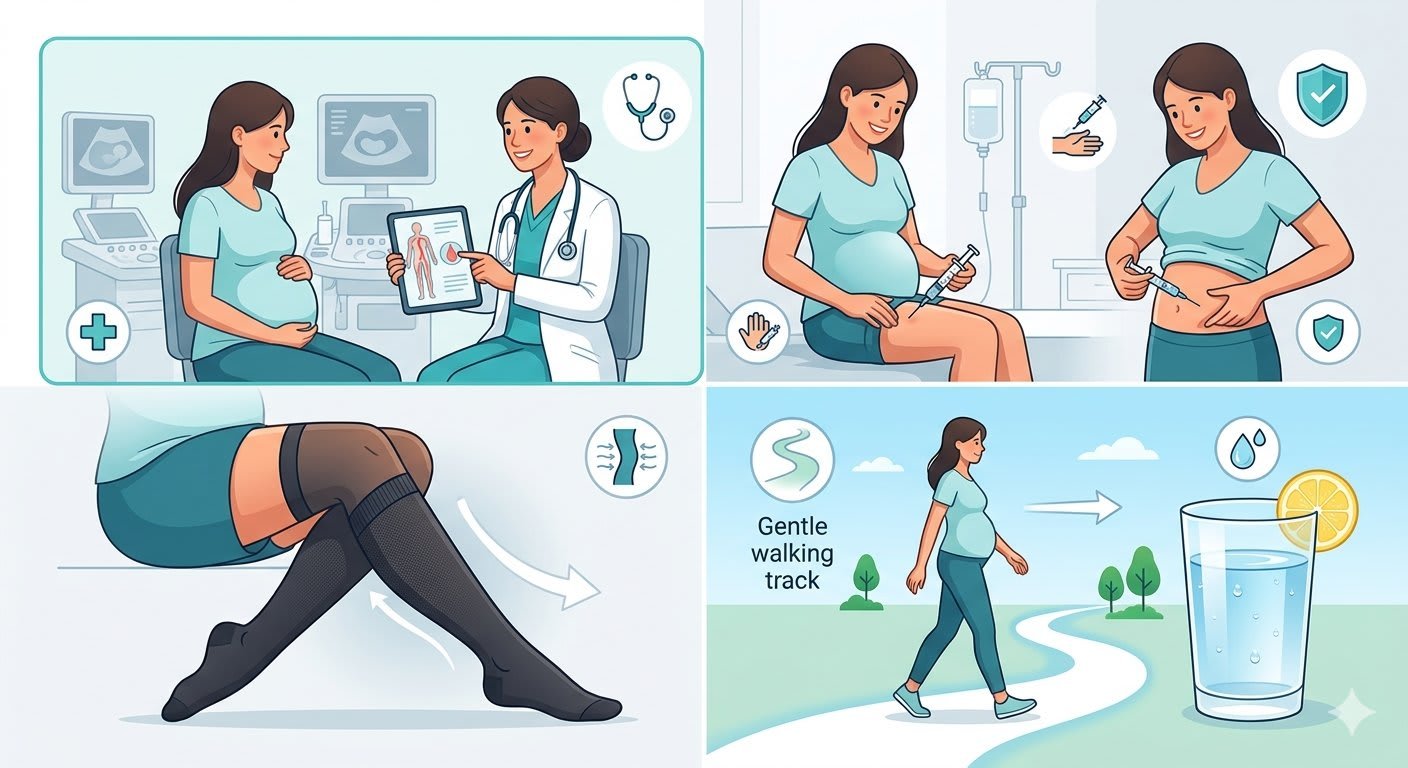
Varicose veins commonly develop or worsen during pregnancy. Hormonal changes, increased blood volume and pressure from the growing uterus contribute to this condition.What treatment is recommended?
Most pregnant women are managed conservatively. Measures may include:- Appropriate compression stockings.
- Regular walking.
- Avoiding prolonged standing.
- Leg elevation.
- Maintaining healthy weight gain according to obstetric guidance.
Can laser treatment be performed during pregnancy?
Elective varicose vein procedures are generally postponed until after delivery. Many pregnancy-related varicose veins improve following childbirth. A woman with painful swelling, sudden redness or suspected thrombosis requires medical assessment rather than simply assuming that the symptoms are ordinary varicose veins.20. Varicose Veins Treatment During Breastfeeding
For women who develop varicose veins after delivery, treatment decisions depend on symptoms, anatomy and breastfeeding circumstances. Many conservative measures can be continued during breastfeeding. Elective procedures may be considered after specialist assessment. The treating team should review the specific medicines, anaesthetic agents and sclerosants planned for the procedure before treatment.21. What Are the Complications of Untreated Varicose Veins?
Varicose veins do not always cause serious problems. However, some patients develop progressive chronic venous disease.21.1 Venous eczema
Venous eczema is an inflammatory skin condition caused by chronic venous hypertension. Symptoms include:- Itching.
- Redness.
- Dryness.
- Scaling.
- Skin irritation.
21.2 Skin pigmentation
Long-standing venous hypertension may cause iron-containing blood breakdown products to accumulate in the skin. This can produce brownish discolouration, particularly around the ankles.21.3 Lipodermatosclerosis
Lipodermatosclerosis is a chronic inflammatory and fibrotic condition affecting the skin and subcutaneous tissues of the lower leg. The affected area may become hard, thickened and painful.21.4 Venous leg ulcers
A venous leg ulcer is a chronic wound that commonly develops around the lower leg, particularly near the medial ankle. It occurs because prolonged venous hypertension interferes with normal skin and tissue health. These ulcers may take weeks or months to heal. Treatment generally includes appropriate wound care, compression when arterial circulation permits, and management of underlying venous reflux.21.5 Superficial thrombophlebitis
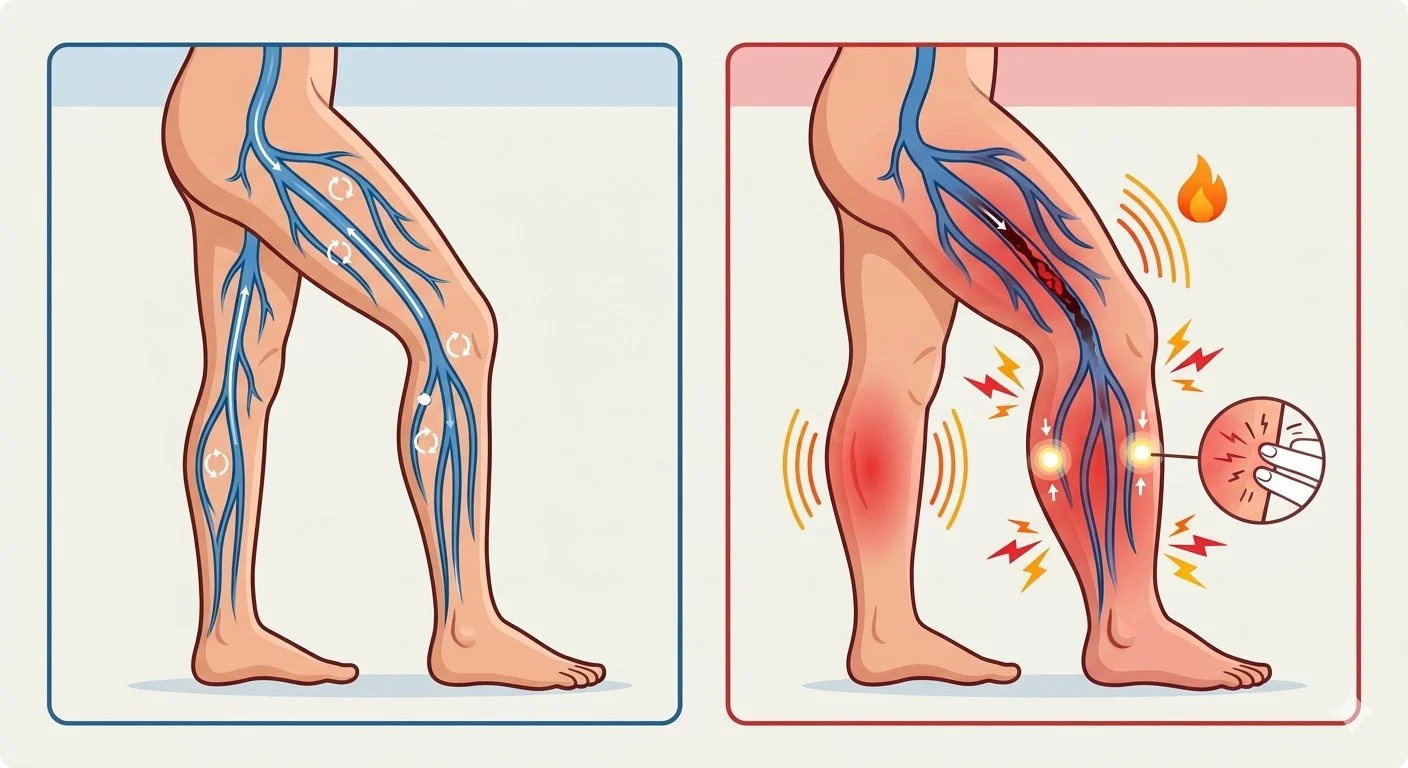
Superficial thrombophlebitis involves inflammation and clot formation in a superficial vein. The affected vein may become:- Hard.
- Painful.
- Red.
- Warm.
- Tender to touch.
21.6 Bleeding from varicose veins
Enlarged superficial veins close to the skin can bleed after minor injury. If bleeding occurs:- Lie down.
- Elevate the affected leg.
- Apply firm, continuous direct pressure using a clean cloth or dressing.
- Seek emergency medical attention if bleeding is heavy or does not stop.
21.7 Deep vein thrombosis
Although varicose veins and DVT are different conditions, they can coexist. Patients with sudden one-sided swelling, pain and warmth should be assessed promptly for DVT. Sudden breathlessness or chest pain requires emergency assessment for pulmonary embolism.22. What Is Recovery Like After Varicose Veins Treatment?
Recovery depends on the procedure performed.After laser or radiofrequency ablation
Many patients can walk shortly after treatment. Mild bruising, tenderness or pulling sensations may occur. Most people return to many routine activities relatively quickly, although strenuous exercise and heavy lifting may be restricted temporarily according to the treating specialist’s instructions.After foam sclerotherapy
Some patients experience temporary bruising, tenderness or pigmentation. The treated vein may initially feel firm. Several treatment sessions may be needed, depending on the number and size of affected veins.After glue closure
Mild local inflammation or tenderness may occur. Patients should follow the clinic’s instructions regarding activity and follow-up.After ambulatory phlebectomy
Small bruises and tenderness are common. The tiny skin openings generally heal over a relatively short period.After conventional surgery
Recovery may take longer. Bruising, swelling and discomfort can persist for several weeks. The surgeon will provide instructions regarding wound care, compression and return to work.23. Can Varicose Veins Come Back After Treatment?
Yes. Treatment can successfully close or remove the targeted abnormal veins, but it cannot prevent every future vein from becoming incompetent. Recurrence may occur because of:- Persistent or newly developing venous reflux.
- Recanalisation of a treated vein.
- Development of reflux in another superficial vein.
- New incompetent perforator veins.
- Progression of underlying chronic venous disease.
24. How Can Varicose Veins Be Prevented or Their Progression Reduced?
Not all cases can be prevented, particularly when genetic factors are involved. However, several measures can support venous circulation.- Walk regularly.
- Avoid prolonged standing or sitting.
- Maintain a healthy body weight.
- Elevate the legs when resting.
- Perform regular calf-muscle exercises.
- Avoid smoking.
- Take movement breaks during long journeys.
- Seek medical advice for persistent swelling or skin changes.
- Follow specialist recommendations after treatment.
- Manage associated chronic venous conditions.
25. How Much Does Varicose Veins Treatment Cost in India?
The cost of treatment varies considerably across India. It depends on:- The number of affected veins.
- Whether one or both legs require treatment.
- The severity of venous reflux.
- The type of procedure.
- Hospital or clinic facilities.
- Specialist fees.
- Anaesthesia requirements.
- Ultrasound investigations.
- Compression garments.
- Follow-up appointments.
26. How Should Patients Choose the Right Varicose Veins Treatment?
Patients should not select a treatment simply because it is advertised as the latest or most advanced technique. The appropriate choice requires an individual assessment. Before agreeing to treatment, ask the specialist:- Which vein is responsible for my symptoms?
- Does duplex ultrasound demonstrate venous reflux?
- Is the great or small saphenous vein involved?
- Is laser or radiofrequency ablation suitable?
- Would foam sclerotherapy be appropriate?
- Are the visible tributary veins also being treated?
- Is conventional surgery necessary?
- What are the possible complications?
- How long will recovery take?
- What is the possibility of recurrence?
- How many follow-up visits are required?
- What is the complete treatment cost?
27. Frequently Asked Questions About Varicose Veins Treatment
1. What is the best treatment for varicose veins?
For many patients with symptomatic varicose veins caused by superficial venous reflux, endovenous laser ablation or radiofrequency ablation is an effective first-line treatment. The appropriate procedure depends on duplex ultrasound findings and individual clinical circumstances.2. Can varicose veins be treated without surgery?
Yes. Laser ablation, radiofrequency ablation, foam sclerotherapy and medical glue closure are minimally invasive alternatives to conventional surgery.3. Can varicose veins disappear naturally?
Some small superficial veins may become less noticeable, and pregnancy-related varicose veins may improve after delivery. Established varicose veins caused by incompetent valves generally do not disappear completely without treatment.4. Do compression stockings cure varicose veins?
No. Compression stockings may reduce swelling, heaviness and discomfort, but they do not permanently correct faulty venous valves.5. Is laser treatment painful?
Laser treatment is generally performed using local anaesthesia and tumescent anaesthesia. Patients may experience mild discomfort, bruising or tenderness during recovery.6. How long does laser treatment take?
The procedure often takes approximately 30–60 minutes, depending on the number of veins treated and the complexity of the case. The actual duration varies between patients.7. Can varicose veins return after laser treatment?
Yes. The treated vein may remain closed, but new reflux can develop in other veins. Recurrence is possible.8. Is walking recommended after varicose vein treatment?
Yes. Walking is generally encouraged soon after minimally invasive treatment, according to the treating specialist’s instructions.9. Can varicose veins cause leg swelling?
Yes. Venous hypertension can cause fluid accumulation in the lower limbs, resulting in ankle and leg swelling.10. Are varicose veins dangerous?
Many cases are not immediately dangerous, but complications may include bleeding, superficial thrombophlebitis, skin damage and venous ulcers. Significant symptoms should be assessed.11. Can varicose veins cause blood clots?
Varicose veins may be associated with superficial venous thrombosis. Some patients may also develop DVT, which is a separate and potentially serious condition.12. Is varicose vein treatment possible during pregnancy?
Elective procedures are generally postponed during pregnancy. Compression stockings, walking and leg elevation may help manage symptoms.13. Which doctor treats varicose veins?
A vascular surgeon, vascular medicine specialist or appropriately trained endovenous specialist can assess and treat varicose veins. Depending on the healthcare system, interventional radiologists may also perform certain procedures.14. Can varicose veins cause skin discolouration?
Yes. Chronic venous hypertension can cause brownish pigmentation around the ankles due to leakage of red blood cell breakdown products into surrounding tissues.15. When is varicose vein surgery necessary?
Conventional surgery may be considered when minimally invasive procedures are unsuitable or when specific anatomical circumstances require surgical treatment.16. Can varicose veins be treated with medicines alone?
Medicines may help selected patients manage symptoms, but they do not reliably correct the underlying valve failure.17. Is foam sclerotherapy effective?
Yes. Ultrasound-guided foam sclerotherapy is an established treatment for selected truncal veins and varicose tributaries, particularly when thermal ablation is unsuitable.18. What is the difference between spider veins and varicose veins?
Spider veins are small, superficial, web-like blood vessels. Varicose veins are larger, dilated and twisted veins that may protrude beneath the skin.19. Should varicose veins be treated if there is no pain?
Not necessarily. Asymptomatic varicose veins do not always require intervention. Treatment decisions depend on symptoms, complications, clinical examination and patient preferences.20. When should a patient seek emergency care?
Seek emergency medical help for uncontrolled bleeding from a varicose vein, sudden severe leg swelling or pain, or symptoms such as sudden breathlessness, chest pain, coughing up blood or fainting.28. Summary: Varicose Veins Treatment
Varicose veins treatment aims to reduce symptoms, improve venous circulation, treat complications and close or remove abnormal superficial veins. The main treatment options include:- Endovenous laser ablation: Uses laser energy to close incompetent superficial veins.
- Radiofrequency ablation: Uses controlled heat to seal affected veins.
- Foam sclerotherapy: Uses a chemical foam to close selected abnormal veins.
- Cyanoacrylate closure: Uses medical adhesive to seal the affected vein.
- Mechanochemical ablation: Combines mechanical and chemical treatment.
- Ambulatory phlebectomy: Removes prominent superficial tributaries through small skin openings.
- Conventional surgery: Removes selected diseased veins through ligation and stripping.
29. Conclusion
Varicose veins are more than a cosmetic concern for many patients. They can cause persistent pain, heaviness, swelling, skin changes and, in advanced cases, chronic venous ulcers. Modern treatment options have made it possible to manage many patients using minimally invasive procedures. Endovenous laser ablation and radiofrequency ablation are important treatment options for symptomatic superficial venous reflux. Foam sclerotherapy, glue closure, mechanochemical ablation and ambulatory phlebectomy provide additional options for appropriately selected patients. However, the best procedure cannot be determined simply by looking at the visible veins. A detailed clinical examination and venous duplex ultrasound are necessary to identify the underlying abnormality. Patients should seek medical advice when symptoms persist or complications develop rather than relying exclusively on home remedies. With appropriate diagnosis, individualised treatment and follow-up, many patients can achieve meaningful symptom relief, improved quality of life and better long-term management of chronic venous disease.30. Medical Disclaimer
This article is intended for general educational purposes only. It should not be considered a substitute for medical consultation, examination, diagnosis or individualised treatment. Varicose veins treatment should be planned by a qualified vascular specialist after appropriate clinical examination and duplex ultrasound assessment. The suitability of compression stockings, medicines, laser procedures, sclerotherapy and surgery varies between patients. Do not start medications or undergo a vascular procedure without appropriate medical assessment. Sudden one-sided leg swelling, severe pain, unexplained breathlessness, chest pain or uncontrolled bleeding requires urgent medical attention.31. References and Evidence-Based Guidelines
International clinical practice guidelines
1. Society for Vascular Surgery (SVS), American Venous Forum (AVF) and American Vein and Lymphatic Society (AVLS). 2023 Clinical Practice Guidelines for the Management of Varicose Veins of the Lower Extremities – Part II. https://pmc.ncbi.nlm.nih.gov/Government and public health resources
4. National Health Service (NHS), United Kingdom. Varicose Veins: Symptoms, Causes and Treatment. https://www.nhs.uk/conditions/Evidence-based systematic reviews
5. Cochrane. Which Procedures Are Best for Treating Varicose Veins in the Leg? https://www.cochrane.org/hr/Additional professional resources
7. American Venous Forum. Clinical Practice Guidelines. https://www.venousforum.org/32. Recommended Educational Video
NHS – Varicose Veins: Treatment and Management For additional patient education, use the NHS varicose veins resource: https://www.nhs.uk/conditions/📲 For Health-Related Articles & Videos
🔹 Facebook: https://www.facebook.com/positivemind.healthcare🔹 YouTube: http://www.youtube.com/@healthuseful8539/
ENT Consultation & Surgery
Dr. Sagar Rajkuwar (MS-ENT) Consultant ENT Specialist & Head-Neck SurgeonPrabha ENT Clinic, Ambad, Nashik, Maharashtra, India