Why Are Asians Less Allergic to Peanuts? The Surprising Science Behind Peanut Allergy Rates
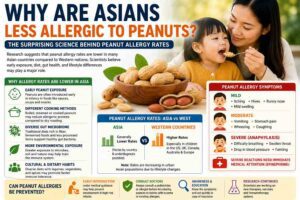
Although there are peanut allergies in Asian communities, they are far less prevalent than in Western nations. Early childhood exposure to peanuts, cooking methods that use boiling or frying as opposed to roasting, and possible environmental variables that develop immunological tolerance, rather than a genetic predisposition, are mostly to blame for this.
Major Causes of Lower Rates in Asia:
Early and Regular Exposure: In many Asian cultures, youngsters are exposed to peanut proteins at an early age, sometimes through their meals, which aids in developing tolerance.
Methods of Cooking (Boiling vs. Roasting): Peanuts are frequently fried or boiled in China and other areas of Asia, which alters the protein structure and reduces the likelihood of severe allergic responses. In contrast, Western nations generally use dry-roasted peanuts, which have been associated with an increased prevalence of allergies.
Environmental Elements: According to studies, environmental factors such as early childhood exposure to various bacteria, diet, and increased UV light exposure in Asia may help protect against allergies.
The “Westernization” Element: Although peanut allergies are less common in Asia, their prevalence is predicted to rise as urban lifestyles and dietary practices get more westernized. Regional
Disparities: It is important to remember that research has indicated that Asian children born in Western nations are far more likely to have peanut allergies than those born and raised in Asia, implying that environment has a greater influence than genetics alone.
Table of Contents
- Introduction
- What Is a Peanut Allergy?
- Are Peanut Allergies Really Less Common in Asia?
- Why Might Asians Have Lower Peanut Allergy Rates?
- Can Asians Still Have Peanut Allergies?
- What Happens During a Peanut Allergy Reaction?
- How Is Peanut Allergy Diagnosed?
- Is There a Cure for Peanut Allergy?
- Can Peanut Allergies Be Prevented?
- Why Peanut Allergy Rates May Continue Rising
- Important Myths About Peanut Allergies
- The Role of Public Health Awareness
- Current Research on Peanut Allergies
- Conclusion
- FAQ
Introduction
Peanut allergy is one of the most serious and rapidly growing food allergies worldwide. In countries such as the United States, the United Kingdom, Canada, and Australia, peanut allergies have become a major public health concern, especially among children. Severe allergic reactions can lead to anaphylaxis, a potentially life-threatening condition requiring emergency treatment.
Interestingly, researchers have noticed that peanut allergy rates appear to be lower in many Asian countries compared to Western nations. This has led scientists to investigate an important question: Why are Asians less allergic to peanuts?
The answer is not simple. Experts believe the difference may involve a combination of genetics, early childhood exposure, food preparation methods, gut microbiome diversity, environmental factors, dietary habits, and lifestyle differences.
Studies suggest that in many Asian cultures, peanuts are introduced earlier in life and are often boiled, fried, or cooked differently than in Western diets. Researchers also believe that environmental exposure and diverse microbiota may influence how the immune system reacts to foods.
However, it is important to understand that Asians can still develop peanut allergies, and rates may be increasing in some urban Asian populations due to changing lifestyles and dietary patterns.
This article explores the possible reasons behind lower peanut allergy rates in many Asian populations, the latest scientific theories, differences in food preparation, environmental influences, and what researchers currently understand about peanut allergy development.
What Is a Peanut Allergy?
A peanut allergy occurs when the body’s immune system mistakenly identifies peanut proteins as harmful substances. This causes the immune system to release chemicals such as histamine, leading to allergic reactions.
Symptoms may include:
- Skin rash or hives
- Swelling of lips or throat
- Sneezing or runny nose
- Vomiting or stomach pain
- Difficulty breathing
- Dizziness
- Anaphylaxis
In severe cases, peanut allergies can become life-threatening.
Peanut allergy is especially common in children, though adults can also develop it later in life.
Are Peanut Allergies Really Less Common in Asia?
Research suggests that peanut allergies are generally less common in many Asian countries than in Western nations.
Countries with traditionally lower reported peanut allergy rates include:
- India
- Thailand
- Singapore
- China
- Indonesia
- Japan
However, researchers warn that data collection methods vary between countries, and some cases may go underdiagnosed.
Despite this, multiple studies suggest that severe peanut allergies and peanut-induced anaphylaxis are comparatively rarer in many Asian populations.
Why Might Asians Have Lower Peanut Allergy Rates?
Scientists believe several factors may contribute to this difference.
1. Early Peanut Exposure During Childhood
One of the strongest theories involves early introduction of peanuts into children’s diets.
In many Asian cultures, peanuts are commonly consumed during infancy or early childhood in foods such as:
- Peanut sauces
- Peanut soups
- Boiled peanuts
- Peanut chutneys
- Snacks containing peanuts
Research now suggests that introducing peanuts early may help the immune system develop tolerance.
This idea gained global attention after major allergy studies showed that delayed peanut introduction might actually increase allergy risk.
The LEAP Study
One of the most famous studies on peanut allergies was the LEAP (Learning Early About Peanut Allergy) study.
Researchers discovered that introducing peanut-containing foods early in infancy significantly reduced peanut allergy risk in high-risk children.
This changed allergy prevention guidelines in several countries.
In cultures where peanuts are traditionally introduced early, natural tolerance may develop more often.
2. Different Methods of Cooking Peanuts
The way peanuts are prepared may also affect allergenicity.
In Western countries, peanuts are commonly dry roasted.
In many Asian countries, peanuts are frequently:
- Boiled
- Fried
- Steamed
- Cooked in sauces
Researchers believe dry roasting may alter peanut proteins in ways that make them more allergenic.
Boiling peanuts may reduce some allergenic protein activity.
This theory remains under investigation, but food preparation differences could partly explain varying allergy rates.
3. The Hygiene Hypothesis
Another popular explanation is the “hygiene hypothesis.”
This theory suggests that extremely clean modern environments may reduce immune system training during childhood.
Children exposed to fewer bacteria, parasites, and environmental microbes may develop more allergic diseases.
In many developing or traditionally rural regions, children may experience:
- Greater environmental exposure
- More contact with soil and animals
- More diverse microorganisms
This exposure may help regulate immune system development and reduce allergic sensitivity.
4. Gut Microbiome Differences
The human gut contains trillions of bacteria that influence immunity.
Scientists increasingly believe gut microbiome diversity plays a major role in allergy development.
Traditional Asian diets often contain:
- Fermented foods
- Fiber-rich vegetables
- Diverse plant-based ingredients
- Less ultra-processed food
These dietary patterns may support healthier gut bacteria.
A more diverse microbiome may help the immune system tolerate foods more effectively.
Western diets high in processed foods, sugar, and preservatives may negatively affect gut bacteria and immune balance.
5. Genetic Factors
Genetics may also contribute.
Certain populations may carry genetic variations affecting immune responses.
However, genetics alone cannot fully explain peanut allergy differences because:
- Asians living in Western countries may develop higher allergy rates
- Allergy rates can rise within one or two generations after migration
This suggests that environment and lifestyle likely interact with genetic predisposition.
6. Urbanization and Western Lifestyle Changes
Interestingly, peanut allergy rates appear to be increasing in some urban Asian populations.
Experts believe modernization may contribute through:
- Processed diets
- Reduced microbial exposure
- Increased antibiotic use
- Pollution
- Indoor lifestyles
Children raised in highly urbanized environments may develop immune systems differently compared to rural populations.
This pattern mirrors trends seen in Western countries.
7. Cultural Eating Habits
In many Asian households, food diversity begins early.
Children may regularly consume a wide variety of foods, spices, legumes, vegetables, and fermented products.
Some researchers believe early exposure to diverse foods may reduce food sensitization.
Dietary diversity may help the immune system learn tolerance rather than overreacting.
Can Asians Still Have Peanut Allergies?
Yes.
Peanut allergies absolutely occur in Asian populations.
Although prevalence may be lower overall in certain regions, Asians can still experience severe allergic reactions and anaphylaxis.
In fact, peanut allergy rates may be increasing in parts of Asia due to changing lifestyles and urbanization.
No ethnic group is completely protected from food allergies.
What Happens During a Peanut Allergy Reaction?
When someone with peanut allergy eats peanuts, the immune system releases chemicals that trigger inflammation.
Common symptoms include:
Mild Symptoms
- Itching
- Rash
- Hives
- Runny nose
- Mild swelling
Moderate Symptoms
- Vomiting
- Abdominal cramps
- Wheezing
- Persistent coughing
Severe Symptoms (Anaphylaxis)
- Difficulty breathing
- Swollen throat
- Drop in blood pressure
- Loss of consciousness
Anaphylaxis requires emergency treatment with epinephrine.
How Is Peanut Allergy Diagnosed?
Doctors may use several methods:
Medical History
Symptoms after peanut exposure are reviewed.
Skin Prick Testing
Small amounts of allergen are applied to the skin.
Blood Tests
These measure allergy-related antibodies.
Oral Food Challenge
Performed under medical supervision to confirm diagnosis.
Is There a Cure for Peanut Allergy?
Currently, there is no guaranteed cure.
However, treatments are improving.
Options may include:
- Strict peanut avoidance
- Carrying epinephrine auto-injectors
- Oral immunotherapy
- Allergy desensitization research
Scientists continue investigating better prevention and treatment methods.
Can Peanut Allergies Be Prevented?
Some evidence suggests early peanut introduction may help prevent allergies in certain infants.
Current guidelines in several countries recommend discussing early peanut introduction with pediatricians, especially for high-risk children.
However, introduction should be medically supervised in infants with severe eczema or existing food allergies.
Why Peanut Allergy Rates May Continue Rising
Experts believe food allergies may continue increasing worldwide due to:
- Urban lifestyles
- Environmental pollution
- Reduced microbial diversity
- Dietary changes
- Excessive hygiene
- Increased processed food intake
As Asian countries become more urbanized, allergy patterns may begin resembling those seen in Western nations.
Important Myths About Peanut Allergies
Myth 1: Asians Cannot Develop Peanut Allergies
False. Asians can absolutely have peanut allergies.
Myth 2: Peanut Allergy Is Always Mild
False. Peanut allergy can be fatal.
Myth 3: Eating More Peanuts Always Prevents Allergy
Not always. Risk varies between individuals.
Myth 4: Roasted and Boiled Peanuts Are Identical
False. Cooking methods may affect allergenicity.
The Role of Public Health Awareness
Many countries are improving allergy education through:
- Food labeling laws
- School allergy awareness
- Emergency epinephrine access
- Early diagnosis programs
Awareness is especially important because severe reactions can occur suddenly.
Current Research on Peanut Allergies
Scientists continue studying:
- Gut microbiome effects
- Genetic susceptibility
- Immune system pathways
- Environmental triggers
- Food processing effects
- Early childhood exposure
Future treatments may include:
- Vaccines
- Biologic therapies
- Microbiome-based therapies
- Advanced immunotherapy
- The Future of Peanut Allergy Prevention
Researchers hope future discoveries may allow:
- Earlier identification of high-risk children
- Personalized prevention strategies
- Safer desensitization therapies
- Reduced allergy severity
Although peanut allergies remain serious, scientific understanding continues to improve rapidly.
Conclusion
Peanut allergy rates appear lower in many Asian populations due to a complex combination of factors including early peanut exposure, cooking methods, environmental microbial diversity, dietary patterns, gut microbiome differences, and lifestyle influences.
However, Asians are not immune to peanut allergies. Severe reactions can still occur, and rates may be increasing in urban Asian populations due to modernization and changing lifestyles.
Scientists believe that understanding why some populations experience lower allergy rates could eventually help improve allergy prevention worldwide.
Although there is still no complete cure for peanut allergy, ongoing research into immunity, microbiota, genetics, and early food exposure continues to offer hope for safer and more effective prevention strategies in the future.
FAQ
Q1. Why are peanut allergies less common in Asia?
Researchers believe lower rates may be linked to early peanut exposure, different cooking methods, diet, and environmental factors.
Q2. Can Asians have peanut allergies?
Yes. Asians can still develop severe peanut allergies and anaphylaxis.
Q3. Does boiling peanuts reduce allergy risk?
Some studies suggest boiling peanuts may reduce allergenicity compared to dry roasting.
Q4. What is the hygiene hypothesis?
It is the theory that reduced exposure to microbes in very clean environments may increase allergy risk.
Q5. Can peanut allergies develop later in life?
Yes. Adults can also develop peanut allergies.
Q6. Is there a cure for peanut allergy?
Currently, there is no guaranteed cure, but treatments and research are improving.
Q7. What are the symptoms of peanut allergy?
Symptoms include hives, swelling, vomiting, breathing difficulty, and anaphylaxis.
Q8. Can early peanut introduction help prevent allergies?
Research suggests early supervised introduction may reduce allergy risk in some children.
Medical Disclaimer
This article is intended for educational and informational purposes only and should not be considered medical advice, diagnosis, or treatment. Peanut allergies can cause severe and potentially life-threatening reactions, including anaphylaxis. Always consult a qualified allergist, pediatrician, or healthcare professional for proper evaluation, allergy testing, dietary guidance, or emergency treatment recommendations. Never ignore professional medical advice or delay seeking emergency care because of information read online.
References
- World Health Organization (WHO) – Food Allergies
- National Institute of Allergy and Infectious Diseases (NIAID)
- American Academy of Allergy, Asthma & Immunology (AAAAI)
- Food Allergy Research & Education (FARE)
- National Health Service (NHS) – Peanut Allergy
- Centers for Disease Control and Prevention (CDC) – Food Allergies
🥜 Peanut Allergy: Causes, Risk Factors, Symptoms & Public Health Impact
🔍 Introduction
Peanut allergy is one of the most serious and potentially life-threatening food allergies worldwide. Although peanut allergy affects less than 2% of the United States population, it remains a major public health concern because even tiny amounts of peanuts can trigger severe allergic reactions in sensitive individuals. For some people, exposure to peanuts may cause mild itching or hives, while others may experience dangerous symptoms such as throat swelling, breathing difficulty, low blood pressure, or anaphylactic shock.
Research shows that nearly 40% of children with food allergies have experienced at least one episode of anaphylaxis, making peanut allergy a major source of anxiety for patients, caregivers, and healthcare providers. Peanut allergies may significantly affect quality of life, leading to emergency room visits, emotional stress, dietary restrictions, and work or school disruptions.
The prevalence of peanut allergy has increased over the last two decades, prompting researchers to investigate possible causes such as genetics, environmental exposure, dietary habits, microbiota diversity, and food preparation methods. Scientists also continue exploring how ethnicity, geography, lifestyle, and early peanut exposure may influence allergy development.
This article explains peanut allergy symptoms, risk factors, social impact, prevention strategies, and current public health recommendations.
🥜 What Is Peanut Allergy?
A peanut allergy occurs when the immune system mistakenly identifies peanut proteins as harmful substances and releases chemicals such as histamine, causing allergic reactions.
Peanut allergy belongs to the group of food allergies that may trigger:
- Mild symptoms
Moderate allergic reactions
Severe anaphylaxis
Even tiny amounts of peanuts may cause symptoms in highly sensitive individuals.
⚠️ Symptoms of Peanut Allergy
Peanut allergy symptoms can develop within minutes after exposure.
Common Symptoms
- Itching in the mouth
Skin rash or hives
Swelling of lips or face
Nasal congestion
Stomach pain
Vomiting
Diarrhea
🚨 Severe Symptoms (Anaphylaxis)
Severe peanut allergy reactions may include:
- Throat tightening
Difficulty breathing
Wheezing
Drop in blood pressure
Dizziness
Shock
Anaphylaxis is a medical emergency requiring immediate treatment.
📈 Why Peanut Allergies Are Increasing
Researchers believe several factors may contribute to the increasing prevalence of peanut allergies.
- Possible Contributing Factors
Reduced microbial exposure
Changes in diet
Antibiotic overuse
Environmental pollution
Delayed peanut introduction in infancy
Genetic predisposition
The exact cause remains complex and likely involves interactions between genes and environmental factors.
🌍 Peanut Allergy & Ethnicity
Studies suggest that peanut allergy prevalence may differ among ethnic and racial groups in the United States. However, experts caution that ethnicity alone does not explain allergy risk.
Researchers believe the following factors may play important roles:
- Country of origin
Cultural food preparation methods
Environmental exposure
Dietary habits
Gut microbiota diversity
For example:
- Boiled or fried peanuts are more common in some Asian countries
Dry-roasted peanuts are more common in Western diets
Different preparation methods may affect allergenicity.
🧬 Genetics & Environmental Factors
Peanut allergy development likely involves:
- Genetic susceptibility
Environmental triggers
Immune system responses
Scientists are studying:
- Epigenetics
Microbiota diversity
Childhood exposure patterns
Early dietary habits
to better understand why some people develop allergies while others do not.
👶 Peanut Introduction Guidelines for Children
The National Institute of Allergy and Infectious Diseases recommends early peanut introduction for many infants to reduce allergy risk.
Low-Risk Infants
Children without eczema or food allergies may consume peanut-based foods according to normal family practices.
Moderate-Risk Infants
Children with mild eczema may begin peanut-containing foods around 6 months of age.
High-Risk Infants
Children with:
- Severe eczema
- Egg allergy
- Family history of allergy
should be evaluated by an allergy specialist before peanut introduction.
Early introduction may begin between 4–6 months under medical guidance.
💉 Emergency Treatment for Peanut Allergy
Individuals with severe peanut allergy are commonly advised to carry:
- Two epinephrine auto-injectors
Emergency allergy action plan
Emergency Medication
Epinephrine
This medication may rapidly reverse life-threatening allergic reactions.
🧠 Emotional & Social Impact of Peanut Allergy
Peanut allergy may significantly affect daily life.
Common Challenges
- Anxiety about accidental exposure
School and workplace restrictions
Emergency room visits
Emotional stress for caregivers
Social limitations during dining or travel
Studies show many adolescents and caregivers experience ongoing fear and uncertainty related to severe allergic reactions.
🔬 Importance of Future Research
Experts believe future peanut allergy research should focus on:
- Life-course health data
- Environmental exposure
- Gut microbiota
- Early childhood experiences
- Diet and food preparation
- Genetic interactions
rather than relying only on simplified factors such as income or ethnicity.
📌 Prevention & Public Health Education
Public health education remains essential for peanut allergy prevention and management.
Important Safety Measures
Read food labels carefully
Avoid cross-contamination
Recognize signs of anaphylaxis
Carry emergency medication
Follow medical guidance for peanut introduction
Education may help reduce severe allergic reactions and improve quality of life.
📌 Conclusion
Peanut allergy is a serious food allergy that may cause severe immune reactions, including life-threatening anaphylaxis. Although the condition affects a relatively small percentage of the population, its medical, emotional, and social impact can be significant for children, adults, and caregivers.
Researchers continue studying how genetics, environmental exposure, microbiota diversity, cultural food preparation, and early peanut introduction influence allergy development. Public health education, early recognition of symptoms, and access to emergency treatment remain essential for reducing complications and improving patient safety.
Understanding peanut allergy risk factors and prevention strategies can help families make informed healthcare decisions and better manage allergic conditions.
❓ FAQ – Peanut Allergy
Q1. What causes peanut allergy?
Peanut allergy occurs when the immune system mistakenly reacts to peanut proteins.
Q2. Can peanut allergy cause death?
✔️ Severe reactions may lead to life-threatening anaphylaxis if untreated.
Q3. What are the first signs of peanut allergy?
Symptoms may include itching, swelling, hives, stomach pain, or breathing difficulty.
Q4. Can peanut allergy develop in adults?
✔️ Yes, some individuals develop peanut allergy later in adulthood.
Q5. How is peanut allergy treated?
Avoidance of peanuts and emergency treatment with Epinephrine are commonly recommended.
Q6. Can peanut allergy be prevented?
Early peanut introduction under medical guidance may reduce risk in some children.