🌍 Ebola Outbreak 2026: WHO Raises Global Concern as Cases Rise in Congo and Uganda
The world is once again facing growing concern over a dangerous infectious disease outbreak after the World Health Organization (WHO) issued a serious warning about the rapid spread of Ebola virus disease in parts of Africa.
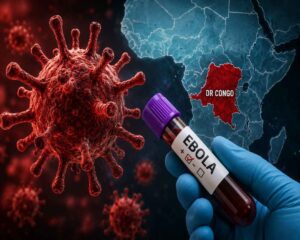
Health officials say the outbreak, centered in the Democratic Republic of the Congo (DRC), has expanded quickly, with hundreds of suspected cases and more than 100 reported deaths linked to the virus. The situation has become especially alarming because the outbreak involves the rare Bundibugyo strain of Ebola, a variant for which there is currently no fully approved vaccine or specific targeted treatment.
As global attention intensifies, India has also stepped up preparedness measures, including airport screening, hospital readiness, and emergency surveillance systems to prevent any possible spread into the country.
Table of Contents
- ⚠️ Why the WHO Is Deeply Concerned
- 🦠 What Makes This Ebola Outbreak Different?
- 🧬 What Is Ebola Virus Disease?
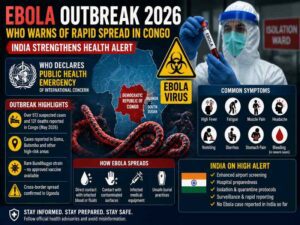
- 🚨 Common Ebola Symptoms
- 🔬 How Ebola Spreads
- 🌍 Has Ebola Spread Beyond Congo?
- 🇮🇳 India Steps Up Ebola Preparedness
- 🏥 Why Some Communities Delayed Treatment
- 💉 Is There a Cure for Ebola?
- 📈 Why Global Experts Are Watching Closely
- 🧠 Final Thoughts
- ❓ FAQ – Ebola Outbreak 2026
⚠️ Why the WHO Is Deeply Concerned
The WHO has described the outbreak as a major international health concern because of the “scale and speed” of infections being reported in affected regions.
The outbreak is primarily concentrated in northeastern Congo, especially in conflict-affected provinces near the borders of Uganda and South Sudan. These areas face multiple challenges including:
- Armed conflict
- Difficult transportation access
- Weak healthcare systems
- Population displacement
- Cross-border movement
These conditions make it extremely difficult for health workers to identify infected individuals, trace contacts, and isolate cases quickly.
According to health authorities, cases have also appeared in larger urban areas such as Goma and Butembo, increasing fears that the virus could spread more widely if containment efforts fail.
🦠 What Makes This Ebola Outbreak Different?
One of the biggest concerns surrounding the current outbreak is the Bundibugyo strain of Ebola virus.
Unlike some previous Ebola outbreaks where approved vaccines were available, there is currently no widely licensed vaccine specifically designed for this strain. This has complicated containment efforts and increased concern among international health agencies.
Medical researchers are evaluating experimental therapies and vaccines, but experts caution that widespread availability may still take time.
The absence of a proven treatment has made rapid identification and isolation of infected patients critically important.
🧬 What Is Ebola Virus Disease?
Ebola is a severe viral illness that can cause life-threatening complications.
The disease attacks multiple organs and may lead to internal bleeding, organ failure, and shock in severe cases. Ebola outbreaks often have high fatality rates, especially in regions with limited healthcare access.
Symptoms usually appear between 2 and 21 days after exposure.
🚨 Common Ebola Symptoms
Early symptoms of Ebola can resemble common illnesses such as malaria or flu, making early diagnosis difficult.
Common symptoms include:
- High fever
- Severe fatigue
- Muscle pain
- Headache
- Sore throat
- Vomiting
- Diarrhea
- Stomach pain
- Weakness
- Dehydration
In severe cases, patients may develop:
- Internal bleeding
- Bleeding from gums or nose
- Organ failure
- Shock
Doctors warn that delayed treatment increases the risk of serious complications and death.
🔬 How Ebola Spreads
Unlike airborne infections such as COVID-19, Ebola spreads through direct contact with infected bodily fluids.
These include:
- Blood
- Saliva
- Vomit
- Sweat
- Urine
- Semen
The virus may also spread through:
- Contaminated medical equipment
- Infected surfaces
- Caregiving contact
- Traditional burial practices
Health experts emphasize that Ebola does not spread through casual contact or simply being near an infected person.
🌍 Has Ebola Spread Beyond Congo?
Yes.
Health authorities have confirmed cases in Uganda linked to cross-border movement from Congo. At least one death connected to the outbreak has reportedly occurred outside the DRC.
Because of the international spread risk, several countries have strengthened:
- Airport screening
- Emergency preparedness
- Isolation facilities
- Disease surveillance systems
The WHO has declared the outbreak a Public Health Emergency of International Concern (PHEIC), a designation reserved for serious international health threats.
However, officials stress that this is not currently considered a global pandemic.
🇮🇳 India Steps Up Ebola Preparedness
Although no Ebola case has been reported in India, authorities are taking preventive measures seriously.
India’s Health Ministry has reportedly conducted high-level preparedness reviews involving health departments across states and Union Territories.
Preventive measures include:
- Enhanced airport screening
- Isolation protocols
- Hospital emergency readiness
- Laboratory surveillance
- Rapid reporting systems
- Contact tracing preparedness
India previously handled Ebola-related preparedness during earlier outbreaks, which health officials say provides valuable experience.
🏥 Why Some Communities Delayed Treatment
Health experts say misinformation and fear have complicated outbreak control efforts in certain regions.
In some affected communities, people reportedly believed the illness was linked to spiritual or mystical causes, delaying medical treatment and increasing virus transmission.
To address this, international agencies are increasing:
- Public education campaigns
- Community awareness programs
- Local healthcare outreach
- Early reporting initiatives
Experts say community trust is essential for controlling outbreaks.
💉 Is There a Cure for Ebola?
There is currently no universal cure for Ebola virus disease.
Treatment mainly focuses on supportive care, including:
- Intravenous fluids
- Oxygen support
- Electrolyte management
- Blood pressure stabilization
- Treatment of secondary infections
Early medical care can significantly improve survival rates.
Experimental treatments and vaccines continue to be studied for the Bundibugyo strain.
📈 Why Global Experts Are Watching Closely
Public health experts say the outbreak is concerning because it involves:
- A rare Ebola strain
- Conflict-affected regions
- Cross-border spread
- Delayed detection
- Weak healthcare systems
The coming weeks may prove critical in determining whether containment efforts succeed.
WHO officials continue monitoring the outbreak closely while urging countries to remain prepared without creating unnecessary panic.
🧠 Final Thoughts
The Ebola outbreak in Congo and Uganda has become one of the most closely monitored global health emergencies of 2026.
While there is currently no immediate threat to India, health authorities are maintaining heightened surveillance because infectious diseases can spread rapidly in today’s interconnected world.
Experts emphasize that awareness, early diagnosis, proper isolation, and strong public health systems remain the most effective tools for preventing further spread.
For now, officials advise the public to stay informed through reliable medical sources and avoid panic or misinformation.
❓ FAQ – Ebola Outbreak 2026
Q1. What is causing the Ebola outbreak in 2026?
The outbreak is linked to the Bundibugyo strain of Ebola virus currently spreading in parts of Congo and Uganda.
Q2. Is Ebola spreading in India?
No Ebola case has been reported in India so far, but authorities have strengthened surveillance and airport screening.
Q3. How does Ebola spread?
Ebola spreads through direct contact with infected bodily fluids such as blood, saliva, vomit, sweat, and contaminated surfaces.
Q4. What are the first symptoms of Ebola?
Common early symptoms include fever, fatigue, muscle pain, headache, vomiting, and diarrhea.
Q5. Is there a vaccine for the current Ebola strain?
There is currently no widely approved vaccine specifically for the Bundibugyo strain involved in this outbreak.
Q6. Is Ebola airborne like COVID-19?
No. Ebola does not spread through normal airborne transmission like COVID-19.
Q7. Why is WHO concerned about this outbreak?
The outbreak is spreading rapidly in conflict-affected regions with limited healthcare access and cross-border movement.
Q8. What precautions has India taken?
India has increased airport screening, hospital preparedness, isolation protocols, and disease surveillance.
⚕️ Medical Disclaimer
This article is intended for informational and educational purposes only and should not be considered medical advice, diagnosis, or treatment. Information regarding the Ebola outbreak is based on currently available public health reports and official updates at the time of writing. Outbreak situations can change rapidly.
Readers should follow guidance from official health authorities such as the World Health Organization (WHO), government health ministries, and qualified healthcare professionals. If you have symptoms, recent travel history to affected regions, or concerns about infectious diseases, seek immediate medical attention.
📚References
- World Health Organization (WHO) – Ebola Virus Disease Fact Sheet
- Centers for Disease Control and Prevention (CDC) – Ebola Information
- World Health Organization (WHO) – Public Health Emergency of International Concern (PHEIC)
- UNICEF – Ebola Prevention and Community Awareness
- Ministry of Health and Family Welfare, Government of India
- World Health Organization Africa – Ebola Outbreak Updates
- World Health Organization
- Democratic Republic of the Congo
- Uganda
- Ministry of Health and Family Welfare