What is the 4 7 8 rule?
By Dr. Sagar Rajkuwar, ENT Specialist, Nashik, Maharashtra, India
🌐 www.entspecialistinnashik.com
Introduction
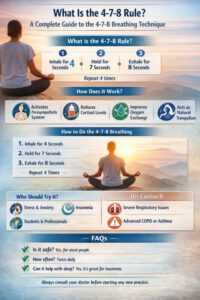
The 4-7-8 breathing method consists of inhaling for four seconds, holding your breath for seven seconds, and exhaling for eight seconds. The goal of this breathing technique is to alleviate worry or aid in falling asleep.
The 4-7-8 breathing method is a type of pranayama, which is the practice of controlling one’s breath. Yoga often incorporates pranayama.
Some supporters assert that the approach enables individuals to fall asleep in a minute.
Although there is not much scientific evidence to back up this approach, there is plenty of anecdotal evidence to suggest that this kind of deep, rhythmic breathing is soothing and might help people fall asleep.
The purpose of this essay is to explain how to execute this breathing technique, discuss potential reasons for its effectiveness, and list applications that might be helpful.
📞 ENT Consultation & Surgery
Dr. Sagar Rajkuwar (MS-ENT)
Prabha ENT Clinic, Ambad, Nashik
📱 7387590194 | 9892596635
🌐 www.entspecialistinnashik.com
What is 4-7-8 breathing, and how does it work?
The 4-7-8 breathing method involves concentrating on inhaling and exhaling slowly and deeply. Rhythmic breathing is an essential component of many yoga and meditation practices since it fosters relaxation.
Rhythmic, deep breathing may have a number of advantages, such as:
- minimizing anxiety
- assisting someone in falling asleep
- controlling desires
- lowering the frequency of violent outbursts
How to do 4-7-8 breathing
Place the tip of your tongue on the tissue right behind the top front teeth while sitting comfortably before beginning the breathing pattern.
Concentrate on the following breathing pattern while using the 4-7-8 method:
- getting rid of air in the lungs
- inhaling silently for four seconds via the nose
- taking a 7-second breath hold
- for eight seconds, make a “whoosh” sound by forcefully exhaling through the mouth and puckering the lips.
- The procedure is repeated up to four times.
Doing this for the first several times might make someone feel dizzy. As a result, in order to avoid fainting or falling, it is recommended to use this method while sitting or lying down.
Maintaining the ratio is more important than the entire number of seconds that the pattern lasts. If someone can’t hold their breath for a long enough period of time, they may attempt a shorter pattern, such as:
- inhaling for two seconds via the nose
- maintaining your breath for three and a half seconds.
- exhaling via the mouth for four seconds
After a few days or weeks of regularly practicing 4-7-8 breathing once or twice a day, one may see advantages if they keep the proper ratio.
These assertions regarding 4-7-8 breathing or other breathing methods are not backed up by a large body of clinical evidence. The only evidence comes from anecdotal accounts of happy customers.
How 4-7-8 breathing works and benefits
According to several studies, deep breathing methods can help lower stress and anxiety in individuals.
The evidence supporting the value of deep breathing exercises in clinical settings is often weak, and the support for the practice is mostly anecdotal.
But according to a 2020 review, there is little evidence to suggest that deep breathing exercises can assist in the following ways:
- improving the functioning of the lungs and heart
- lowering blood pressure
- enhancing the quality of life for those suffering from persistent diseases
- lessening the frequency and intensity of migraine episodes
Other relaxation techniques to help anxiety
Some breathing practices, such as 4-7-8 breathing, are related to other relaxation methods. Some individuals combine this breathing method with the following practices:
- directed visualization
- progressive relaxation of muscles
- repeated prayer
- qigong, tai chi, and yoga
- mindful meditation
Reducing stress and worry are the main applications of 4-7-8 breathing. It is claimed that regular use makes it more effective at assisting someone in controlling their stress levels.
Unlike antianxiety medications, which tend to become less effective over time as the body gets used to them, this improvement is noteworthy.
What meditation apps are there?
A software might be helpful for those who are curious about learning breathing methods but are unsure of their capacity for self-regulation. The Apple and Google Play stores offer apps for a variety of devices.
Summary
Many possible health benefits, like lowering anxiety and promoting quicker sleep onset, may result from the 4-7-8 breathing pattern and other breathing methods.
Mild dizziness is the only known adverse effect. One should either quit using this method or change the duration of their breaths if they are experiencing it.
Apps may also be available to interested mobile users that will remind them to practice the method all day and help them regulate their breathing.