What Activities Should I Avoid With Stitches?
Complete Recovery Guide for Safe & Faster Healing
By Dr. Sagar Rajkuwar
ENT Specialist, Nashik, Maharashtra, India
🌐 www.entspecialistinnashik.com
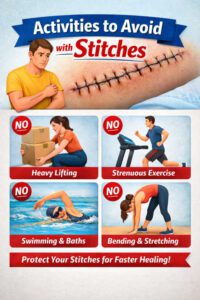
Table of Contents
-
Introduction
-
Why Activity Restrictions Matter When You Have Stitches
-
General Rules to Follow After Getting Stitches
-
Activities You Should Avoid With Stitches
4.1 Strenuous Exercise and Sports
4.2 Heavy Lifting
4.3 Swimming and Soaking in Water
4.4 Excessive Bending, Stretching, or Twisting
4.5 Rubbing, Scratching, or Touching the Wound
4.6 Wearing Tight or Irritating Clothing
4.7 Smoking and Alcohol Consumption
4.8 Sexual Activity (When Stitches Are in Sensitive Areas)
4.9 Sun Exposure on Stitches
4.10 Driving and Long Travel -
Activities That Are Usually Safe With Stitches
-
How Long Should You Avoid Activities With Stitches?
-
Warning Signs That You May Have Overdone Activity
-
Tips to Promote Faster Healing With Stitches
-
When Can You Resume Normal Activities?
-
Frequently Asked Questions (FAQs)
-
Final Thoughts
1. Introduction
Following an injury, accident, or surgery, wounds are closed using stitches, also known as sutures. Although stitches aid in the proper healing of your skin, your conduct throughout the healing phase is critical in avoiding complications.
One of the questions that patients frequently ask is:
“With stitches, what activities should I stay away from?”
Too soon participation in the incorrect activities might result in pain, infection, delayed healing, wound reopening, and lasting scars. This post clarifies which activities to avoid, why they are important, and how long restrictions often last, enabling you to heal in a secure and pleasant manner.
2. Why Activity Restrictions Matter When You Have Stitches
The wound edges are kept together by stitches so that fresh tissue may grow beneath. The wound is vulnerable throughout the initial healing phase. Too much motion, force, or humidity may:
- Separate the stitches.
- May cause bleeding or swelling
- Cause infection by introducing bacteria
- Delay healing or make scarring worse
Refrain from engaging in particular activities to provide your body the optimum opportunity to recover properly.
3. General Rules to Follow After Getting Stitches
Follow these general guidelines before going over any particular actions:
- Maintain the wound’s dryness and cleanliness.
- Adhere to your doctor’s advice regarding how to dress.
- Refrain from excessively touching stitches
- Regularly take any drugs that are prescribed.
- Go to stitch removal sessions or follow-up appointments.
These fundamental guidelines encourage quicker and safer recovery.
4. Activities You Should Avoid With Stitches
4.1 Strenuous Exercise and Sports
Refrain from engaging in activities like:
- jogging or running
- Training in the gym
- Weightlifting
- Contact sports
- Exercises at a high intensity
Why stay away from them?
Intense physical activity raises blood pressure and muscle activity, which may cause sutures to bleed or rupture due to wound stretching.
4.2 Heavy Lifting
Refrain from lifting:
- big containers or bags
- Furniture
- Weights in the gym
- if heavy, children or pets
Heavy lifting raises pressure inside the body, particularly following surgery to the abdomen or chest, which raises the chance of harm to internal sutures.
4.3 Swimming and Soaking in Water
Stay away from:
- Pools for swimming
- Water from rivers, lakes, or the ocean
- Hot tubs and bathtubs
Water contact raises the risk of infection and may cause stitches to become weaker. Light showers may be permitted, but the wound should not be soaked until it has fully healed.
4.4 Excessive Bending, Stretching, or Twisting
If there are stitches in the abdomen, back, joints, or groin, it is important to avoid activities like yoga, stretching, or frequent bending. These actions cause the skin to stretch and may cause the wound to reopen.
4.5 Rubbing, Scratching, or Touching the Wound
While stitches heal, itching is frequent, but scratching or picking scabs might cause:
- Introduce the bacteria.
- Induce inflammation
- Postpone treatment
Keep your hands clean and avoid making any unnecessary contact.
4.6 Wearing Tight or Irritating Clothing
Stay away from constricting belts, apparel, or materials that rub against the wound. Sutures can be irritated and healing can be slowed by friction and pressure. The best choice is cotton apparel that is airy and loose.
4.7 Smoking and Alcohol Consumption
Smoking reduces the amount of oxygen available to tissues that are healing, and alcohol impairs the immune system. Both have the potential to greatly slow down wound healing and raise the chance of infection.
4.8 Sexual Activity (When Stitches Are in Sensitive Areas)
Sexual activity should be avoided until the wound has healed if stitches are close to the perineal region, groin, lower belly, or genitalia to prevent wound disruption and infection.
4.9 Sun Exposure on Stitches
Scars can be permanently darkened by direct sunshine. Keep the area covered and avoid sun exposure on the healing stitches until the wound is completely healed.
4.10 Driving and Long Travel
Scars can be permanently darkened by direct sunlight. Keep the area covered and avoid sun exposure on healing stitches until the wound is completely healed.
5. Activities That Are Usually Safe With Stitches
The following activities are often safe:
- Walking gently
- Simple chores about the home
- Work at a desk or on a computer
- Television viewing or reading
If you experience discomfort or tugging at the wound, stop immediately.
6. How Long Should You Avoid Activities With Stitches?
| Stitch Location | Usual Restriction Period |
|---|---|
| Face | 5–7 days |
| Hands/Arms | 7–10 days |
| Legs/Feet | 10–14 days |
| Abdomen | 2–4 weeks |
| Internal stitches | 3–6 weeks |
Healing time varies based on age, health, wound depth, and medical conditions like diabetes.
7. Warning Signs That You May Have Overdone Activity
If you see the following, call your doctor:
- More pain or swelling
- bleeding from the wound
- redness, heat, or pus
- Stitches are coming undone.
- High temperature
These could point to stitch injury or infection.
8. Tips to Promote Faster Healing With Stitches
- Eat foods high in protein.
- Maintain hydration
- Get enough sleep
- Don’t put any stress on the injury.
- adhere to medical advice at all costs
Good habits promote healing and lessen complications.
9. When Can You Resume Normal Activities?
You can resume your regular activities when:
- There has been a considerable decrease in pain.
- The injury is now healed.
- Stitches are taken out or dissolved.
- The all-clear is given by your physician
Don’t hasten your rehabilitation since problems might hinder your progress.
10. Frequently Asked Questions (FAQs)
Q1. Can normal walking damage stitches?
Gentle walking is usually safe and helps blood circulation, but avoid fast walking or long distances unless your doctor allows it.
Q2. Can stitches break if I exercise too early?
Yes, strenuous exercise or heavy lifting can pull stitches apart and cause bleeding or delayed healing.
Q3. How long should I avoid physical activity with stitches?
Most people should avoid strenuous activity for 7–14 days, but abdominal or internal stitches may need 3–6 weeks.
Q4. Is itching around stitches normal?
Yes, mild itching is normal during healing, but scratching should be avoided to prevent infection.
Q5. When can I return to normal activities after stitches?
You can return to normal activities once the wound has healed, stitches are removed or absorbed, and your doctor gives approval.
For important health related topics please click on our facebook page link given below or copy paste this link into google search –
https://www.facebook.com/positivemind.healthcare
For important health related videos please click on the link of our youtube channel given below or copy paste this link into google search-
http://www.youtube.com/@healthuseful8539
11. Final Thoughts
Following a stitch, it’s critical to avoid certain activities in order for the wound to heal correctly. You may avoid complications and improve the outcome by adhering to medical advice and giving your body enough time to heal.
Before engaging in any action that you are unsure about, always seek advice from your physician.
Medical Disclaimer
This article is for educational purposes only and does not replace professional medical advice. Always consult your doctor for personalized treatment.
Clinic address of ENT SPECIALIST doctor Dr Sagar Rajkuwar-
Prabha ENT clinic, plot no 345,Saigram colony, opposite Indoline furniture Ambad link road ,Ambad ,1 km from Pathardi phata Nashik ,422010 ,Maharashtra, India-Dr Sagar Rajkuwar (MS-ENT), Cell no- 7387590194 , 98925966